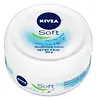
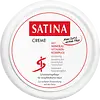
Nivea Soft Moisturizing Crème Versus Satina Creme
This barrier-repair moisturizer is formulated around Simmondsia Chinensis Seed Oil and Tocopheryl Acetate to strengthen the skin barrier and hydrate skin.
This barrier-repair moisturizer is formulated around Petrolatum and Panthenol to strengthen the skin barrier and hydrate skin.


What's inside
What's inside
 Key Ingredients
Benefits
Concerns
Ingredients Side-by-side
Water
Skin ConditioningGlycerin
Humectant


Myristyl Alcohol
Emollient





Paraffinum Liquidum
Emollient

Butylene Glycol
Humectant
Alcohol Denat.
Antimicrobial

Stearic Acid
Cleansing
Petrolatum
Emollient
Myristyl Myristate
Emollient
Glyceryl Stearate
Emollient
Hydrogenated Coco-Glycerides
Emollient
Dimethicone
Emollient
Simmondsia Chinensis Seed Oil
Emollient
Tocopheryl Acetate
Antioxidant


Lanolin Alcohol
Emollient
Polyglyceryl-2 Caprate
EmulsifyingParfum
Masking

Carbomer
Emulsion StabilisingSodium Hydroxide
BufferingPhenoxyethanol
Preservative
Water, Glycerin, Myristyl Alcohol, Paraffinum Liquidum, Butylene Glycol, Alcohol Denat., Stearic Acid, Petrolatum, Myristyl Myristate, Glyceryl Stearate, Hydrogenated Coco-Glycerides, Dimethicone, Simmondsia Chinensis Seed Oil, Tocopheryl Acetate, Lanolin Alcohol, Polyglyceryl-2 Caprate, Parfum, Carbomer, Sodium Hydroxide, Phenoxyethanol
Water
Skin ConditioningPetrolatum
Emollient
Paraffinum Liquidum
Emollient
Isohexadecane
EmollientAlcohol
Antimicrobial
Ozokerite
Emulsion StabilisingSorbitol
Humectant
Glyceryl Oleate
Emollient
Aluminum Stearates
EmollientLanolin Alcohol
Emollient
Panthenol
Skin Conditioning

Tocopherol
Antioxidant

Parfum
Masking
Zinc Sulfate
Antimicrobial
Magnesium Sulfate
Calcium Pantothenate
Trisodium Ethylenediamine Disuccinate
ChelatingLinalool
Perfuming
Hexyl Cinnamal
Perfuming
Citronellol
Perfuming
Benzyl Salicylate
Perfuming
Alpha-Isomethyl Ionone
Perfuming
Limonene
Perfuming
Coumarin
Perfuming
Geraniol
Perfuming
BHT
Antioxidant
Sodium Hydroxide
BufferingWater, Petrolatum, Paraffinum Liquidum, Isohexadecane, Alcohol, Ozokerite, Sorbitol, Glyceryl Oleate, Aluminum Stearates, Lanolin Alcohol, Panthenol, Tocopherol, Parfum, Zinc Sulfate, Magnesium Sulfate, Calcium Pantothenate, Trisodium Ethylenediamine Disuccinate, Linalool, Hexyl Cinnamal, Citronellol, Benzyl Salicylate, Alpha-Isomethyl Ionone, Limonene, Coumarin, Geraniol, BHT, Sodium Hydroxide
Reviews
Ingredients Explained
These ingredients are found in both products.
Ingredients higher up in an ingredient list are typically present in a larger amount.
A complex combination of organic alcohols obtained by the hydrolysis of lanolin and is classified as a fatty alcohol.
Fatty Alcohols are most often used as an emollient or to thicken a product. They are usually derived from natural fats and oils and therefore do not have the same drying or irritating effect as traditional alcohols.
Paraffinum Liquidum is a highly-refined cosmetic-grade mineral oil. It is also known as liquid paraffin.
Despite its controversial reputation, the science is pretty clear: it's one of the most well-studied and effective moisturizing ingredients out there.
As an occlusive, it forms a protective layer on the skin that locks in moisture and prevents transepidermal water loss (TEWL). This makes it especially great for compromised skin barriers.
The "it clogs your pores" myth has been around for decades; a study found that industrial-grade mineral oil may be comedogenic but cosmetic-grade mineral oil is not (these two are very, very different).
A 2017 review concluded that cosmetic use of mineral oils and waxes does not present a risk to consumers due to absorption.
Mineral oil got a bad rap from the old rabbit ear studies. When tested on actual human skin, cosmetic-grade mineral oil showed no comedogenic activity. The rating of 0 is a correction of outdated science.
Mineral oil is an inert substance with no fatty acids so there's nothing to feed Malassezia. This ingredient is fungal acne safe.
Learn more about Paraffinum LiquidumParfum is a catch-all term for an ingredient or more that is used to give a scent to products.
Also called "fragrance", this ingredient can be a blend of hundreds of chemicals or plant oils. This means every product with "fragrance" or "parfum" in the ingredients list is a different mixture.
For instance, Habanolide is a proprietary trade name for a specific aroma chemical. When used as a fragrance ingredient in cosmetics, most aroma chemicals fall under the broad labeling category of “FRAGRANCE” or “PARFUM” according to EU and US regulations.
The term 'parfum' or 'fragrance' is not regulated in many countries. In many cases, it is up to the brand to define this term.
For instance, many brands choose to label themselves as "fragrance-free" because they are not using synthetic fragrances. However, their products may still contain ingredients such as essential oils that are considered a fragrance by INCI standards.
One example is Calendula flower extract. Calendula is an essential oil that still imparts a scent or 'fragrance'.
Depending on the blend, the ingredients in the mixture can cause allergies and sensitivities on the skin. Some ingredients that are known EU allergens include linalool and citronellol.
Parfum can also be used to mask or cover an unpleasant scent.
The bottom line is: not all fragrances/parfum/ingredients are created equally. If you are worried about fragrances, we recommend taking a closer look at an ingredient. And of course, we always recommend speaking with a professional.
Learn more about ParfumPetrolatum is more commonly known as petroleum jelly. It is created by mixing waxes and mineral oils.
This ingredient is effective at reducing water loss by 99%. This is because it is an occlusive. Occlusives create a hydrophobic barrier on the skin to prevent evaporation. This property makes it great for hydrating dry skin.
Pro tip: Use occlusives, such as this ingredient, on damp skin for the best results.
The quality or origin of petrolatum is only known when disclosed by the brand. Most cosmetic petrolatum has gone through several purification stages.
Another benefit of occlusives is it protects your skin against infection or allergies.
Petrolatum is fungal acne safe. It is a hydrocarbon with no fatty acid structure, so Malassezia cannot metabolize it. In-vitro studies support negligible growth stimulation as well.
It's also worth noting that petrolatum has a comedogenic rating of 0. In updated rabbit ear testing (and in human testing), petrolatum was found to be not comedogenic. This means it didn’t promote comedone formation in standard models.
Learn more about PetrolatumSodium Hydroxide is also known as lye or caustic soda. It is used to adjust the pH of products; many ingredients require a specific pH to be effective.
In small amounts, sodium hydroxide is considered safe to use. However, large amounts may cause chemical burns due to its high alkaline.
Your skin has a natural pH and acid mantle. This acid mantle helps prevent harmful bacteria from breaking through. The acid mantle also helps keep your skin hydrated.
"Alkaline" refers to a high pH level. A low pH level would be considered acidic.
Learn more about Sodium HydroxideWater. It's the most common cosmetic ingredient of all. You'll usually see it at the top of ingredient lists, meaning that it makes up the largest part of the product.
So why is it so popular? Water most often acts as a solvent - this means that it helps dissolve other ingredients into the formulation.
You'll also recognize water as that liquid we all need to stay alive. If you see this, drink a glass of water. Remember to stay hydrated!
Learn more about Water

