Nivea Rich Nourishing Body Lotion Versus Vaseline Expert Care Dry Skin Rescue Advanced Strength Body Lotion


What's inside
What's inside
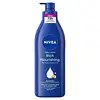 Key Ingredients
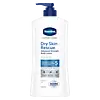
No key ingredients
Benefits
Concerns
Ingredients Side-by-side
Water
Skin ConditioningParaffinum Liquidum
Emollient


Isohexadecane
EmollientGlycerin
Humectant


Isopropyl Palmitate
Emollient



PEG-40 Sorbitan Perisostearate
EmulsifyingCera Microcristallina
Emulsion StabilisingPolyglyceryl-3 Diisostearate
Emulsifying
Sodium Hyaluronate
Humectant


Prunus Amygdalus Dulcis Oil
Skin Conditioning
Tocopherol
Antioxidant



Magnesium Sulfate
Sodium Citrate
BufferingCitric Acid
Buffering
Tocopheryl Acetate
Antioxidant
Potassium Sorbate
Preservative
BHT
Antioxidant
Parfum
Masking

Water, Paraffinum Liquidum, Isohexadecane, Glycerin, Isopropyl Palmitate, PEG-40 Sorbitan Perisostearate, Cera Microcristallina, Polyglyceryl-3 Diisostearate, Sodium Hyaluronate, Prunus Amygdalus Dulcis Oil, Tocopherol, Magnesium Sulfate, Sodium Citrate, Citric Acid, Tocopheryl Acetate, Potassium Sorbate, BHT, Parfum
Water
Skin ConditioningGlycerin
Humectant
Stearic Acid
Cleansing
Isopropyl Palmitate
Emollient
Glycol Stearate
Emollient
PEG-100 Stearate
Surfactant
Dimethicone
Emollient
Paraffinum Liquidum
Emollient
Hydroxystearic Acid
Cleansing
Petrolatum
Emollient
Stearamide Amp
Foam BoostingGlyceryl Stearate
Emollient
Palmitic Acid
Emollient
Cetyl Alcohol
Emollient

Acrylates/C10-30 Alkyl Acrylate Crosspolymer
Emulsion StabilisingArachidic Acid
Cleansing
Triethanolamine
BufferingDisodium EDTA
ChelatingPhenoxyethanol
Preservative
Methylparaben
Preservative

Propylparaben
Preservative
Water, Glycerin, Stearic Acid, Isopropyl Palmitate, Glycol Stearate, PEG-100 Stearate, Dimethicone, Paraffinum Liquidum, Hydroxystearic Acid, Petrolatum, Stearamide Amp, Glyceryl Stearate, Palmitic Acid, Cetyl Alcohol, Acrylates/C10-30 Alkyl Acrylate Crosspolymer, Arachidic Acid, Triethanolamine, Disodium EDTA, Phenoxyethanol, Methylparaben, Propylparaben
Reviews
Ingredients Explained
These ingredients are found in both products.
Ingredients higher up in an ingredient list are typically present in a larger amount.
Glycerin (or glycerol) is a compound naturally found in your skin. It's a powerhouse humectant that pulls water into the stratum corneum.
Topically, glycerin does several things at once:
Your skin makes glycerin on its own (mostly from sebaceous oil breakdown) and shuttles it to your outermost layer of skin, or your epidermis, via aquaporin-3.
Aquaporin-3 is a transporter that is essential for normal skin hydration, elasticity, and repair. Interestingly, mice lacking in AQP3 have dry and less elastic skin that can be fully corrected with glycerin.
This ingredient is non-irritating, plays well with almost every ingredient, and works across all skin types. Typical use is anywhere between 3-10% but can go up to 79% in some leave-on products.
Just know very high concentrations (>40%) can feel tacky in low humidity.
Glycerin is the name for this ingredient in American English. British English uses Glycerol/Glycerine.
Learn more about GlycerinIsopropyl Palmitate is a lightweight emollient made by combining isopropyl alcohol and palmitic acid.
It is an emollient that leaves skin feeling smooth and silky without leaving a greasy feel.
Typical usage concentrations range from 1-5%.
Human testing shows it's non-irritating and non-sensitizing, and the EU Scientific Committee on Consumer Safety (SCCS) has cleared it at very high levels (79% in leave-on products).
The one thing worth knowing about its comedogenic score of 3-4 is to keep it in perspective: these ratings come from old rabbit-ear tests using 100% of pure ingredient and doesn't reflect how it behaves at low levels in a finished product.
Because it is an ester of palmitic acid (C16), it falls into the range that the Malassezia yeast can feed on and is considered not fungal acne safe.
Learn more about Isopropyl PalmitateParaffinum Liquidum is a highly-refined cosmetic-grade mineral oil. It is also known as liquid paraffin.
Despite its controversial reputation, the science is pretty clear: it's one of the most well-studied and effective moisturizing ingredients out there.
As an occlusive, it forms a protective layer on the skin that locks in moisture and prevents transepidermal water loss (TEWL). This makes it especially great for compromised skin barriers.
The "it clogs your pores" myth has been around for decades; a study found that industrial-grade mineral oil may be comedogenic but cosmetic-grade mineral oil is not (these two are very, very different).
A 2017 review concluded that cosmetic use of mineral oils and waxes does not present a risk to consumers due to absorption.
Mineral oil got a bad rap from the old rabbit ear studies. When tested on actual human skin, cosmetic-grade mineral oil showed no comedogenic activity. The rating of 0 is a correction of outdated science.
Mineral oil is an inert substance with no fatty acids so there's nothing to feed Malassezia. This ingredient is fungal acne safe.
Learn more about Paraffinum LiquidumWater. It's the most common cosmetic ingredient of all. You'll usually see it at the top of ingredient lists, meaning that it makes up the largest part of the product.
So why is it so popular? Water most often acts as a solvent - this means that it helps dissolve other ingredients into the formulation.
You'll also recognize water as that liquid we all need to stay alive. If you see this, drink a glass of water. Remember to stay hydrated!
Learn more about Water

