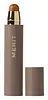
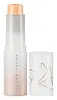
Merit Beauty The Minimalist Perfecting Complexion Foundation and Concealer Stick Versus Fenty Beauty Eaze Drop Blur + Smooth Tint Stick

What's inside
What's inside
 Key Ingredients
Benefits
Concerns
Ingredients Side-by-side
Hydrogenated Polydecene
EmollientCaprylic/Capric Triglyceride
Masking


Octyldodecanol
Emollient
Silica
Abrasive


Polyethylene
Abrasive
Dipentaerythrityl Hexahydroxystearate/Hexastearate/Hexarosinate
Skin ConditioningHydrogenated Polyisobutene
EmollientCopernicia Cerifera Wax


Synthetic Wax
Abrasive
Triethoxycaprylylsilane

Cera Microcristallina
Emulsion StabilisingSorbitan Isostearate
Emulsifying
Pancratium Maritimum Extract
BleachingTocopheryl Acetate
Antioxidant


Dimethicone
Emollient
Caprylyl Glycol
Emollient
Propylene Carbonate
SolventEthylhexylglycerin
Skin Conditioning1,2-Hexanediol
Skin Conditioning
Stearalkonium Hectorite
Gel FormingGlycerin
Humectant
Water
Skin ConditioningMica
Cosmetic ColorantBHT
Antioxidant
CI 77491
Cosmetic ColorantCI 77891
Cosmetic ColorantHydrogenated Polydecene, Caprylic/Capric Triglyceride, Octyldodecanol, Silica, Polyethylene, Dipentaerythrityl Hexahydroxystearate/Hexastearate/Hexarosinate, Hydrogenated Polyisobutene, Copernicia Cerifera Wax, Synthetic Wax, Triethoxycaprylylsilane, Cera Microcristallina, Sorbitan Isostearate, Pancratium Maritimum Extract, Tocopheryl Acetate, Dimethicone, Caprylyl Glycol, Propylene Carbonate, Ethylhexylglycerin, 1,2-Hexanediol, Stearalkonium Hectorite, Glycerin, Water, Mica, BHT, CI 77491, CI 77891
Dimethicone
Emollient
Octyldodecanol
Emollient
Synthetic Wax
Abrasive
Aluminum Starch Octenylsuccinate
Absorbent
Silica
Abrasive
Ethylene/Propylene Copolymer
Abrasive
Disteardimonium Hectorite
StabilisingAstrocaryum Murumuru Seed Butter
Emollient
Pentaerythrityl Tetra-Di-T-Butyl Hydroxyhydrocinnamate
Antioxidant
Caprylic/Capric Triglyceride
Masking
Ricinus Communis Seed Oil
Masking

Sodium Hyaluronate
Humectant


Silica Dimethyl Silylate
EmollientPolyhydroxystearic Acid
Emulsifying
Hydrogenated Castor Oil
Emollient
Psidium Guajava Fruit Extract
AstringentTocopherol
Antioxidant
CI 77891
Cosmetic ColorantIron Oxides
Dimethicone, Octyldodecanol, Synthetic Wax, Aluminum Starch Octenylsuccinate, Silica, Ethylene/Propylene Copolymer, Disteardimonium Hectorite, Astrocaryum Murumuru Seed Butter, Pentaerythrityl Tetra-Di-T-Butyl Hydroxyhydrocinnamate, Caprylic/Capric Triglyceride, Ricinus Communis Seed Oil, Sodium Hyaluronate, Silica Dimethyl Silylate, Polyhydroxystearic Acid, Hydrogenated Castor Oil, Psidium Guajava Fruit Extract, Tocopherol, CI 77891, Iron Oxides
Reviews
Alternatives
Ingredients Explained
These ingredients are found in both products.
Ingredients higher up in an ingredient list are typically present in a larger amount.
Caprylic/Capric Triglyceride (aka MCT Oil) is a lightweight emollient, solvent, and texture enhancer. It is considered a skin-softener by helping to prevent moisture loss.
Though it behaves like an oil, it is not technically one due to its chemical composition. One perk of this ingredient is that it is very stable, resistant to oxidation, and unlikely to go rancid.
In practice, that translates to a long shelf life and a consistently elegant skin feel.
While there is an assumption Caprylic Triglyceride can clog pores due to it being derived from coconut oil, there is no research supporting this. Just patch test if you have concerns.
Fractionated coconut oil and MCT Oil are both listed as Caprylic/Capric Triglyceride according to INCI. This is because INCI names are based on the ingredient’s final chemical composition and not its marketing name or source.
This ingredient is treated as the gold standard fungal acne safe oil. Even though it is coconut derived, the problematic lauric acid is stripped out.
This leaves just caprylic (C8) and capric (C10) acid. These chain lengths actually trend antifungal; a 2020 study found caprylic acid was enough to disrupt Malassezia furfur cell membrane, with a caprylic acid derivative damaging membrane structures at concentrations as low as 0.2%.
Learn more about Caprylic/Capric TriglycerideCi 77891 is a white pigment from Titanium dioxide. It is naturally found in minerals such as rutile and ilmenite.
It's main function is to add a white color to cosmetics. It can also be mixed with other colors to create different shades.
Ci 77891 is commonly found in sunscreens due to its ability to block UV rays.
Learn more about CI 77891Dimethicone is a type of synthetic silicone created from natural materials such as quartz. It is also known as polydimethylsiloxane.
What it does:
Dimethicone comes in different viscosities:
Depending on the viscosity, dimethicone has different properties.
Ingredients lists don't always show which type is used, so we recommend reaching out to the brand if you have questions about the viscosity.
This ingredient is unlikely to cause irritation because it does not get absorbed into skin. However, people with silicone allergies should be careful about using this ingredient.
Note: Dimethicone may contribute to pilling. This is because it is not oil or water soluble, so pilling may occur when layered with products. When mixed with heavy oils in a formula, the outcome is also quite greasy.
Learn more about DimethiconeOctyldodecanol is a fatty alcohol sourced from plant oils like coconut or palm (or made synthetically).
It is:
You'll likely see this in many BHA products because this is the go-to solvent for salicylic acid.
This ingredient is typically used at levels between 2-20%.
Regarding fungal acne:
In 2019, this ingredient was tested against multiple Malassezia species (the yeast that causes fungal acne) and showed no growth.
Silica, also known as silicon dioxide, is a naturally occurring mineral. It is used as a fine, spherical, and porous powder in cosmetics.
Though it has exfoliant properties, the function of silica varies depending on the product.
The unique structure of silica enhances the spreadability and adds smoothness, making it a great texture enhancer.
It is also used as an active carrier, emulsifier, and mattifier due to its ability to absorb excess oil.
In some products, tiny microneedles called spicules are made from silica or hydrolyzed sponge. When you rub them in, they lightly polish away dead skin layers and enhance the penetration of active ingredients.
Learn more about SilicaSynthetic Wax is a manufactured hydrocarbon wax. In formulas, it works as an occlusive emollient that helps reduce water loss and improves the spreadability of products.
Research comparing synthetic wax to traditional mineral-derived products found that formulas containing it perform as well for skin hydration.
It is considered non-comedogenic and vegan-friendly.
This ingredient has a well-established safety record by the CIR Expert Panel for Cosmetic Ingredient Safety.
Synthetic Waxes are straight/branched-chain hydrocarbons with no ester bond or fatty acids. That means there is nothing for the Malassezia yeast to feed on.
Learn more about Synthetic Wax

