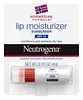
This barrier-repair lip moisturizer is formulated around Bis-Diglyceryl Polyacyladipate-2 and Simmondsia Chinensis Seed Oil to strengthen the lip barrier and hydrate lips.
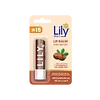
This lip moisturizer is formulated around Ricinus Communis Seed Oil and Bisabolol to hydrate lips.


What's inside
What's inside
 Key Ingredients
Benefits
Concerns
Ingredients Side-by-side
Octyldodecanol
Emollient
Pentaerythrityl Tetraisostearate
Emollient

Hydrogenated Polyisobutene
EmollientBis-Diglyceryl Polyacyladipate-2
Emollient
Ceresin
Emulsion StabilisingEthylhexyl Methoxycinnamate
UV Absorber


Beeswax
Emulsion Stabilising


Polyethylene
Abrasive
Microcrystalline Wax
Emulsion StabilisingDipentaerythrityl Hexahydroxystearate/Hexastearate/Hexarosinate
Skin ConditioningButyl Methoxydibenzoylmethane
UV Absorber
Tocopheryl Acetate
Antioxidant


Ricinus Communis Seed Oil
Masking

Parfum
Masking
Simmondsia Chinensis Seed Oil
Emollient

Isopropyl Titanium Triisostearate
Emollient
Octyldodecanol, Pentaerythrityl Tetraisostearate, Hydrogenated Polyisobutene, Bis-Diglyceryl Polyacyladipate-2, Ceresin, Ethylhexyl Methoxycinnamate, Beeswax, Polyethylene, Microcrystalline Wax, Dipentaerythrityl Hexahydroxystearate/Hexastearate/Hexarosinate, Butyl Methoxydibenzoylmethane, Tocopheryl Acetate, Ricinus Communis Seed Oil, Parfum, Simmondsia Chinensis Seed Oil, Isopropyl Titanium Triisostearate
Ricinus Communis Seed Oil
Masking
Paraffin
Skin Conditioning
Cera Alba
Emollient
Cetyl Palmitate
Emollient
Ethylhexyl Methoxycinnamate
UV Absorber
Cetearyl Alcohol
Emollient
Isopropyl Myristate
Emollient
Cetyl Alcohol
Emollient
Candelilla Cera
Emollient
Cera Microcristallina
Emulsion StabilisingBisabolol
Antioxidant

Isopropyl Palmitate
Emollient
Isopropyl Laurate
EmollientStearic Acid
Cleansing
Palmitic Acid
Emollient
Propylene Glycol
Humectant
Sodium Cetearyl Sulfate
Cleansing
Sodium Sulfate
Citric Acid
Buffering
BHA
Antioxidant
BHT
Antioxidant
Parfum
Masking
Ricinus Communis Seed Oil, Paraffin, Cera Alba, Cetyl Palmitate, Ethylhexyl Methoxycinnamate, Cetearyl Alcohol, Isopropyl Myristate, Cetyl Alcohol, Candelilla Cera, Cera Microcristallina, Bisabolol, Isopropyl Palmitate, Isopropyl Laurate, Stearic Acid, Palmitic Acid, Propylene Glycol, Sodium Cetearyl Sulfate, Sodium Sulfate, Citric Acid, BHA, BHT, Parfum
Ingredients Explained
These ingredients are found in both products.
Ingredients higher up in an ingredient list are typically present in a larger amount.
This ingredient is also known as Octinoxate and is one of the oldest and most widely used chemical UV filters in skincare.
It has a simple job: soap up UVB radiation (290-320 nm), the wavelengths responsible for sunburn and a big chunk of long-term sun damage.
In formulas, it's always paired with a separate UVA filter because octinoxate solely protects skin from UVB.
Because it's an oil-soluble liquid, it's easy to blend into the oil phase of lotions/creams and gives a cosmetically elegant feel.
The one quirk about formulating this ingredient is photostability; the molecule slowly changes shape into a less effective version when sunlight hits it. So the longer you're in the sun, the weaker its protection gets. The drop can be more than 30% in some formulas.
It also doesn't play nice with Avobenzone (the common UVA filter) since avobenzone destabilizes octinoxate and the two degrade each other. But don't worry: brands have solved this issue by adding photostabilizers like Tinosorb S to prevent degradation and keep SPF stable under heavy UV exposure.
The maximum allowed level is 10% in the EU and Australia, 7.5% in the US and Canada, and 20% in Japan.
The Cosmetic Ingredient Review Panel has concluded this ingredient to be safe in cosmetics up to 10%.
One last thing worth knowing for context:
Octinoxate has been the subject of ongoing review in Europe where the Scientific Committee on Consumer Safety's (SCCS) 2025 final opinion is that this ingredient is an endocrine-active substance.
Lab and animal studies suggest it can act a bit like a hormone in the body (mildly mimicking estrogen and slightly blocking male hormones). It's important to know this hasn't really been shown to happen in everyday human use.
This ingredient is also banned in Hawaii over coral reef concerns.
Learn more about Ethylhexyl MethoxycinnamateParfum is a catch-all term for an ingredient or more that is used to give a scent to products.
Also called "fragrance", this ingredient can be a blend of hundreds of chemicals or plant oils. This means every product with "fragrance" or "parfum" in the ingredients list is a different mixture.
For instance, Habanolide is a proprietary trade name for a specific aroma chemical. When used as a fragrance ingredient in cosmetics, most aroma chemicals fall under the broad labeling category of “FRAGRANCE” or “PARFUM” according to EU and US regulations.
The term 'parfum' or 'fragrance' is not regulated in many countries. In many cases, it is up to the brand to define this term.
For instance, many brands choose to label themselves as "fragrance-free" because they are not using synthetic fragrances. However, their products may still contain ingredients such as essential oils that are considered a fragrance by INCI standards.
One example is Calendula flower extract. Calendula is an essential oil that still imparts a scent or 'fragrance'.
Depending on the blend, the ingredients in the mixture can cause allergies and sensitivities on the skin. Some ingredients that are known EU allergens include linalool and citronellol.
Parfum can also be used to mask or cover an unpleasant scent.
The bottom line is: not all fragrances/parfum/ingredients are created equally. If you are worried about fragrances, we recommend taking a closer look at an ingredient. And of course, we always recommend speaking with a professional.
Learn more about ParfumThis ingredient is also known as castor oil. It is a skin conditioning ingredient.
The star component of castor oil is ricinoleic acid, an unusual fatty acid that makes up ~80-92% of its composition.
In skincare, it is an emollient that dries down to a solid film with water-binding properties. This helps keep skin hydrated and helps reduce transepidermal water loss (TEWL).
A 2026 dermatology review pulls together its broader uses:
Human clinical testing found this ingredient to be non-irritating and non-sensitizing.
Because castor oil contains fatty acids in the C11-24 range, this ingredient may not be fungal acne safe.
At this time, the literature does not support castor oil in regrowing hair. A 2022 systematic review found no strong evidence that it supports hair growth and only weak evidence that it improves hair shine.
Castor oil itself carries "perfuming" and "masking" function tags according to the official CosIng database. This is because of its mild odor and odor-dampening properties.
Learn more about Ricinus Communis Seed Oil

