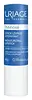
This barrier-repair lip moisturizer is formulated around Butyrospermum Parkii Butter and Borago Officinalis Seed Oil to strengthen the lip barrier and hydrate lips.
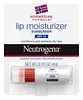
This lip moisturizer is formulated around Ricinus Communis Seed Oil and Bisabolol to hydrate lips.


What's inside
What's inside
 Key Ingredients
Benefits
Concerns
Ingredients Side-by-side
Paraffinum Liquidum
Emollient


Paraffin
Skin Conditioning
Cera Microcristallina
Emulsion StabilisingCopernicia Cerifera Cera
Emollient

Butyrospermum Parkii Butter
Skin Conditioning



C12-13 Alkyl Lactate
EmollientCera Alba
Emollient
Cetyl Alcohol
Emollient

Borago Officinalis Seed Oil
Emollient

Tocopheryl Acetate
Antioxidant


Stearyl Glycyrrhetinate
Skin ConditioningSodium Hyaluronate
Humectant

Tocopherol
Antioxidant
Ascorbyl Palmitate
Antioxidant

BHT
Antioxidant
Ricinus Communis Seed Oil
Masking
Paraffin
Skin Conditioning
Cera Alba
Emollient
Cetyl Palmitate
Emollient
Ethylhexyl Methoxycinnamate
UV Absorber

Cetearyl Alcohol
Emollient
Isopropyl Myristate
Emollient
Cetyl Alcohol
Emollient
Candelilla Cera
Emollient
Cera Microcristallina
Emulsion StabilisingBisabolol
Antioxidant
Isopropyl Palmitate
Emollient
Isopropyl Laurate
EmollientStearic Acid
Cleansing
Palmitic Acid
Emollient
Propylene Glycol
Humectant
Sodium Cetearyl Sulfate
Cleansing
Sodium Sulfate
Citric Acid
Buffering
BHA
Antioxidant
BHT
Antioxidant
Parfum
Masking
Ricinus Communis Seed Oil, Paraffin, Cera Alba, Cetyl Palmitate, Ethylhexyl Methoxycinnamate, Cetearyl Alcohol, Isopropyl Myristate, Cetyl Alcohol, Candelilla Cera, Cera Microcristallina, Bisabolol, Isopropyl Palmitate, Isopropyl Laurate, Stearic Acid, Palmitic Acid, Propylene Glycol, Sodium Cetearyl Sulfate, Sodium Sulfate, Citric Acid, BHA, BHT, Parfum
Reviews
Ingredients Explained
These ingredients are found in both products.
Ingredients higher up in an ingredient list are typically present in a larger amount.
BHT is a synthetic antioxidant and preservative.
As an antioxidant, it helps your body fight off free-radicals. Free-radicals are molecules that may damage your skin cells.
As a preservative, it is used to stabilize products and prevent them from degrading. Specifically, BHT prevents degradation from oxidation.
The concerns related to BHT come from oral studies; this ingredient is currently allowed for use by both the FDA and EU.
However, it was recently restricted for use in the UK as of April 2024.
Learn more about BHTThis is another name for beeswax; it's a natural wax produced by honey bees to build their honeycomb.
Because it forms a protective layer on your skin, it can help lock in moisture and reduce water loss. It is also widely used as a thickener and emulsifier in lip balms and lotions. Research suggests beeswax containing moisturizers can support skin barrier integrity.
In comedogenic testing, Beeswax scored a 0-2, which is on the low end. Whether or not a product clogs your pores really comes down to the formula as a whole (not any single ingredient on its own) and your skin.
Beeswax is not vegan since it is animal-derived. It cannot be removed with water, but can be taken off with an oil cleanser.
People with a known Propolis allergy also report to have reactions from beeswax.
Beeswax's wax esters are derived primarily from palmitic and oleic acid (C16 and C18:1). Both of these fall within the C11-C24 feeding window.
The Malassezia yeast can potentially cleave these esters and release usable fatty acids, so this ingredient may not be fungal acne safe. However, not everyone will react to this ingredient.
Learn more about Cera AlbaCera Microcristallina, aka microcrystalline wax, is a petroleum-derived wax that helps thicken texture and stabilize the oils in formulas.
It also has mild occlusive properties that creates a film on skin to slow down water loss.
The CIR Expert Panel has concluded this ingredient to be safe as used in cosmetics.
This ingredient is refined to a cosmetic grade with high purity. It is chemically inert, stable, and doesn't clog pores (petroleum has a comedogenic rating of 0).
Malassezia feeds on fatty acids roughly in the C11-24 range and this ingredient contains none of those. Since there's no plausible food source for it here, this ingredient is fungal acne safe.
Learn more about Cera MicrocristallinaCetyl Alcohol is a fatty alcohol. Fatty Alcohols are most often used as an emollient or to thicken a product.
Its main roles are:
Though it has "alcohol" in the name, it is not related to denatured alcohol or ethyl alcohol.
The FDA allows products labeled "alcohol-free" to have fatty alcohols.
This ingredient may not be fungal acne safe. It is a primary fatty alcohol with a chain length above 12 carbons. A study from 2019 show Malassezia can feed on fatty alcohols in this range, so it may trigger fungal acne in those prone to it.
Learn more about Cetyl AlcoholParaffin is a solid wax that pulls its weight as an emollient, occlusive, and consistency-booster.
It softens skin and lays down a protective film to slow water loss and gives products a stable body and structure.
The cosmetic grade stuff is highly refined with a solid safety record. The CIR Expert Panel has repeatedly reaffirmed this ingredient to be safe in current practices of use and concentration.
The worry about carcinogenic compounds only applies to industrial grades, not the purified version used in skincare.
Despite its reputation, the highly reformed form is non-comedogenic and doesn't penetrate deeply into skin.
The good news for fungal-acne prone folks: the Malassezia yeast feeds on fatty acids and lipids and paraffin doesn't contain any of these (so there's nothing for the yeast to metabolize). This ingredient is considered fungal acne safe.
Learn more about Paraffin

