
What's inside
What's inside
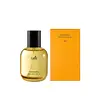 Key Ingredients
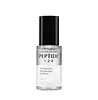
Benefits
Concerns
Ingredients Side-by-side
Cyclopentasiloxane
Emollient
C12-15 Alkyl Benzoate
AntimicrobialDimethiconol
Emollient
Dimethicone
Emollient
Argania Spinosa Kernel Oil
Emollient







Limnanthes Alba Seed Oil
Skin Conditioning
Cyclohexasiloxane
Emollient
Camellia Japonica Seed Oil
Emollient
Corylopsis Coreana Extract
Skin ConditioningWater
Skin ConditioningLactobacillus/Rice Ferment
Skin Conditioning
Angelica Koreana Root Extract
Skin ConditioningTocopheryl Acetate
Antioxidant


Butylene Glycol
Humectant
1,2-Hexanediol
Skin Conditioning
Keratin
Skin ConditioningElastin
Skin ConditioningGelatin
Parfum
Masking



Citronellol
Perfuming
Geraniol
Perfuming
Citral
Perfuming
Cyclopentasiloxane, C12-15 Alkyl Benzoate, Dimethiconol, Dimethicone, Argania Spinosa Kernel Oil, Limnanthes Alba Seed Oil, Cyclohexasiloxane, Camellia Japonica Seed Oil, Corylopsis Coreana Extract, Water, Lactobacillus/Rice Ferment, Angelica Koreana Root Extract, Tocopheryl Acetate, Butylene Glycol, 1,2-Hexanediol, Keratin, Elastin, Gelatin, Parfum, Citronellol, Geraniol, Citral
Dimethicone
Emollient
Hydrogenated Poly(C6-14 Olefin)
EmollientCetyl Ethylhexanoate
EmollientDicaprylyl Carbonate
EmollientDimethiconol
Emollient
Disiloxane
Skin Conditioning
Dicaprylyl Ether
Emollient
Aminopropyl Dimethicone
Argania Spinosa Kernel Oil
Emollient
Hexyldecanol
Emollient
Parfum
Masking
Hexyl Cinnamal
Perfuming
Limonene
Perfuming
Citronellol
Perfuming
Tocopherol
Antioxidant

Linalool
Perfuming
Benzyl Benzoate
Antimicrobial
Olea Europaea Fruit Oil
Masking
Camellia Japonica Seed Oil
Emollient
Simmondsia Chinensis Seed Oil
Emollient
Oryza Sativa Bran Oil
Emollient
Vitis Vinifera Seed Oil
Emollient
Macadamia Ternifolia Seed Oil
Emollient
Tripeptide-13
Skin Conditioning
Dimethicone, Hydrogenated Poly(C6-14 Olefin), Cetyl Ethylhexanoate, Dicaprylyl Carbonate, Dimethiconol, Disiloxane, Dicaprylyl Ether, Aminopropyl Dimethicone, Argania Spinosa Kernel Oil, Hexyldecanol, Parfum, Hexyl Cinnamal, Limonene, Citronellol, Tocopherol, Linalool, Benzyl Benzoate, Olea Europaea Fruit Oil, Camellia Japonica Seed Oil, Simmondsia Chinensis Seed Oil, Oryza Sativa Bran Oil, Vitis Vinifera Seed Oil, Macadamia Ternifolia Seed Oil, Tripeptide-13
Reviews
Ingredients Explained
These ingredients are found in both products.
Ingredients higher up in an ingredient list are typically present in a larger amount.
You may know this ingredient as argan oil. It has emollient and skin conditioning properties that help soften skin and reinforce the lipid barrier.
The fatty acid profile of argan oil is roughly 45-55% oleic acid, 28-36% linoleic acid, 10-15% palmitic acid, and 5-7% stearic acid. It also contains vitamin E, sterols, squalene, and polyphenols like ferulic acid.
Two clinical studies in postmenopausal women found that applying argan oil for 60 days significantly improved skin elasticity and moisturization (reduced transepidermal water loss and increased epidermal water content).
Since it is high in oleic and linoleic acid, this ingredient may not be fungal acne safe. Both of these fall in the C11-C24 range that Malassezia yeast can metabolize.
Learn more about Argania Spinosa Kernel OilThis ingredient is also known as Tsubaki oil, or the fixed oil from the seeds of the Japanese camellia.
It's basically a fatty acid delivery system (~75-85% oleic acid) plus some minor extras like squalene, tocopherols, and phytosterols.
That profile makes it a classic emollient; it works by hanging out with the skin's surface lipids, softens, and slows down water loss.
The most cited study on it was done on skin cells in a dish where this oil got them to make more of the building blocks for collagen while also slowing down the enzyme that breaks collagen down. Researchers tested this on human skin too; it didn't cause irritation and helped skin hold onto moisture better.
Another study done on cells and mice found this oil quieted down some of the body's inflammation signals.
These studies are still small, early, and not done on humans, so it's best to think of this ingredient as a great supporting ingredient for the rest of your routine and not the main active.
Concentrations can range from 1-5% in serums to 100% as a single face oil (how it's most traditionally used).
Because this ingredient is a triglyceride of long-chain fatty acids, this ingredient may not be Malassezia safe.
Allergies to this protein are quite rare as the refined seed oil contains very little residual protein. Human irritation testing also came back clean. But it is a plant and as with any botanical ingredient, contact allergy is possible.
Learn more about Camellia Japonica Seed OilCitronellol is used to add fragrance/parfum to a product. It is often derived from plants such as roses. In fact, it can be found in many essential oils including geranium, lavender, neroli, and more. The scent of Citronellol is often described as "fresh, grassy, and citrus-like".
Since the Citronellol molecule is already unstable, Citronellol becomes irritating on the skin when exposed to air.
Citronellol is a modified terpene. Terpenes are unsaturated hydrocarbons found in plants. They make up the primary part of essential oils.
Citronellol is not able to be absorbed into deeper layers of the skin. It has low permeability,
Citronellol is also a natural insect repellent.
Learn more about CitronellolDimethicone is a type of synthetic silicone created from natural materials such as quartz. It is also known as polydimethylsiloxane.
What it does:
Dimethicone comes in different viscosities:
Depending on the viscosity, dimethicone has different properties.
Ingredients lists don't always show which type is used, so we recommend reaching out to the brand if you have questions about the viscosity.
This ingredient is unlikely to cause irritation because it does not get absorbed into skin. However, people with silicone allergies should be careful about using this ingredient.
Note: Dimethicone may contribute to pilling. This is because it is not oil or water soluble, so pilling may occur when layered with products. When mixed with heavy oils in a formula, the outcome is also quite greasy.
Learn more about DimethiconeDimethiconol is a silicone that resembles the popular dimethicone. Like other silicones, it is an emollient. Emollients create a thin film on skin to prevent moisture from escaping.
This ingredient helps to create a silky texture and improve spreadability. Due to its high molecular weight and thickness, it is often combined with cyclopentasiloxane.
Parfum is a catch-all term for an ingredient or more that is used to give a scent to products.
Also called "fragrance", this ingredient can be a blend of hundreds of chemicals or plant oils. This means every product with "fragrance" or "parfum" in the ingredients list is a different mixture.
For instance, Habanolide is a proprietary trade name for a specific aroma chemical. When used as a fragrance ingredient in cosmetics, most aroma chemicals fall under the broad labeling category of “FRAGRANCE” or “PARFUM” according to EU and US regulations.
The term 'parfum' or 'fragrance' is not regulated in many countries. In many cases, it is up to the brand to define this term.
For instance, many brands choose to label themselves as "fragrance-free" because they are not using synthetic fragrances. However, their products may still contain ingredients such as essential oils that are considered a fragrance by INCI standards.
One example is Calendula flower extract. Calendula is an essential oil that still imparts a scent or 'fragrance'.
Depending on the blend, the ingredients in the mixture can cause allergies and sensitivities on the skin. Some ingredients that are known EU allergens include linalool and citronellol.
Parfum can also be used to mask or cover an unpleasant scent.
The bottom line is: not all fragrances/parfum/ingredients are created equally. If you are worried about fragrances, we recommend taking a closer look at an ingredient. And of course, we always recommend speaking with a professional.
Learn more about Parfum

