KUMANO COSME Hatomugi UV Care & Moisturizing The UV Milky Gel SPF 50+ PA++++ Versus KUMANO COSME Reihaku Hatomugi The Tone Up Milky Gel UV Care SPF 50+
This chemical sunscreen covers most of the UV range, lighter on the deep UVA that drives aging.
This hybrid sunscreen covers the full UV range and blocks ~98% of UVB at SPF 50.

What's inside
What's inside
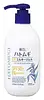 Key Ingredients
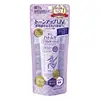
Benefits
Concerns
Ingredients Side-by-side
Water
Skin ConditioningEthylhexyl Methoxycinnamate 9.5%
UV Absorber


Alcohol
Antimicrobial



Butyl Methoxydibenzoylmethane 1%
UV Absorber
Octocrylene 1%
UV Absorber
Steareth-6
EmulsifyingDimethicone
Emollient

Butylene Glycol
Humectant

Carbomer
Emulsion StabilisingCoix Lacryma-Jobi Ma-Yuen Seed Extract
Skin ConditioningRosmarinus Officinalis Leaf Extract
AntimicrobialPrunus Persica Leaf Extract
Emollient
Aloe Barbadensis Leaf Extract
Emollient

Citrus Junos Peel Oil
Astringent
Cocos Nucifera Oil
Masking




Sodium Hyaluronate
Humectant

Ceramide Ng
Skin Conditioning
Xanthan Gum
EmulsifyingTetrasodium EDTA
ChelatingSodium Hydroxide 0.1%
BufferingBHT
Antioxidant
Methylparaben 0.2%
Preservative

Ethylparaben 0.01%
Preservative
Phenoxyethanol 0.9%
Preservative
Water, Ethylhexyl Methoxycinnamate 9.5%, Alcohol, Butyl Methoxydibenzoylmethane 1%, Octocrylene 1%, Steareth-6, Dimethicone, Butylene Glycol, Carbomer, Coix Lacryma-Jobi Ma-Yuen Seed Extract, Rosmarinus Officinalis Leaf Extract, Prunus Persica Leaf Extract, Aloe Barbadensis Leaf Extract, Citrus Junos Peel Oil, Cocos Nucifera Oil, Sodium Hyaluronate, Ceramide Ng, Xanthan Gum, Tetrasodium EDTA, Sodium Hydroxide 0.1%, BHT, Methylparaben 0.2%, Ethylparaben 0.01%, Phenoxyethanol 0.9%
Water
Skin ConditioningEthylhexyl Methoxycinnamate
UV Absorber
Alcohol
Antimicrobial
Titanium Dioxide
Cosmetic Colorant
Diethylamino Hydroxybenzoyl Hexyl Benzoate
UV Filter
Octocrylene
UV Absorber
Butylene Glycol
Humectant
Dimethicone
Emollient
Steareth-6
EmulsifyingCarbomer
Emulsion StabilisingAcrylates/C10-30 Alkyl Acrylate Crosspolymer
Emulsion StabilisingAluminum Hydroxide
EmollientHydrated Silica
Abrasive
Silica
Abrasive

Mica
Cosmetic ColorantRosmarinus Officinalis Leaf Extract
AntimicrobialPrunus Persica Leaf Extract
Emollient
Aloe Barbadensis Leaf Extract
Emollient
Cannabis Sativa Seed Extract
EmollientCitrus Junos Peel Oil
Astringent
Elaeis Guineensis Oil
Emollient
Xanthan Gum
EmulsifyingTetrasodium EDTA
ChelatingSodium Hydroxide
BufferingBHT
Antioxidant
Phenoxyethylparaben
Antimicrobial
CI 42090
Cosmetic ColorantCI 17200
Cosmetic ColorantParfum
Masking
Water, Ethylhexyl Methoxycinnamate, Alcohol, Titanium Dioxide, Diethylamino Hydroxybenzoyl Hexyl Benzoate, Octocrylene, Butylene Glycol, Dimethicone, Steareth-6, Carbomer, Acrylates/C10-30 Alkyl Acrylate Crosspolymer, Aluminum Hydroxide, Hydrated Silica, Silica, Mica, Rosmarinus Officinalis Leaf Extract, Prunus Persica Leaf Extract, Aloe Barbadensis Leaf Extract, Cannabis Sativa Seed Extract, Citrus Junos Peel Oil, Elaeis Guineensis Oil, Xanthan Gum, Tetrasodium EDTA, Sodium Hydroxide, BHT, Phenoxyethylparaben, CI 42090, CI 17200, Parfum
Reviews
Ingredients Explained
These ingredients are found in both products.
Ingredients higher up in an ingredient list are typically present in a larger amount.
This ingredient is also called ethanol or ethyl alcohol. It is denatured, meaning made undrinkable for cosmetic use.
In formulas, it:
Is it bad for your skin?
The answer comes down to concentration. Patch and wash studies have found highly concentrated alcohol-based hand rubs (60-100%) cause less barrier disruption than washing with a basic detergent like SLS. The only measurable effect in these studies was a temporary dip in skin hydration.
Concentrations below 12-15% in leave-on cosmetics is generally well-tolerated. Concentrations above start to see increased transepidermal water loss (TEWL) and reduced hydration.
In concentrations about 58%, it creates temporary channels in your skin's lipid layers to become more permeable and allow other ingredients to slip through easily.
This ingredient can be up to 80% of the formula in alcohol-based perfumes.
Overall, this ingredient is probably harmless if found lower down an ingredients list but worth side-eyeing if it's high up (especially if your barrier is already struggling).
Alcohol can worsen dry skin, eczema, and oily skin, especially at higher concentrations. This is because it can increase transepidermal water loss and decrease hydration to disrupt the skin barrier.
According to the National Rosacea Society based in the US, you should be mindful of products with these alcohols in the top half of ingredients.
True allergic contact dermatitis to ethanol is uncommon, but be sure to patch test if you have dry or sensitive skin.
Learn more about AlcoholAloe Barbadensis Leaf Extract is a botanical extract pulled from the leaves of aloe vera and one of the most studied plant ingredients in cosmetics.
The inner leaf gel it comes from is mostly water (~99-99.5%) and the remaining fraction is made up of pretty good stuff: polysaccharides, vitamins, phenolics, and enzymes.
Its headline job is hydration.
The star polysaccharide in aloe, acemannan, is a humectant that retains moisture and helps reduce trans-epidermal water loss.
Aloe also has real soothing credentials; it contains anti-inflammatory compounds like bradykinase and C-glucosyl chromone that help calm irritation and redness.
On the repair side, lab work shows that acemannan wakes up your skin's repair cells (fibroblasts), prompting them to multiply and speed up healing.
There's some human data for cosmetic benefit too: a cream containing 10% Aloe Barbadensis leaf extract improved skin hydration and elasticity in a real-use study.
Safety-wise, this ingredient is well-regarded with just one rare downside; there have been some case reports of acute eczema, contact urticaria, and dermatitis in people who applied aloe-derived ingredients topically. Those with a known aloe or Liliaceae sensitivity should patch test.
Typical use levels range widely, from under 1% up to 90%+ depending on the format and the effect you are after.
Learn more about Aloe Barbadensis Leaf ExtractBHT is a synthetic antioxidant and preservative.
As an antioxidant, it helps your body fight off free-radicals. Free-radicals are molecules that may damage your skin cells.
As a preservative, it is used to stabilize products and prevent them from degrading. Specifically, BHT prevents degradation from oxidation.
The concerns related to BHT come from oral studies; this ingredient is currently allowed for use by both the FDA and EU.
However, it was recently restricted for use in the UK as of April 2024.
Learn more about BHTButylene Glycol (or BG) is used within cosmetic products for a few different reasons:
Overall, Butylene Glycol is a safe and well-rounded ingredient that works well with other ingredients.
Though this ingredient works well with most skin types, some people with sensitive skin may experience a reaction such as allergic rashes, closed comedones, or itchiness.
Learn more about Butylene GlycolCarbomer is a synthetic thickening and gelling agent. It's basically the ingredient that gives a lot of serums, gels, creams, and sunscreens their smooth, non-sticky texture.
Although legally permitted at very high levels, carbomers are normally used at concentrations below 1%.
It also needs to be neutralized to actually thicken, and because it is a large molecule, it doesn't really penetrate the skin barrier.
Allergy-wise, the risk is very low. Clinical studies show carbomers have low potential for skin irritation/sensitization even at concentrations up to 100%.
A 2024 UK study patch-tested 1,302 patients and found true allergy to the parent group of carbomer to be rare with no confirmed relevant reactions.
Learn more about CarbomerCitrus Junos Peel Oil comes from the Citrus Junos tree, or the Yuzu plant.
Citrus peels contain Vitamin C, antioxidants, bioflavonoids, potassium, and calcium. These components help with anti-aging.
For those with allergies, Yuzu does contain limonene and linalool. Both these compounds may cause skin sensitivity. If you have concerns, we recommend speaking with a professional.
Learn more about Citrus Junos Peel OilDimethicone is a type of synthetic silicone created from natural materials such as quartz. It is also known as polydimethylsiloxane.
What it does:
Dimethicone comes in different viscosities:
Depending on the viscosity, dimethicone has different properties.
Ingredients lists don't always show which type is used, so we recommend reaching out to the brand if you have questions about the viscosity.
This ingredient is unlikely to cause irritation because it does not get absorbed into skin. However, people with silicone allergies should be careful about using this ingredient.
Note: Dimethicone may contribute to pilling. This is because it is not oil or water soluble, so pilling may occur when layered with products. When mixed with heavy oils in a formula, the outcome is also quite greasy.
Learn more about DimethiconeThis ingredient is also known as Octinoxate and is one of the oldest and most widely used chemical UV filters in skincare.
It has a simple job: soap up UVB radiation (290-320 nm), the wavelengths responsible for sunburn and a big chunk of long-term sun damage.
In formulas, it's always paired with a separate UVA filter because octinoxate solely protects skin from UVB.
Because it's an oil-soluble liquid, it's easy to blend into the oil phase of lotions/creams and gives a cosmetically elegant feel.
The one quirk about formulating this ingredient is photostability; the molecule slowly changes shape into a less effective version when sunlight hits it. So the longer you're in the sun, the weaker its protection gets. The drop can be more than 30% in some formulas.
It also doesn't play nice with Avobenzone (the common UVA filter) since avobenzone destabilizes octinoxate and the two degrade each other. But don't worry: brands have solved this issue by adding photostabilizers like Tinosorb S to prevent degradation and keep SPF stable under heavy UV exposure.
The maximum allowed level is 10% in the EU and Australia, 7.5% in the US and Canada, and 20% in Japan.
The Cosmetic Ingredient Review Panel has concluded this ingredient to be safe in cosmetics up to 10%.
One last thing worth knowing for context:
Octinoxate has been the subject of ongoing review in Europe where the Scientific Committee on Consumer Safety's (SCCS) 2025 final opinion is that this ingredient is an endocrine-active substance.
Lab and animal studies suggest it can act a bit like a hormone in the body (mildly mimicking estrogen and slightly blocking male hormones). It's important to know this hasn't really been shown to happen in everyday human use.
This ingredient is also banned in Hawaii over coral reef concerns.
Learn more about Ethylhexyl MethoxycinnamateOctocrylene is an oil-soluble organic UV filter that mainly absorbs UVB and short wave UVA II light.
Its real superpower is teamwork: octocrylene is remarkably photostable and is most famous for stabilizing avobenzone (the workhorse UVA filter).
This ingredient is commonly used to enhance both UVB and UVA protection due to its unique property in stabilizing avobenzone. It also pulls double duty by boosting water resistance and giving formulas a smooth, spreadable feel.
The EU's Scientific Committee on Consumer Safety (SCCS) has deemed octocrylene to be safe as a UV-filter at concentrations up to 10% (capped at 9% in propellant sprays). The US also permits it up to 10%.
Two things worth knowing:
You'll usually see this ingredient used in concentrations between 2-10% (higher amounts when used as a stabilizer for avobenzone).
Learn more about OctocrylenePrunus Persica Leaf Extract comes from the leaves of the peach tree.
Peach leaves contain antioxidants such as ferulic acid.
As an emollient, peach leaves help soften and moisturize your skin. Emollients create a barrier on the skin to prevent moisture from escaping. This helps keep your skin hydrated.
Learn more about Prunus Persica Leaf ExtractThis is a botanical extract from the rosemary plant (the same one you cook with). In skincare, it mostly works as a skin conditioning agent.
Its activity comes from a handful of polyphenols, carnosic acid, carnosol, and rosmarinic acid. Almost 90% of the antioxidant activity of this ingredient can be attributed to canosol and carnosic acid.
These compounds protect your skin two ways:
1) They fight off free radicals, or the unstable molecules from things like sun and pollution that age and damage skin.
2) They help calm inflammation by switching off the chemical signals that tell skin to get red and irritated.
Lab studies also suggest that rosmarinic acid may help protect collagen and slow sugar-related damage to it.
The Cosmetic Ingredient Review has concluded rosemary-derived ingredients to be safe when formulated to be non-sensitizing.
Rosemary can occasionally cause allergic contact dermatitis (due to carnosol), so be sure to patch test if you have reactive or fragrance-sensitive skin.
Learn more about Rosmarinus Officinalis Leaf ExtractSodium Hydroxide is also known as lye or caustic soda. It is used to adjust the pH of products; many ingredients require a specific pH to be effective.
In small amounts, sodium hydroxide is considered safe to use. However, large amounts may cause chemical burns due to its high alkaline.
Your skin has a natural pH and acid mantle. This acid mantle helps prevent harmful bacteria from breaking through. The acid mantle also helps keep your skin hydrated.
"Alkaline" refers to a high pH level. A low pH level would be considered acidic.
Learn more about Sodium HydroxideWe don't have a description for Steareth-6 yet.
Tetrasodium EDTA is the salt formed from neutralizing ethylenediamine tetraacetic acid with sodium hydroxide. It is a chelating agent and used to prevent metal ions from binding to other ingredients. This helps keep the product and ingredients stable.
Tetrasodium EDTA comes as a white solid and is soluble in water.
Water. It's the most common cosmetic ingredient of all. You'll usually see it at the top of ingredient lists, meaning that it makes up the largest part of the product.
So why is it so popular? Water most often acts as a solvent - this means that it helps dissolve other ingredients into the formulation.
You'll also recognize water as that liquid we all need to stay alive. If you see this, drink a glass of water. Remember to stay hydrated!
Learn more about WaterXanthan gum is used as a stabilizer and thickener within cosmetic products. It helps give products a sticky, thick feeling - preventing them from being too runny.
On the technical side of things, xanthan gum is a polysaccharide - a combination consisting of multiple sugar molecules bonded together.
Xanthan gum is a pretty common and great ingredient. It is a natural, non-toxic, non-irritating ingredient that is also commonly used in food products.
Learn more about Xanthan Gum

