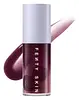
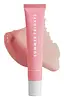
This barrier-repair lip moisturizer is formulated around Butyrospermum Parkii Butter and Sodium Hyaluronate to strengthen the lip barrier and hydrate lips.

What's inside
What's inside
 Key Ingredients
No key ingredients
Benefits
Concerns
Ingredients Side-by-side
Polyglyceryl-2 Triisostearate
Emulsifying

Polyglyceryl-2 Isostearate/Dimer Dilinoleate Copolymer
EmollientDiphenyl Dimethicone
Emollient
Silica Dimethyl Silylate
EmollientPrunus Avium Seed Oil
Emollient


Simmondsia Chinensis Seed Oil
Emollient


Dextrin Palmitate
Emulsifying
Rosa Canina Fruit Oil
Emollient
Malpighia Glabra Fruit Extract
Skin ConditioningPrunus Serotina Fruit Extract
MaskingRaphanus Sativus Root Extract
AstringentMaltodextrin
Absorbent
Citric Acid
Buffering

Water
Skin ConditioningBenzyl Alcohol
Perfuming





Benzyl Benzoate
Antimicrobial
Dehydroacetic Acid
Preservative
Butylene Glycol
Humectant
1,2-Hexanediol
Skin Conditioning
Aroma
Polyglyceryl-2 Triisostearate, Polyglyceryl-2 Isostearate/Dimer Dilinoleate Copolymer, Diphenyl Dimethicone, Silica Dimethyl Silylate, Prunus Avium Seed Oil, Simmondsia Chinensis Seed Oil, Dextrin Palmitate, Rosa Canina Fruit Oil, Malpighia Glabra Fruit Extract, Prunus Serotina Fruit Extract, Raphanus Sativus Root Extract, Maltodextrin, Citric Acid, Water, Benzyl Alcohol, Benzyl Benzoate, Dehydroacetic Acid, Butylene Glycol, 1,2-Hexanediol, Aroma
Phytosteryl/Isostearyl/Cetyl/Stearyl/Behenyl Dimer Dilinoleate
Skin Conditioning
Diisostearyl Malate
EmollientHydrogenated Polyisobutene
EmollientPolybutene
Hydrogenated Poly(C6-14 Olefin)
EmollientButyrospermum Parkii Butter
Skin Conditioning
Cera Microcristallina
Emulsion StabilisingOctyldodecanol
Emollient
Synthetic Wax
Abrasive
Disteardimonium Hectorite
StabilisingAstrocaryum Murumuru Seed Butter
Emollient
Sodium Hyaluronate
Humectant


Tocopherol
Antioxidant


Propylene Carbonate
SolventPolyglyceryl-2 Diisostearate
Emulsifying
Aluminum Hydroxide
EmollientParfum
Masking
Mica
Cosmetic ColorantBHT
Antioxidant
Benzyl Alcohol
Perfuming
Benzyl Benzoate
Antimicrobial
CI 15850
Cosmetic ColorantCI 45410
Cosmetic ColorantCI 77891
Cosmetic ColorantPhytosteryl/Isostearyl/Cetyl/Stearyl/Behenyl Dimer Dilinoleate, Diisostearyl Malate, Hydrogenated Polyisobutene, Polybutene, Hydrogenated Poly(C6-14 Olefin), Butyrospermum Parkii Butter, Cera Microcristallina, Octyldodecanol, Synthetic Wax, Disteardimonium Hectorite, Astrocaryum Murumuru Seed Butter, Sodium Hyaluronate, Tocopherol, Propylene Carbonate, Polyglyceryl-2 Diisostearate, Aluminum Hydroxide, Parfum, Mica, BHT, Benzyl Alcohol, Benzyl Benzoate, CI 15850, CI 45410, CI 77891
Reviews
Ingredients Explained
These ingredients are found in both products.
Ingredients higher up in an ingredient list are typically present in a larger amount.
Benzyl Alcohol is an aromatic alcohol with several roles: it's a preservative, solvent, and mild fragrance component with a floral scent.
This ingredient has been deemed safe for use in cosmetic formulations at concentrations up to 5%, and up to 10% in hair dyes. You'll typically see 0.5-2% in most rinse-off or leave-on products.
As a preservative, it works by disrupting the membrane of microbial proteins. This helps keep bacteria and fungi from growing in your products.
The sensitization picture is actually quite assuring as well:of nearly 71,000 patients patch tested with benzyl alcohol, only 0.21% showed a positive reaction with most of them being weakly positive.
This led researchers to conclude that benzyl alcohol cannot be regarded as a significant contact allergen.
It is worth noting this ingredient is classified as one of the EU's regulated fragrance allergens and restricted to 1% in finished products.
Labels must also declare it in concentrations above 0.001% in leave-on products and 0.01% in rinse-off products.
At concentrations around 5%, localized redness and itching can appear as a direct irritant response and not as a true allergic reaction.
Learn more about Benzyl AlcoholBenzyl Benzoate is usually created from the condensation of benzoic acid and benzyl alcohol. It is used as a preservative, solvent, and has a floral/balsamic scent in large amounts.
As a preservative, Benzyl Benzoate works against bacteria and fungus. It is often used to treat scabies and lice in medicine.
Solvents are used to keep ingredients together in a product. They can help dissolve ingredients to stable bases or help evenly distribute ingredients throughout the product.
Due to its fragrance, Benzyl Benzoate can be sensitizing and may cause contact dermatitis. It is a known EU allergen. We recommend speaking with a professional if you have any concerns.
Benzyl Benzoate can be naturally found in cranberries and peaches.
Learn more about Benzyl Benzoate

