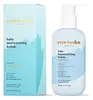
This barrier-repair moisturizer is formulated around Aloe Barbadensis Leaf Juice Powder and Persea Gratissima Oil to strengthen the skin barrier and hydrate skin.

What's inside
What's inside
 Key Ingredients
Benefits
Concerns
Ingredients Side-by-side
Water
Skin ConditioningCocos Nucifera Oil
Masking








Persea Gratissima Oil
Skin Conditioning
Vitis Vinifera Seed Oil
Emollient
Dimethicone
Emollient

Glycerin
Humectant
1,2-Hexanediol
Skin Conditioning
Butyrospermum Parkii Butter
Skin Conditioning
Colloidal Oatmeal
Absorbent
Glyceryl Stearate
Emollient
Cetearyl Olivate
Sorbitan Olivate
Emulsifying
Stearic Acid
Cleansing
Helianthus Annuus Seed Oil Unsaponifiables
Emollient
Cucumis Sativus Fruit Extract
Emollient
Chenopodium Quinoa Seed Extract
Skin Conditioning
Sodium Stearoyl Glutamate
CleansingCarbomer
Emulsion StabilisingHydroxyacetophenone
Antioxidant
Sodium Hydroxide
BufferingWater, Cocos Nucifera Oil, Persea Gratissima Oil, Vitis Vinifera Seed Oil, Dimethicone, Glycerin, 1,2-Hexanediol, Butyrospermum Parkii Butter, Colloidal Oatmeal, Glyceryl Stearate, Cetearyl Olivate, Sorbitan Olivate, Stearic Acid, Helianthus Annuus Seed Oil Unsaponifiables, Cucumis Sativus Fruit Extract, Chenopodium Quinoa Seed Extract, Sodium Stearoyl Glutamate, Carbomer, Hydroxyacetophenone, Sodium Hydroxide
Water
Skin ConditioningIsononyl Isononanoate
EmollientGlycerin
Humectant
Heptyl Undecylenate
EmollientGlyceryl Stearate Citrate
Emollient
Caprylic/Capric Triglyceride
Masking
Polyglyceryl-3 Stearate
Emulsifying
Cetyl Alcohol
Emollient
Aloe Barbadensis Leaf Juice Powder
Skin Conditioning
Acrylates/C10-30 Alkyl Acrylate Crosspolymer
Emulsion StabilisingPersea Gratissima Oil
Skin Conditioning
Butyrospermum Parkii Butter
Skin Conditioning
Glucose
Humectant
Hydrolyzed Pea Protein
EmollientSodium Chloride
MaskingSodium Succinate
BufferingOenothera Biennis Oil
Emollient
Hoya Lacunosa Flower Extract
Skin ConditioningAnthemis Nobilis Flower Extract
Masking
Hydrogenated Lecithin
Emulsifying
Arginine
Masking
Tocopheryl Acetate
Antioxidant

Tocopherol
Antioxidant

Sodium Phytate
ChelatingPhenoxyethanol
Preservative
Water, Isononyl Isononanoate, Glycerin, Heptyl Undecylenate, Glyceryl Stearate Citrate, Caprylic/Capric Triglyceride, Polyglyceryl-3 Stearate, Cetyl Alcohol, Aloe Barbadensis Leaf Juice Powder, Acrylates/C10-30 Alkyl Acrylate Crosspolymer, Persea Gratissima Oil, Butyrospermum Parkii Butter, Glucose, Hydrolyzed Pea Protein, Sodium Chloride, Sodium Succinate, Oenothera Biennis Oil, Hoya Lacunosa Flower Extract, Anthemis Nobilis Flower Extract, Hydrogenated Lecithin, Arginine, Tocopheryl Acetate, Tocopherol, Sodium Phytate, Phenoxyethanol
Reviews
Ingredients Explained
These ingredients are found in both products.
Ingredients higher up in an ingredient list are typically present in a larger amount.
This ingredient is also known as shea butter. It is a plant-derived extract from the nuts of the Africa shea tree and one of the most well-studied emollients.
Because it has a high concentration of fatty acids (primarily oleic, stearic, and linoleic) it is able to form a protective barrier on the skin's surface. This helps seal in moisture and prevents transepidermal water loss (TEWL).
In vitro research found an increase in skin hydration by 58% and a decrease in TEWL by 37.8% after 24 hours of applying this ingredient (pretty impressive for a single ingredient!).
Besides hydration, shea butter also contains triterpenes that have anti-inflammatory potential. In particule, lupeol cinnamate has shown the highest anti-inflammatory activity in vivo.
Shea butter also contains vitamins A and E which may contribute to antioxidant activity.
While Shea Butter has an SPF rating of about 3-4, it is not a sunscreen replacement.
This ingredient may not be fungal acne safe because its fatty acids fall within the C11-C24 range that the Malassezia yeast can metabolize.
This ingredient shows up on a lot of "pore-clogging" lists but there's no real evidence behind that. It doesn't even have a comedogenic rating from an actual study; the numbers you'll find online come from blogs citing other blogs.
Ratings for other ingredients mostly come from a 1980s rabbit ear test. This test doesn't translate well to human skin or to real products because the ingredient sits at a much lower percentage.
Some people still find it breaks them out. So if that's you, definitely trust your skin. Just know this one's based on experience and not evidence.
Learn more about Butyrospermum Parkii ButterGlycerin (or glycerol) is a compound naturally found in your skin. It's a powerhouse humectant that pulls water into the stratum corneum.
Topically, glycerin does several things at once:
Your skin makes glycerin on its own (mostly from sebaceous oil breakdown) and shuttles it to your outermost layer of skin, or your epidermis, via aquaporin-3.
Aquaporin-3 is a transporter that is essential for normal skin hydration, elasticity, and repair. Interestingly, mice lacking in AQP3 have dry and less elastic skin that can be fully corrected with glycerin.
This ingredient is non-irritating, plays well with almost every ingredient, and works across all skin types. Typical use is anywhere between 3-10% but can go up to 79% in some leave-on products.
Just know very high concentrations (>40%) can feel tacky in low humidity.
Glycerin is the name for this ingredient in American English. British English uses Glycerol/Glycerine.
Learn more about GlycerinThis ingredient is also known as Avocado oil. It's the cold-pressed oil from the flesh of the avocado fruit packed with fatty acids (mostly oleic acid).
The rich fatty acid profile allows it to function as a skin conditioning agent and emollient; it helps soften and smooth skin while reducing water loss.
Preclinical research has found that topical avocado oil increased collagen synthesis and reduced inflammation during wound healing, giving it some skin-repairing credibility.
The unsaponifiable fraction of the oil is also interesting: studies on avocado unsaponifiables showed that it helped skin produce more collagen and other structural compounds that support healing.
The CIR Expert Panel has found this ingredient to be non-irritating in formulations.
This ingredient may not be fungal acne safe. This is because the oleic acid content falls within the range that Malassezia can use as a food source.
This ingredient does have a comedogenic rating of 0-3, but this doesn't mean a formula with this ingredient will clog pores. Human testing has proved that any finished product with a comedogenic ingredient won't automatically make you break out; it really comes down to concentration, formula, and your skin.
Learn more about Persea Gratissima OilWater. It's the most common cosmetic ingredient of all. You'll usually see it at the top of ingredient lists, meaning that it makes up the largest part of the product.
So why is it so popular? Water most often acts as a solvent - this means that it helps dissolve other ingredients into the formulation.
You'll also recognize water as that liquid we all need to stay alive. If you see this, drink a glass of water. Remember to stay hydrated!
Learn more about Water

