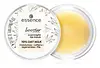
This hydrating lip mask is formulated around Squalane and Sodium Hyaluronate to hydrate lips and strengthen the lip barrier.
This hydrating lip mask is formulated around Ricinus Communis Seed Oil and Butyrospermum Parkii Butter to hydrate lips and strengthen the lip barrier.


What's inside
What's inside
 Key Ingredients
Benefits
Concerns
Ingredients Side-by-side
Triisostearin
Skin Conditioning

Hydrogenated Polyisobutene
EmollientPolyglyceryl-10 Pentaisostearate
Emollient
Dextrin Palmitate
Emulsifying
Ethylhexylglycerin
Skin ConditioningDiethylhexyl Syringylidenemalonate
Skin Protecting
Squalane
Emollient


Parfum
Masking



Simethicone
Emollient
Caprylic/Capric Triglyceride
Masking
Tocopherol
Antioxidant




Water
Skin ConditioningRicinus Communis Seed Oil
Masking
Glycerin
Humectant
Sodium Hyaluronate
Humectant
Hydrogenated Castor Oil
Emollient
1,2-Hexanediol
Skin Conditioning
Soluble Collagen
Humectant
Linalool
Perfuming
Geraniol
Perfuming
Benzyl Benzoate
Antimicrobial
Limonene
Perfuming
CI 77891
Cosmetic ColorantCI 42090
Cosmetic ColorantCI 45410
Cosmetic ColorantTriisostearin, Hydrogenated Polyisobutene, Polyglyceryl-10 Pentaisostearate, Dextrin Palmitate, Ethylhexylglycerin, Diethylhexyl Syringylidenemalonate, Squalane, Parfum, Simethicone, Caprylic/Capric Triglyceride, Tocopherol, Water, Ricinus Communis Seed Oil, Glycerin, Sodium Hyaluronate, Hydrogenated Castor Oil, 1,2-Hexanediol, Soluble Collagen, Linalool, Geraniol, Benzyl Benzoate, Limonene, CI 77891, CI 42090, CI 45410
Ricinus Communis Seed Oil
Masking
Bis-Diglyceryl Polyacyladipate-2
Emollient
Water
Skin ConditioningButyrospermum Parkii Butter
Skin Conditioning

Silica
Abrasive


Polyglyceryl-2 Dipolyhydroxystearate
Skin Conditioning
Shorea Robusta Resin
TonicGlyceryl Behenate
Emollient
Helianthus Annuus Seed Oil
Emollient
Helianthus Annuus Seed Wax
Skin Conditioning
Sodium Hyaluronate
Humectant
Tocopherol
Antioxidant
Ascorbyl Palmitate
Antioxidant
Tocopheryl Acetate
Antioxidant
Avena Sativa Kernel Extract
Abrasive
Xanthan Gum
EmulsifyingHydrogenated Castor Oil
Emollient
Citric Acid
Buffering
Phenoxyethanol
Preservative
Sodium Benzoate
Masking
Potassium Sorbate
Preservative
Parfum
Masking
CI 77492
Cosmetic ColorantRicinus Communis Seed Oil, Bis-Diglyceryl Polyacyladipate-2, Water, Butyrospermum Parkii Butter, Silica, Polyglyceryl-2 Dipolyhydroxystearate, Shorea Robusta Resin, Glyceryl Behenate, Helianthus Annuus Seed Oil, Helianthus Annuus Seed Wax, Sodium Hyaluronate, Tocopherol, Ascorbyl Palmitate, Tocopheryl Acetate, Avena Sativa Kernel Extract, Xanthan Gum, Hydrogenated Castor Oil, Citric Acid, Phenoxyethanol, Sodium Benzoate, Potassium Sorbate, Parfum, CI 77492
Reviews
Ingredients Explained
These ingredients are found in both products.
Ingredients higher up in an ingredient list are typically present in a larger amount.
Hydrogenated Castor Oil (aka "castor wax") is what you get when castor oil is turned into a wax.
Its dominant fatty acid is ricinoleic acid, giving it both emollient and mild humectant properties.
According to EU CosIng, this ingredient helps soften skin, keep oil and water stay mixed, and thickens products.
Hydrogenated castor oil at 30% did not trigger a positive patch-test reaction and is well-tolerated.
Since this ingredient is based on an 18-carbon fatty acid, it falls into the chain-length range that Malassezia can feed on and may not be fungal acne safe.
Learn more about Hydrogenated Castor OilParfum is a catch-all term for an ingredient or more that is used to give a scent to products.
Also called "fragrance", this ingredient can be a blend of hundreds of chemicals or plant oils. This means every product with "fragrance" or "parfum" in the ingredients list is a different mixture.
For instance, Habanolide is a proprietary trade name for a specific aroma chemical. When used as a fragrance ingredient in cosmetics, most aroma chemicals fall under the broad labeling category of “FRAGRANCE” or “PARFUM” according to EU and US regulations.
The term 'parfum' or 'fragrance' is not regulated in many countries. In many cases, it is up to the brand to define this term.
For instance, many brands choose to label themselves as "fragrance-free" because they are not using synthetic fragrances. However, their products may still contain ingredients such as essential oils that are considered a fragrance by INCI standards.
One example is Calendula flower extract. Calendula is an essential oil that still imparts a scent or 'fragrance'.
Depending on the blend, the ingredients in the mixture can cause allergies and sensitivities on the skin. Some ingredients that are known EU allergens include linalool and citronellol.
Parfum can also be used to mask or cover an unpleasant scent.
The bottom line is: not all fragrances/parfum/ingredients are created equally. If you are worried about fragrances, we recommend taking a closer look at an ingredient. And of course, we always recommend speaking with a professional.
Learn more about ParfumThis ingredient is also known as castor oil. It is a skin conditioning ingredient.
The star component of castor oil is ricinoleic acid, an unusual fatty acid that makes up ~80-92% of its composition.
In skincare, it is an emollient that dries down to a solid film with water-binding properties. This helps keep skin hydrated and helps reduce transepidermal water loss (TEWL).
A 2026 dermatology review pulls together its broader uses:
Human clinical testing found this ingredient to be non-irritating and non-sensitizing.
Because castor oil contains fatty acids in the C11-24 range, this ingredient may not be fungal acne safe.
At this time, the literature does not support castor oil in regrowing hair. A 2022 systematic review found no strong evidence that it supports hair growth and only weak evidence that it improves hair shine.
Castor oil itself carries "perfuming" and "masking" function tags according to the official CosIng database. This is because of its mild odor and odor-dampening properties.
Learn more about Ricinus Communis Seed OilSodium Hyaluronate is the salt form of hyaluronic acid. It is a long sugar chain that is naturally found in your skin, joints, and connective tissue that maintains hydration and elasticity.
In skincare, it works as a humectant. It pulls water from the environment and deeper layers of skin and binds it to the surface.
Interestingly, the size of the molecule affects its behavior:
Some clinical evidence links low molecular weight versions to improved wrinkle depth, elasticity, anti-inflammatory effects, and barrier repair.
Many serums use a blend of both weights so you can get surface hydration plus longer-lasting and deeper effects.
You'll typically see concentrations between 0.1-2% for this ingredient.
Learn more about Sodium HyaluronateTocopherol is a fat-soluble antioxidant known as Vitamin E.
You'll find this ingredient in the vast majority of skincare (for good reason). It works to neutralize free radicals, or unstable molecules generated by UV exposure, pollution, and other environmental stressors, before they can cause oxidative damage to your skin cells.
Topically applied tocopherol has been shown to protect against UV damage by ramping up the skin's own natural defense enzymes.
It also acts as a skin conditioning agent; some studies show that regular topical use can improve the skin's water-binding capacity over 2-4 weeks.
This ingredient is especially loved for being a team player. When combined with Vitamin C, the photoprotective effect of both ingredients roughly doubles and the combo also helps reduce UV-induced DNA damage.
This ingredient has some brightening potential but it's more of a prevention ingredient than spot-fader. Cell studies show it can slow down melanin production but it's worth noting that it's not the most powerful brightener out there.
In formulations, it also serves as a stabilizer that helps protect other oxidation-prone ingredients from degrading.
Concentrations usually range from 0.1-1% in most leave-on products.
Learn more about TocopherolWater. It's the most common cosmetic ingredient of all. You'll usually see it at the top of ingredient lists, meaning that it makes up the largest part of the product.
So why is it so popular? Water most often acts as a solvent - this means that it helps dissolve other ingredients into the formulation.
You'll also recognize water as that liquid we all need to stay alive. If you see this, drink a glass of water. Remember to stay hydrated!
Learn more about Water

