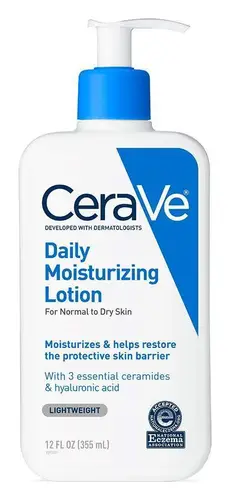
What's inside
What's inside
 Key Ingredients
Benefits
Concerns
Ingredients Side-by-side
Water
Skin ConditioningLactic Acid
Buffering










Ethyl Olivate
Emollient
Olive Oil Ethylhexyl Esters

Propylene Glycol
Humectant
Paraffinum Liquidum
Emollient
Glyceryl Stearate
Emollient
PEG-100 Stearate
Surfactant
Dimethicone
Emollient
Glycerin
Humectant
Cetyl Alcohol
Emollient

Salicylic Acid
Masking



Rh-Rice Extract
Skin ConditioningImidazolidinyl Urea
Preservative
Xanthan Gum
EmulsifyingMilk Protein
Skin ConditioningChamomilla Recutita Extract
Skin Conditioning

Melaleuca Alternifolia Leaf Oil
Antioxidant


Water, Lactic Acid, Ethyl Olivate, Olive Oil Ethylhexyl Esters, Propylene Glycol, Paraffinum Liquidum, Glyceryl Stearate, PEG-100 Stearate, Dimethicone, Glycerin, Cetyl Alcohol, Salicylic Acid, Rh-Rice Extract, Imidazolidinyl Urea, Xanthan Gum, Milk Protein, Chamomilla Recutita Extract, Melaleuca Alternifolia Leaf Oil
Water
Skin ConditioningCyclopentasiloxane
Emollient
Cetearyl Alcohol
Emollient
Isopropyl Myristate
Emollient
Cetyl Alcohol
Emollient
Saccharide Isomerate
Humectant
Caprylic/Capric Triglyceride
Masking
Glycerin
Humectant
Glyceryl Stearate
Emollient
Imidazolidinyl Urea
Preservative
Polyglycerin-3
Humectant
Stearic Acid
Cleansing
Phenoxyethanol
Preservative
Crocus Sativus Callus Extract
Antioxidant
Shea Butter Glyceride
Emollient
Prunus Amygdalus Dulcis Oil
Skin Conditioning
Ethoxydiglycol
HumectantSodium Benzoate
Masking
Niacinamide
Smoothing
Kojic Dipalmitate
Emollient
Alpha-Arbutin
Antioxidant
Carbomer
Emulsion StabilisingXanthan Gum
EmulsifyingSodium Gluconate
ChelatingTocopherol
Antioxidant
Panthenol
Skin Conditioning
Water, Cyclopentasiloxane, Cetearyl Alcohol, Isopropyl Myristate, Cetyl Alcohol, Saccharide Isomerate, Caprylic/Capric Triglyceride, Glycerin, Glyceryl Stearate, Imidazolidinyl Urea, Polyglycerin-3, Stearic Acid, Phenoxyethanol, Crocus Sativus Callus Extract, Shea Butter Glyceride, Prunus Amygdalus Dulcis Oil, Ethoxydiglycol, Sodium Benzoate, Niacinamide, Kojic Dipalmitate, Alpha-Arbutin, Carbomer, Xanthan Gum, Sodium Gluconate, Tocopherol, Panthenol
Ingredients Explained
These ingredients are found in both products.
Ingredients higher up in an ingredient list are typically present in a larger amount.
Cetyl Alcohol is a fatty alcohol. Fatty Alcohols are most often used as an emollient or to thicken a product.
Its main roles are:
Though it has "alcohol" in the name, it is not related to denatured alcohol or ethyl alcohol.
The FDA allows products labeled "alcohol-free" to have fatty alcohols.
This ingredient may not be fungal acne safe. It is a primary fatty alcohol with a chain length above 12 carbons. A study from 2019 show Malassezia can feed on fatty alcohols in this range, so it may trigger fungal acne in those prone to it.
Learn more about Cetyl AlcoholGlycerin (or glycerol) is a compound naturally found in your skin. It's a powerhouse humectant that pulls water into the stratum corneum.
Topically, glycerin does several things at once:
Your skin makes glycerin on its own (mostly from sebaceous oil breakdown) and shuttles it to your outermost layer of skin, or your epidermis, via aquaporin-3.
Aquaporin-3 is a transporter that is essential for normal skin hydration, elasticity, and repair. Interestingly, mice lacking in AQP3 have dry and less elastic skin that can be fully corrected with glycerin.
This ingredient is non-irritating, plays well with almost every ingredient, and works across all skin types. Typical use is anywhere between 3-10% but can go up to 79% in some leave-on products.
Just know very high concentrations (>40%) can feel tacky in low humidity.
Glycerin is the name for this ingredient in American English. British English uses Glycerol/Glycerine.
Learn more about GlycerinGlyceryl Stearate is made by reacting glycerin with stearic acid (typically sourced from plant oils like palm or coconut). It's an emulsifier, emollient, and mild occlusive.
Emulsifiers help ingredients like oil and water stay mixed so your formula stays nicely blended and uniform in texture.
This ingredient is typically used in concentrations between 1-10%. Studies have found it to be non-sensitizing, non-phototoxic, and non-photoallergenic.
A close cousin of this ingredient is Glyceryl Stearate SE ("self-emulsifying"). This just has a small amount of sodium or potassium stearate added so it can emulsify without a co-emulsifier.
Since this ingredient is an ester of a C18 fatty acid, it may not be fungal acne safe. The Malassezia yeast can potentially metabolize within the C11-C24 range.
Fun fact: The human body also creates Glyceryl Stearate naturally.
Learn more about Glyceryl StearateImidazolidinyl Urea is a synthetic antimicrobial preservative. It works by slowly releasing small amounts of formaldehyde to keep bacteria, yeast, and mold from growing.
Just so you know, the formaldehyde released at typical use concentrations (up to 0.6% in the EU and typically 0.1-0.3% in the US) are tiny. The CIR Expert Panel has reaffirmed its safety as a cosmetic ingredient at current use concentrations in 2023. It's also not mutagenic in cell studies.
However, it is a known contact sensitizer with about a 1-2% contact allergy rate.
Other formaldehyde releasers include Diazolidinyl Urea or DMDM Hydantoin.
Learn more about Imidazolidinyl UreaWater. It's the most common cosmetic ingredient of all. You'll usually see it at the top of ingredient lists, meaning that it makes up the largest part of the product.
So why is it so popular? Water most often acts as a solvent - this means that it helps dissolve other ingredients into the formulation.
You'll also recognize water as that liquid we all need to stay alive. If you see this, drink a glass of water. Remember to stay hydrated!
Learn more about WaterXanthan gum is used as a stabilizer and thickener within cosmetic products. It helps give products a sticky, thick feeling - preventing them from being too runny.
On the technical side of things, xanthan gum is a polysaccharide - a combination consisting of multiple sugar molecules bonded together.
Xanthan gum is a pretty common and great ingredient. It is a natural, non-toxic, non-irritating ingredient that is also commonly used in food products.
Learn more about Xanthan Gum