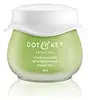
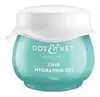
Dot & Key Skincare Cica & Niacinamide Night Gel Versus Dot & Key Skincare 72 HR Hydrating Gel Moisturizer + Probiotics
This calming night moisturizer is formulated around Aloe Barbadensis Leaf Juice and Centella Asiatica Extract to calm redness and clear breakouts.
This barrier-repair moisturizer is formulated around Hyaluronic Acid and Saccharide Isomerate to strengthen the skin barrier and hydrate skin.

What's inside
What's inside
 Key Ingredients
Benefits
Concerns
Ingredients Side-by-side
Aloe Barbadensis Leaf Juice
Skin Conditioning


Glycerin
Humectant

Polyacrylamide
C13-14 Isoparaffin
Emollient
Laureth-7
EmulsifyingDimethicone
Emollient
Dicaprylyl Ether
Emollient
Centella Asiatica Extract
Cleansing

Camellia Sinensis Leaf Extract
Antimicrobial



Melaleuca Alternifolia Leaf Oil
Antioxidant





Avena Sativa Kernel Flour
Abrasive
Mentha Piperita Oil
Masking


CI 75810
Cosmetic ColorantNiacinamide
Smoothing

Laminaria Digitata Extract
Skin Protecting
Cetyl-Pg Hydroxyethyl Palmitamide
Skin ConditioningCeramide EOP
Skin Conditioning
Ceramide Ns
Skin Conditioning
Ceramide NP
Skin Conditioning
Ceramide As
Skin Conditioning
Ceramide AP
Skin Conditioning
Silanetriol
Hyaluronic Acid
Humectant
Cyclopentasiloxane
Emollient
Dimethicone Crosspolymer
Emulsion Stabilising
Xylitylglucoside
Humectant
Anhydroxylitol
Humectant
Xylitol
Humectant
Sodium Hydroxide
BufferingAllantoin
Skin Conditioning
Disodium EDTA
Benzyl Alcohol
Perfuming


Ethylhexylglycerin
Skin ConditioningTocopherol
Antioxidant
CI 19140
Cosmetic ColorantCI 42090
Cosmetic ColorantAloe Barbadensis Leaf Juice, Glycerin, Polyacrylamide, C13-14 Isoparaffin, Laureth-7, Dimethicone, Dicaprylyl Ether, Centella Asiatica Extract, Camellia Sinensis Leaf Extract, Melaleuca Alternifolia Leaf Oil, Avena Sativa Kernel Flour, Mentha Piperita Oil, CI 75810, Niacinamide, Laminaria Digitata Extract, Cetyl-Pg Hydroxyethyl Palmitamide, Ceramide EOP, Ceramide Ns, Ceramide NP, Ceramide As, Ceramide AP, Silanetriol, Hyaluronic Acid, Cyclopentasiloxane, Dimethicone Crosspolymer, Xylitylglucoside, Anhydroxylitol, Xylitol, Sodium Hydroxide, Allantoin, Disodium EDTA, Benzyl Alcohol, Ethylhexylglycerin, Tocopherol, CI 19140, CI 42090
Water
Skin ConditioningCyclopentasiloxane
Emollient
Dimethicone Crosspolymer
Emulsion Stabilising
Glycerin
Humectant
Polyacrylamide
C13-14 Isoparaffin
Emollient
Laureth-7
EmulsifyingSilanetriol
Hyaluronic Acid
Humectant
Divinyldimethicone/Dimethicone Copolymer
C12-13 Pareth-23
CleansingC12-13 Pareth-3
EmulsifyingDimethylsilanol Hyaluronate
Humectant
Saccharide Isomerate
Humectant
Oryza Sativa Bran Water
Masking
Saccharomyces/Xylinum/Black Tea Ferment
Skin Conditioning
Avena Sativa Meal Extract
SoothingPyrus Malus Fruit Extract
Skin Conditioning
Lactobacillus
Skin ConditioningMaltodextrin
Absorbent
Sodium Hydroxide
BufferingMethylsilanol Mannuronate
Skin ConditioningPhenoxyethanol
Preservative
Methylisothiazolinone
Preservative
Acrylates/C10-30 Alkyl Acrylate Crosspolymer
Emulsion StabilisingDisodium EDTA
CI 42090
Cosmetic ColorantWater, Cyclopentasiloxane, Dimethicone Crosspolymer, Glycerin, Polyacrylamide, C13-14 Isoparaffin, Laureth-7, Silanetriol, Hyaluronic Acid, Divinyldimethicone/Dimethicone Copolymer, C12-13 Pareth-23, C12-13 Pareth-3, Dimethylsilanol Hyaluronate, Saccharide Isomerate, Oryza Sativa Bran Water, Saccharomyces/Xylinum/Black Tea Ferment, Avena Sativa Meal Extract, Pyrus Malus Fruit Extract, Lactobacillus, Maltodextrin, Sodium Hydroxide, Methylsilanol Mannuronate, Phenoxyethanol, Methylisothiazolinone, Acrylates/C10-30 Alkyl Acrylate Crosspolymer, Disodium EDTA, CI 42090
Reviews
Ingredients Explained
These ingredients are found in both products.
Ingredients higher up in an ingredient list are typically present in a larger amount.
C13-14 Isoparaffin is a synthetic emollient, solvent, and thickening agent. It helps soften skin and improves spreadability without leaving a greasy residue.
This ingredient has been found to be non-sensitizing and safe for use in cosmetics.
Two things floating around online that cause fear-mongering:
There's one scary-sounding study related to kidney tumors in male rats; this depends on a protein called alpha-2u-globulin that binds the ingredient and clogs up kidney cells. Female rats barely make this protein, and humans don't make it at all so this effect cannot happen to us. Regulatory bodies have states this rat-only pathway shouldn't be used to judge human risk.
The other thing you'll see is 1,4-dioxane being a trace byproduct that can form during manufacturing of petroleum-derived ingredients. This is a real, but heavily managed/monitored issue. This byproduct is removed through purification steps before the ingredients goes into the formula. Regulatory bodies also actively monitor residual levels for safety.
One last thing to note: this ingredient is a pure hydrocarbon with no fatty-acid or ester chains for Malassezia to feed on, so it's considered fungal acne safe.
Learn more about C13-14 IsoparaffinCi 42090 is a synthetic dye created from petroleum. It is used to give a bright blue color to cosmetics, medicine, and food.
Cyclopentasiloxane (D5) is a lightweight silicone that mostly acts as an emollient and solvent in cosmetics. Its the reason your products feel silky, fast-spreading, and non-greasy.
Since D5 is volatile, it does its thing and then evaporates off the skin quickly.
The safety profile of this ingredient is reassuring; the US CIR Expert Panel concluded D5 is safe as used in cosmetics and Health Canada concluded that D5 is not harmful to human health or the environment as currently used in cosmetics
There's a study that people mention about D5 in a rat study showing tumors. This study is related to long-term inhalation of high D5 levels.
Regulatory bodies have judged this study to be not applicable in topical skincare since skin absorption of D5 is very low and we're not really inhaling huge amounts of D5.
The only restriction for this ingredient is environmental. The European Chemicals Agency (ECHA) restricted D5 in wash-off cosmetics at or above 0.1% due to their persistence in water.
Learn more about CyclopentasiloxaneDimethicone Crosspolymer is a silicone created by modifying dimethicone with hydrocarbon side chains. Due to its large size, it does not penetrate skin. It is considered non-occlusive.
Dimethicone Crosspolymer is used to stabilize and thicken products. It also helps give products a silky feel.
Disodium EDTA is a chelating agent. It grabs onto and deactivates metal ions that sneak into your products from water, packaging, or air.
This ingredient mainly works behind the scenes and helps with:
On top of that, this ingredient can counteract the effects of hard water by binding to the minerals in it.
One thing worth knowing is that Disodium EDTA has been shown to be a mild penetration enhancer. It can help other ingredients absorb into skin more effectively which can be a double-edged sword (great for actives, but can also make the active too strong if you have sensitive skin).
Clinical patch testing showed no significant skin irritation at typical use concentrations and minimal dermal absorption.
You'll most likely see this ingredient near the end of an ingredient list. It's typically found in concentrations less than 1%.
Learn more about Disodium EDTAGlycerin (or glycerol) is a compound naturally found in your skin. It's a powerhouse humectant that pulls water into the stratum corneum.
Topically, glycerin does several things at once:
Your skin makes glycerin on its own (mostly from sebaceous oil breakdown) and shuttles it to your outermost layer of skin, or your epidermis, via aquaporin-3.
Aquaporin-3 is a transporter that is essential for normal skin hydration, elasticity, and repair. Interestingly, mice lacking in AQP3 have dry and less elastic skin that can be fully corrected with glycerin.
This ingredient is non-irritating, plays well with almost every ingredient, and works across all skin types. Typical use is anywhere between 3-10% but can go up to 79% in some leave-on products.
Just know very high concentrations (>40%) can feel tacky in low humidity.
Glycerin is the name for this ingredient in American English. British English uses Glycerol/Glycerine.
Learn more about GlycerinHyaluronic acid (HA) is a glycosaminoglycan (basically a long sugar chain) that your skin already makes on its own. In your skin, HA lives in the extracellular matrix and acts as the body's moisture reservoir.
Topically, HA is a humectant that binds water and helps skin look more plump, smooth, and hydrated.
The only catch is that HA isn't a single thing; it actually comes in a wide range of molecular weights (~50 - 2,000+ kDA) and size matters.
Some clinical evidence links low molecular weight versions to improved wrinkle depth, elasticity, anti-inflammatory effects, and barrier repair.
This is why the best HA serums blend the two sizes together so you get the best of both worlds.
The majority of cosmetic HA is produced by bacterial fermentation, typically using Streptococcus or Bacillus strains. Typical use levels in skincare sit around 0.1-2%.
A clinical study using a 0.2% low-molecular weight HA gel showed improvement in facial seborrheic dermatitis with excellent tolerance.
These are some other common types of Hyaluronic Acid:
Learn more about Hyaluronic AcidLaureth-7 is created by the ethoxylation of lauryl alcohol using ethylene oxide. Lauryl alcohol is a fatty alcohol with hydrating properties.
This ingredient is an emulsifier and cleansing ingredient. As an emulsifier, it is used to prevent ingredients from separating. It also helps cleanse the skin by gathering dirt, oil, and pollutants to be rinsed away.
Polyacrylamide is a synthetic polymer. It is used to stabilize products and bind ingredients. When hydrated, Polyacrylamide forms a soft gel.
Polyacrylamide is low-toxicity. If source properly, it is deemed safe to use in cosmetics.
It should be noted the precursor to Polyacrylamide is acrylamide. Acrylamide is a carcinogen. Most reputable sources of Polyacrylamide will screen for residual acrylamide to make sure the count is in a safe range. Acrylamide is not able to be absorbed through the skin.
We recommend speaking with a professional if you have concerns.
Learn more about PolyacrylamideWe don't have a description for Silanetriol yet.
Sodium Hydroxide is also known as lye or caustic soda. It is used to adjust the pH of products; many ingredients require a specific pH to be effective.
In small amounts, sodium hydroxide is considered safe to use. However, large amounts may cause chemical burns due to its high alkaline.
Your skin has a natural pH and acid mantle. This acid mantle helps prevent harmful bacteria from breaking through. The acid mantle also helps keep your skin hydrated.
"Alkaline" refers to a high pH level. A low pH level would be considered acidic.
Learn more about Sodium Hydroxide


