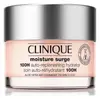
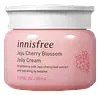
Clinique Moisture Surge 100H Auto-Replenishing Hydrator Versus innisfree Jeju Cherry Blossom Jelly Cream
This barrier-repair moisturizer is formulated around Sodium Hyaluronate and Aloe Barbadensis Leaf Extract to strengthen the skin barrier and hydrate skin.
This brightening moisturizer is formulated around Niacinamide to brighten dull-looking skin.


What's inside
What's inside
 Key Ingredients
Benefits
Concerns
Ingredients Side-by-side
Water
Skin ConditioningDimethicone
Emollient

Butylene Glycol
Humectant

Glycerin
Humectant
Trisiloxane
Skin Conditioning
Trehalose
Humectant
Saccharomyces Lysate Extract
Humectant

Sodium Hyaluronate
Humectant

Aloe Barbadensis Leaf Extract
Emollient
Aloe Barbadensis Leaf Water
MaskingSilybum Marianum Extract
Skin Conditioning
Camellia Sinensis Leaf Extract
Antimicrobial



Aloe Barbadensis Leaf Polysaccharides
Emollient
Sorbitol
Humectant
Sodium Polyaspartate
HumectantCaffeine
Skin Conditioning
Thermus Thermophillus Ferment
Skin ConditioningLactobacillus Ferment Lysate
Skin Conditioning
Palmitoyl Hexapeptide-12
Skin Conditioning
Caprylyl Glycol
Emollient
Sucrose
Humectant
Hydroxyethyl Urea
Humectant
Ammonium Acryloyldimethyltaurate/Vp Copolymer
Oleth-10
EmulsifyingAcrylates/C10-30 Alkyl Acrylate Crosspolymer
Emulsion StabilisingSaccharide Isomerate
Humectant
Hydrogenated Lecithin
Emulsifying
Tromethamine
BufferingGlyceryl Polymethacrylate
Disodium EDTA
ChelatingPEG-8
HumectantHexylene Glycol
EmulsifyingCitric Acid
Buffering
Sodium Citrate
BufferingTocopheryl Acetate
Antioxidant
BHT
Antioxidant
Magnesium Ascorbyl Phosphate
Antioxidant

Phenoxyethanol
Preservative
Sodium Benzoate
Masking
Potassium Sorbate
Preservative
CI 14700
Cosmetic ColorantCI 19140
Cosmetic ColorantWater, Dimethicone, Butylene Glycol, Glycerin, Trisiloxane, Trehalose, Saccharomyces Lysate Extract, Sodium Hyaluronate, Aloe Barbadensis Leaf Extract, Aloe Barbadensis Leaf Water, Silybum Marianum Extract, Camellia Sinensis Leaf Extract, Aloe Barbadensis Leaf Polysaccharides, Sorbitol, Sodium Polyaspartate, Caffeine, Thermus Thermophillus Ferment, Lactobacillus Ferment Lysate, Palmitoyl Hexapeptide-12, Caprylyl Glycol, Sucrose, Hydroxyethyl Urea, Ammonium Acryloyldimethyltaurate/Vp Copolymer, Oleth-10, Acrylates/C10-30 Alkyl Acrylate Crosspolymer, Saccharide Isomerate, Hydrogenated Lecithin, Tromethamine, Glyceryl Polymethacrylate, Disodium EDTA, PEG-8, Hexylene Glycol, Citric Acid, Sodium Citrate, Tocopheryl Acetate, BHT, Magnesium Ascorbyl Phosphate, Phenoxyethanol, Sodium Benzoate, Potassium Sorbate, CI 14700, CI 19140
Water
Skin ConditioningGlycerin
Humectant
Propanediol
Solvent
Dipropylene Glycol
HumectantNiacinamide
Smoothing


Betaine
Humectant
1,2-Hexanediol
Skin Conditioning
Carbomer
Emulsion StabilisingTromethamine
BufferingAmmonium Acryloyldimethyltaurate/Beheneth-25 Methacrylate Crosspolymer
Emulsion StabilisingDisodium EDTA
ChelatingEthylhexylglycerin
Skin ConditioningParfum
Masking



Prunus Yedoensis Leaf Extract
Skin ConditioningTocopherol
Antioxidant
Reviews
Ingredients Explained
These ingredients are found in both products.
Ingredients higher up in an ingredient list are typically present in a larger amount.
Disodium EDTA is a chelating agent. It grabs onto and deactivates metal ions that sneak into your products from water, packaging, or air.
This ingredient mainly works behind the scenes and helps with:
On top of that, this ingredient can counteract the effects of hard water by binding to the minerals in it.
One thing worth knowing is that Disodium EDTA has been shown to be a mild penetration enhancer. It can help other ingredients absorb into skin more effectively which can be a double-edged sword (great for actives, but can also make the active too strong if you have sensitive skin).
Clinical patch testing showed no significant skin irritation at typical use concentrations and minimal dermal absorption.
You'll most likely see this ingredient near the end of an ingredient list. It's typically found in concentrations less than 1%.
Learn more about Disodium EDTAGlycerin (or glycerol) is a compound naturally found in your skin. It's a powerhouse humectant that pulls water into the stratum corneum.
Topically, glycerin does several things at once:
Your skin makes glycerin on its own (mostly from sebaceous oil breakdown) and shuttles it to your outermost layer of skin, or your epidermis, via aquaporin-3.
Aquaporin-3 is a transporter that is essential for normal skin hydration, elasticity, and repair. Interestingly, mice lacking in AQP3 have dry and less elastic skin that can be fully corrected with glycerin.
This ingredient is non-irritating, plays well with almost every ingredient, and works across all skin types. Typical use is anywhere between 3-10% but can go up to 79% in some leave-on products.
Just know very high concentrations (>40%) can feel tacky in low humidity.
Glycerin is the name for this ingredient in American English. British English uses Glycerol/Glycerine.
Learn more about GlycerinTromethamine (aka THAM) is a synthetic amino acid that shows up in skincare as a helper ingredient.
It functions as a pH adjuster to help neutralize acidic ingredients and set a formula's pH to the right spot.
This matters a lot because a lot of actives (like vitamin C) needs a specific pH to work well and feel comfortable on skin.
Concentration use ranges from 0.1-1.0% depending on the formula.
Learn more about TromethamineWater. It's the most common cosmetic ingredient of all. You'll usually see it at the top of ingredient lists, meaning that it makes up the largest part of the product.
So why is it so popular? Water most often acts as a solvent - this means that it helps dissolve other ingredients into the formulation.
You'll also recognize water as that liquid we all need to stay alive. If you see this, drink a glass of water. Remember to stay hydrated!
Learn more about Water

