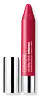
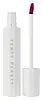
Clinique Chubby Stick Intense Moisturizing Lip Colour Balm Versus Fenty Beauty Poutsicle Hydrating Lip Stain

What's inside
What's inside
 Key Ingredients
No key ingredients
Benefits
Concerns
Ingredients Side-by-side
Ricinus Communis Seed Oil
Masking




Caprylic/Capric Triglyceride
Masking

Vegetable Oil
Skin Conditioning
Euphorbia Cerifera Cera
Astringent
Beeswax
Emulsion Stabilising


Ozokerite
Emulsion StabilisingButyrospermum Parkii Butter
Skin Conditioning
Hydrogenated Vegetable Oil
Emollient
Simmondsia Chinensis Seed Oil
Emollient
Butyrospermum Parkii Butter Extract
Skin Conditioning
Mangifera Indica Seed Butter
Skin Conditioning
Limnanthes Alba Seed Oil
Skin Conditioning
Helianthus Annuus Seed Oil
Emollient
Hydrogenated Olive Oil
Skin Conditioning
Tocopherol
Antioxidant





CI 77891
Cosmetic ColorantMica
Cosmetic ColorantCI 15850
Cosmetic ColorantCI 77499
Cosmetic ColorantCI 77491
Cosmetic ColorantCI 77492
Cosmetic ColorantCI 19140
Cosmetic ColorantCI 45380
Cosmetic ColorantCI 73360
Cosmetic ColorantCI 75470
Cosmetic ColorantCI 77163
Cosmetic Colorant
CI 17200
Cosmetic ColorantCI 45410
Cosmetic ColorantCI 42090
Cosmetic ColorantCI 15985
Cosmetic ColorantRicinus Communis Seed Oil, Caprylic/Capric Triglyceride, Vegetable Oil, Euphorbia Cerifera Cera, Beeswax, Ozokerite, Butyrospermum Parkii Butter, Hydrogenated Vegetable Oil, Simmondsia Chinensis Seed Oil, Butyrospermum Parkii Butter Extract, Mangifera Indica Seed Butter, Limnanthes Alba Seed Oil, Helianthus Annuus Seed Oil, Hydrogenated Olive Oil, Tocopherol, CI 77891, Mica, CI 15850, CI 77499, CI 77491, CI 77492, CI 19140, CI 45380, CI 73360, CI 75470, CI 77163, CI 17200, CI 45410, CI 42090, CI 15985
Water
Skin ConditioningDiphenyl Dimethicone
Emollient
Diisostearyl Malate
EmollientBis-Diglyceryl Polyacyladipate-2
Emollient
Hydrogenated Polyisobutene
EmollientGlycerin
Humectant
Cetyl PEG/PPG-10/1 Dimethicone
Emulsifying
Dipropylene Glycol
HumectantSorbitan Isostearate
Emulsifying
Polysorbate 60
Emulsifying
Octyldodecanol
Emollient
Pentylene Glycol
Skin Conditioning
Ceteareth-20
Cleansing
Hydroxyethyl Acrylate/Sodium Acryloyldimethyl Taurate Copolymer
Emulsion StabilisingSqualane
Emollient
Phenoxyethanol
Preservative
Ethylhexylglycerin
Skin ConditioningTitanium Dioxide
Cosmetic Colorant

CI 15985
Cosmetic ColorantCI 45410
Cosmetic ColorantCI 17200
Cosmetic ColorantCI 19140
Cosmetic ColorantCI 42090
Cosmetic ColorantWater, Diphenyl Dimethicone, Diisostearyl Malate, Bis-Diglyceryl Polyacyladipate-2, Hydrogenated Polyisobutene, Glycerin, Cetyl PEG/PPG-10/1 Dimethicone, Dipropylene Glycol, Sorbitan Isostearate, Polysorbate 60, Octyldodecanol, Pentylene Glycol, Ceteareth-20, Hydroxyethyl Acrylate/Sodium Acryloyldimethyl Taurate Copolymer, Squalane, Phenoxyethanol, Ethylhexylglycerin, Titanium Dioxide, CI 15985, CI 45410, CI 17200, CI 19140, CI 42090
Reviews
Ingredients Explained
These ingredients are found in both products.
Ingredients higher up in an ingredient list are typically present in a larger amount.
Ci 15985 is a dye made from petroleum. It is synthetically created and approved by the FDA for use in foods and cosmetics.
The color of this dye is orange/yellow.
This ingredient can be found in makeup, sun care, and skincare.
Learn more about CI 15985CI 17200 is a synthetic, water-soluble, reddish-pink dye. It is used purely as a cosmetic colorant.
In the US, the FDA permits this ingredient in cosmetics but it is not approved for use around the eyes while the EU allows this to be used in all cosmetic products.
The FDA requires batch-to-batch certification for this ingredient that is held to a pretty rigorous standard. That means the CI 17200 in your cosmetics has been tested and approved before it ever reaches you.
Contact allergy to cosmetic-grade dyes used at low concentrations are uncommon but has been documented before.
This ingredient also goes by the name D&C RED NO. 33.
CI 17200 has a comedogenic rating of 1 and an irritancy rating of 2 on a scale of 0-5. This is based on peer-reviewed research from the man who invented the comedogenic scale.
A 1 on the comedogenic scale is about as low as it gets without being a flat zero, and makes sense for CI 17200.
It's a water-soluble dye used at very small concentrations (typically 0.001-0.1%), so it dissolves into the water phase of a formula rather than sitting on your skin the way an oil or wax would.
The irritancy rating of 2 reflects that, like most synthetic dyes, there's a small possibility of mild irritation ( particularly for people with existing dye sensitivities).
For the vast majority of people, it's a non-issue at typical use levels.
It's also worth keeping in mind that comedogenic and irritancy ratings are tested on individual ingredients, not finished formulas. The final product's formulation, concentration, and other ingredients all play a role in how something actually behaves on your skin.
Just so you know, the FDA ban on Red Dye No. 3 refers to CI 45430, not this ingredient. CI 45430 and CI 17200 are different chemical compounds with distinct safety and regulatory histories.
It's also worth noting that Red No. 3 (CI 45430) was already banned from cosmetics back in 1990, so the 2025 action just extended the ban to food and oral drugs. CI 17200 was never part of any of this.
Learn more about CI 17200CI 19140 is also known as Tartrazine. Tartrazine is a synthetic dye used in cosmetics, foods, and medicine to add a yellow color.
Tartrazine is created from petroleum and is water-soluble.
Some people may experience allergies from this dye, especially asthmatics and those with an aspirin intolerance.
Learn more about CI 19140Ci 42090 is a synthetic dye created from petroleum. It is used to give a bright blue color to cosmetics, medicine, and food.
CI 45410 is a synthetic red-pigment and dye.
It often goes by both Red 28 or Red 27; manufacturers label both ingredients as CI 45410.
This dye is commonly found in makeup because it imparts a vivid color. Some types of this dye change color based on pH level and interaction with moisture:
Your skin has a natural pH of around 4.5 - 5.5.
According to the FDA, CI 45410 is not permitted for use in eye products.
Red 27 is a flourescein dye and commonly used as a fluorescent tracer in medicine.
Learn more about CI 45410

