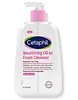
This mild gel cleanser is made to cleanse without leaving your skin tight or dry.

What's inside
What's inside
 Key Ingredients
Benefits
Concerns
Ingredients Side-by-side
Water
Skin ConditioningGlycerin
Humectant


Cocamidopropyl Betaine
Cleansing



Butylene Glycol
Humectant
PEG-40 Hydrogenated Castor Oil
Emulsifying

Lauryl Glucoside
CleansingPEG-200 Hydrogenated Glyceryl Palmate
Cleansing
Sodium Cocoamphoacetate
CleansingSodium Cocoyl Alaninate
Surfactant
Sodium Chloride
MaskingPEG-150 Pentaerythrityl Tetrastearate
Emulsifying
Citric Acid
Buffering

Panthenol
Skin Conditioning

Phenoxyethanol
Preservative
PEG-7 Glyceryl Cocoate
Emulsifying
PPG-2 Hydroxyethyl Cocamide
Emulsifying
Saccharide Isomerate
Humectant
Ethylhexylglycerin
Skin ConditioningDisodium EDTA
Linum Usitatissimum Seed Oil
Perfuming


Niacinamide
Smoothing






Pantolactone
Humectant
Sodium Citrate
BufferingWater, Glycerin, Cocamidopropyl Betaine, Butylene Glycol, PEG-40 Hydrogenated Castor Oil, Lauryl Glucoside, PEG-200 Hydrogenated Glyceryl Palmate, Sodium Cocoamphoacetate, Sodium Cocoyl Alaninate, Sodium Chloride, PEG-150 Pentaerythrityl Tetrastearate, Citric Acid, Panthenol, Phenoxyethanol, PEG-7 Glyceryl Cocoate, PPG-2 Hydroxyethyl Cocamide, Saccharide Isomerate, Ethylhexylglycerin, Disodium EDTA, Linum Usitatissimum Seed Oil, Niacinamide, Pantolactone, Sodium Citrate
Water
Skin ConditioningPEG-7 Glyceryl Cocoate
Emulsifying
Sodium Laureth Sulfate
Cleansing
Glycerin
Humectant
Cocamidopropyl Betaine
Cleansing
Chrysanthemum Parthenium Flower/Leaf/Stem Juice
Antioxidant
Avena Sativa Kernel Oil
Skin Conditioning
Avena Sativa Kernel Extract
Abrasive
Sodium Benzoate
Masking
PEG-40 Hydrogenated Castor Oil
Emulsifying
PPG-5-Ceteth-20
EmulsifyingPEG-150 Pentaerythrityl Tetrastearate
Emulsifying
PPG-2 Hydroxyethyl Cocamide
Emulsifying
Polyquaternium-10
Hydrolyzed Hyaluronic Acid
Humectant
Citric Acid
Buffering
Sodium Hydroxide
BufferingWater, PEG-7 Glyceryl Cocoate, Sodium Laureth Sulfate, Glycerin, Cocamidopropyl Betaine, Chrysanthemum Parthenium Flower/Leaf/Stem Juice, Avena Sativa Kernel Oil, Avena Sativa Kernel Extract, Sodium Benzoate, PEG-40 Hydrogenated Castor Oil, PPG-5-Ceteth-20, PEG-150 Pentaerythrityl Tetrastearate, PPG-2 Hydroxyethyl Cocamide, Polyquaternium-10, Hydrolyzed Hyaluronic Acid, Citric Acid, Sodium Hydroxide
Reviews
Ingredients Explained
These ingredients are found in both products.
Ingredients higher up in an ingredient list are typically present in a larger amount.
Citric Acid is an alpha hydroxy acid (AHA) naturally found in citrus fruits like oranges, lemons, and limes.
Like other AHAs, citric acid can exfoliate skin by breaking down the bonds that hold dead skin cells together. This helps reveal smoother and brighter skin underneath.
However, this exfoliating effect only happens at high concentrations (20%) which can be hard to find in cosmetic products.
Due to this, citric acid is usually included in small amounts as a pH adjuster. This helps keep products slightly more acidic and compatible with skin's natural pH.
In skincare formulas, citric acid can:
While it can provide some skin benefits, research shows lactic acid and glycolic acid are generally more effective and less irritating exfoliants.
Most citric acid used in skincare today is made by fermenting sugars (usually from molasses). This synthetic version is identical to the natural citrus form but easier to stabilize and use in formulations.
Read more about some other popular AHA's here:
Learn more about Citric AcidCocamidopropyl Betaine is a fatty acid created by mixing similar compounds in coconut oil and dimethylaminopropylamine, a compound with two amino groups.
This ingredient is a surfactant and cleanser. It helps gather the dirt, pollutants, and other impurities in your skin to be washed away. It also helps thicken a product and make the texture more creamy.
Being created from coconut oil means Cocamidopropyl Betaine is hydrating for the skin.
While Cocamidopropyl Betaine was believed to be an allergen, a study from 2012 disproved this. It found two compounds in unpure Cocamidopropyl Betaine to be the irritants: aminoamide and 3-dimethylaminopropylamine. High-grade and pure Cocamidopropyl Betaine did not induce allergic reactions during this study.
Learn more about Cocamidopropyl BetaineGlycerin (or glycerol) is a compound naturally found in your skin. It's a powerhouse humectant that pulls water into the stratum corneum.
Topically, glycerin does several things at once:
Your skin makes glycerin on its own (mostly from sebaceous oil breakdown) and shuttles it to your outermost layer of skin, or your epidermis, via aquaporin-3.
Aquaporin-3 is a transporter that is essential for normal skin hydration, elasticity, and repair. Interestingly, mice lacking in AQP3 have dry and less elastic skin that can be fully corrected with glycerin.
This ingredient is non-irritating, plays well with almost every ingredient, and works across all skin types. Typical use is anywhere between 3-10% but can go up to 79% in some leave-on products.
Just know very high concentrations (>40%) can feel tacky in low humidity.
Glycerin is the name for this ingredient in American English. British English uses Glycerol/Glycerine.
Learn more about GlycerinPEG-150 Pentaerythrityl Tetrastearate is an emulsifier, thickener, and mild conditioner.
It's made by esterifying and pentaerythritol with stearic acid, and then attaching 150 units of ethylene oxide to make it water-friendly.
This structure lets it bridge oil and water to prevent ingredients from separating and keep formulas stable. It is also the reason it gives cosmetics a creamy feel without the greasiness.
The CIR Expert Panel has concluded this ingredient to be well-tolerated. Human repeated patch testing on the undiluted version has come back negative for irritation and sensitization. On top of that, its large molecule size makes skin penetration unlikely.
Usage concentration ranges from 5% in rinse-off to 1.8% in leave-on formulas.
Because this ingredient is made from stearic acid, it may not be fungal acne safe. Stearic acid is a C18 fatty acid that the Malassezia yeast can substrate.
Learn more about PEG-150 Pentaerythrityl TetrastearatePEG-40 Hydrogenated Castor Oil is an emulsifier derived from castor oil.
As an emulsifying agent, it helps other ingredients like fragrances and fat-soluble vitamins dissolve cohesively.
Due to its large molecule size, it doesn't penetrate beyond the skin's surface.
This ingredient has a solid regulatory track record; the CIR Expert Panel first concluded it was safe for use in cosmetics at concentrations up to 100% in 1997. A 2012 reassessment reaffirmed that finding. Safety studies have also found no irritation or evidence of toxicity.
A 2019 study did find this ingredient to grow Malassezia, so this ingredient may not be fungal acne safe.
Learn more about PEG-40 Hydrogenated Castor OilPEG-7 Glyceryl Cocoate is a synthetic, water-soluble surfactant and emulsifier.
It's a "superfatting" agent that helps replenish some of your skin's oils after they're stripped away by other surfactants.
This is why "gentle" and "moisturizing" cleansers feel less stripping than basic ones.
Typical concentrations range from 1-10% and it has a solid safety record. The CIR Expert Panel has concluded this ingredient to be safe at concentrations up to 10% in leave-on products.
Dermal application tests at 50% also did not produce irritation in two studies.
This ingredient may not be fungal acne safe and in vitro studies have shown Malassezia can metabolize it.
Learn more about PEG-7 Glyceryl CocoateWe don't have a description for PPG-2 Hydroxyethyl Cocamide yet.
Water. It's the most common cosmetic ingredient of all. You'll usually see it at the top of ingredient lists, meaning that it makes up the largest part of the product.
So why is it so popular? Water most often acts as a solvent - this means that it helps dissolve other ingredients into the formulation.
You'll also recognize water as that liquid we all need to stay alive. If you see this, drink a glass of water. Remember to stay hydrated!
Learn more about Water

