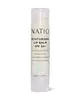
This barrier-repair lip moisturizer is formulated around Ricinus Communis Seed Oil and Butyrospermum Parkii Butter to strengthen the lip barrier and hydrate lips.
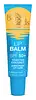
This calming lip moisturizer is formulated around Aloe Barbadensis Leaf Juice and Cocos Nucifera Oil to calm redness and hydrate lips.

What's inside
What's inside
 Key Ingredients
Benefits
Concerns
Ingredients Side-by-side
Ricinus Communis Seed Oil
Masking




Octyldodecanol
Emollient
Synthetic Beeswax
Emulsion Stabilising
Microcrystalline Wax
Emulsion StabilisingHydrogenated Polydecene
EmollientCocoglycerides
Emollient
Cetyl Palmitate
Emollient
Butylene Glycol
Humectant
Butyrospermum Parkii Butter
Skin Conditioning


Simmondsia Chinensis Seed Oil
Emollient
Butyl Methoxydibenzoylmethane
UV Absorber
Octocrylene
UV Absorber

Ethylhexyl Triazone
UV Absorber
Aroma

Triacontanyl Pvp
HumectantPEG-30 Dipolyhydroxystearate
Emulsifying
Bis-Ethylhexyloxyphenol Methoxyphenyl Triazine
UV Absorber
BHA
Antioxidant
Saccharin
MaskingTocopheryl Acetate
Antioxidant

Anise Alcohol
Perfuming
Ricinus Communis Seed Oil, Octyldodecanol, Synthetic Beeswax, Microcrystalline Wax, Hydrogenated Polydecene, Cocoglycerides, Cetyl Palmitate, Butylene Glycol, Butyrospermum Parkii Butter, Simmondsia Chinensis Seed Oil, Butyl Methoxydibenzoylmethane, Octocrylene, Ethylhexyl Triazone, Aroma, Triacontanyl Pvp, PEG-30 Dipolyhydroxystearate, Bis-Ethylhexyloxyphenol Methoxyphenyl Triazine, BHA, Saccharin, Tocopheryl Acetate, Anise Alcohol
Homosalate
Skin Conditioning
Ethylhexyl Salicylate
UV Absorber
Octocrylene
UV Absorber
4-Methylbenzylidene Camphor
UV Absorber
Butyl Methoxydibenzoylmethane
UV Absorber
Aloe Barbadensis Leaf Juice
Skin Conditioning

Caprylic/Capric/Stearic Triglyceride
Skin ConditioningCeresin
Emulsion StabilisingCocos Nucifera Oil
Masking
Silica
Abrasive


Tocopheryl Acetate
Antioxidant
Paraffinum Liquidum
Emollient
Microcrystalline Wax
Emulsion StabilisingPvp
Emulsion StabilisingSynthetic Wax
Abrasive
Reviews
Ingredients Explained
These ingredients are found in both products.
Ingredients higher up in an ingredient list are typically present in a larger amount.
Also known as Avobenzone, this ingredient is an oil-soluble used to absorb the full spectrum of UVA rays (peak 357 nm).
It's one of the most effective UVA filters available but has a major caveat of photostability: avobenzone is susceptible to photodegradation.
This means it can lose efficacy when exposed to sunlight without the help of a stabilizing agent.
Studies show antioxidants (like vitamin E or vitamin C) and some UV filters (like octocrylene and Tinosorb S) can meaningfully improve its stability in a formulation.
The maximum allowable concentration according to regulation is 3% in the US + Canada, and 5% in the EU, Australia, China, Korea, and ASEAN countries.
It has a well-support safety profile: a comprehensive 2025 review found minimal toxicity with no evidence of carcinogenicity.
Overall, avobenzone is a safe and regulated ingredient used in sunscreen for over 40 years.
Learn more about Butyl MethoxydibenzoylmethaneMicrocrystalline Wax is derived from petroleum through a de-oiling process, then highly refined and purified before use in cosmetics.
In skincare formulations, it is used to improve texture and create a smooth, even consistency. It also helps stabilize products by preventing ingredients from separating.
Octocrylene is an oil-soluble organic UV filter that mainly absorbs UVB and short wave UVA II light.
Its real superpower is teamwork: octocrylene is remarkably photostable and is most famous for stabilizing avobenzone (the workhorse UVA filter).
This ingredient is commonly used to enhance both UVB and UVA protection due to its unique property in stabilizing avobenzone. It also pulls double duty by boosting water resistance and giving formulas a smooth, spreadable feel.
The EU's Scientific Committee on Consumer Safety (SCCS) has deemed octocrylene to be safe as a UV-filter at concentrations up to 10% (capped at 9% in propellant sprays). The US also permits it up to 10%.
Two things worth knowing:
You'll usually see this ingredient used in concentrations between 2-10% (higher amounts when used as a stabilizer for avobenzone).
Learn more about OctocryleneTocopheryl Acetate is a stable, shelf-friendly form of vitamin E.
Formulators love it because plain vitamin E oxidizes quickly once it hits air. This acetate version stays stable and resists going off, helping to extend a product's shelf life.
It's actually inactive on its own and works like a slow-release "storage" form; the enzymes in your skin called esterases gradually convert it into active vitamin E over time.
One in vivo study showed 5% of the acetate in the living layer of the epidermis converted to vitamin E after 5 days of application. This study also found the skin gained protection against UV damage even though the conversion was slow and small.
Once converted, vitamin E acts as a skin's main fat-soluble antioxidant that fights free radicals to protect skin from damage.
Topical vitamin E generally boosts the skin's photoprotection, and it reduced UV-damage in animal models.
This ingredient has some brightening potential but it's more of a prevention ingredient than spot-fader. Cell studies show it can slow down melanin production but it's worth noting that it's not the most powerful brightener out there.
Overall, it has a pretty solid safety profile and has been found to be non-irritating and non-comedogenic. Allergic reactions may happen but stay rare due to how widely the ingredient gets used.
The concentration will vary depending on the formula; industry data shows 0.1% in baby lotions, 3% in lipsticks, and 5% in foot powders. You can also find this ingredient at 100% in a pure vitamin E oil.
Most leave-on skincare keeps it at the lower end, often between 0.5-1%.
Learn more about Tocopheryl Acetate

