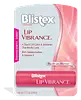
This lip moisturizer is formulated around Vitis Vinifera Seed Oil and Butyrospermum Parkii Butter to hydrate lips.

What's inside
What's inside
 Key Ingredients
Benefits
Concerns
Ingredients Side-by-side
Pentaerythrityl Tetraethylhexanoate
Emollient
Petrolatum
Emollient


Paraffinum Liquidum
Emollient
Phenyl Trimethicone
Skin Conditioning
Hydrogenated Polyisobutene
EmollientMicrocrystalline Wax
Emulsion StabilisingParaffin
Skin Conditioning
Ozokerite
Emulsion StabilisingPolybutene
Vitis Vinifera Seed Oil
Emollient


Bis-Diglyceryl Polyacyladipate-2
Emollient
Butyrospermum Parkii Butter
Skin Conditioning


Dimethicone
Emollient
Aroma


Mica
Cosmetic ColorantArachidyl Alcohol
Emollient
Arachidyl Glucoside
EmulsifyingBehenyl Alcohol
Emollient
Phenoxyethanol
Preservative
Ricinus Communis Seed Oil
Masking
Saccharin
MaskingTocopheryl Acetate
Antioxidant


CI 45410
Cosmetic ColorantIron Oxides
Titanium Dioxide
Cosmetic Colorant

Pentaerythrityl Tetraethylhexanoate, Petrolatum, Paraffinum Liquidum, Phenyl Trimethicone, Hydrogenated Polyisobutene, Microcrystalline Wax, Paraffin, Ozokerite, Polybutene, Vitis Vinifera Seed Oil, Bis-Diglyceryl Polyacyladipate-2, Butyrospermum Parkii Butter, Dimethicone, Aroma, Mica, Arachidyl Alcohol, Arachidyl Glucoside, Behenyl Alcohol, Phenoxyethanol, Ricinus Communis Seed Oil, Saccharin, Tocopheryl Acetate, CI 45410, Iron Oxides, Titanium Dioxide
Polybutene
Hydrogenated Polyisobutene
EmollientOctyldodecanol
Emollient
Polyethylene
Abrasive
Caprylic/Capric Triglyceride
Masking
Hydrogenated Poly(C6-14 Olefin)
EmollientDicalcium Phosphate
Abrasive
Microcrystalline Wax
Emulsion StabilisingSynthetic Wax
Abrasive
Stearalkonium Bentonite
Gel FormingPentaerythrityl Tetra-Di-T-Butyl Hydroxyhydrocinnamate
Antioxidant
Propylene Carbonate
SolventPunica Granatum Extract
AstringentRicinus Communis Seed Oil
Masking
Sodium Hyaluronate
Humectant

Mica
Cosmetic ColorantHydrogenated Castor Oil
Emollient
Synthetic Fluorphlogopite
Silica
Abrasive

Tin Oxide
Abrasive
CI 77491
Cosmetic ColorantCI 77492
Cosmetic ColorantCI 77499
Cosmetic ColorantCI 77891
Cosmetic ColorantCI 15850
Cosmetic ColorantCI 19140
Cosmetic ColorantCI 45410
Cosmetic ColorantCI 42090
Cosmetic ColorantPolybutene, Hydrogenated Polyisobutene, Octyldodecanol, Polyethylene, Caprylic/Capric Triglyceride, Hydrogenated Poly(C6-14 Olefin), Dicalcium Phosphate, Microcrystalline Wax, Synthetic Wax, Stearalkonium Bentonite, Pentaerythrityl Tetra-Di-T-Butyl Hydroxyhydrocinnamate, Propylene Carbonate, Punica Granatum Extract, Ricinus Communis Seed Oil, Sodium Hyaluronate, Mica, Hydrogenated Castor Oil, Synthetic Fluorphlogopite, Silica, Tin Oxide, CI 77491, CI 77492, CI 77499, CI 77891, CI 15850, CI 19140, CI 45410, CI 42090
Ingredients Explained
These ingredients are found in both products.
Ingredients higher up in an ingredient list are typically present in a larger amount.
CI 45410 is a synthetic red-pigment and dye.
It often goes by both Red 28 or Red 27; manufacturers label both ingredients as CI 45410.
This dye is commonly found in makeup because it imparts a vivid color. Some types of this dye change color based on pH level and interaction with moisture:
Your skin has a natural pH of around 4.5 - 5.5.
According to the FDA, CI 45410 is not permitted for use in eye products.
Red 27 is a flourescein dye and commonly used as a fluorescent tracer in medicine.
Learn more about CI 45410Hydrogenated Polyisobutene is a synthetic polymer. Polymers are compounds with high molecular weight. Hydrogenated Polyisobutene is an emollient and texture enhancer.
In one study, Hydrogenated Polyisobutene showed better skin hydration levels than Caprylic/Capric Triglyceride. As an emollient, it helps keep your skin soft and hydrated by trapping moisture in.
Hydrogenated Polyisobutene is often used as a mineral oil replacement.
Learn more about Hydrogenated PolyisobuteneMica is a naturally occurring mineral used to add shimmer and color in cosmetics. It can also help improve the texture of a product or give it an opaque, white/silver color.
Serecite is the name for very fine but ragged grains of mica.
This ingredient is often coated with metal oxides like titanium dioxide. Trace amounts of heavy metals may be found in mica, but these metals are not harmful in our personal products.
Mica has been used since prehistoric times throughout the world. Ancient Egyptian, Indian, Greek, Roman, Aztec, and Chinese civilizations have used mica.
Learn more about MicaMicrocrystalline Wax is derived from petroleum through a de-oiling process, then highly refined and purified before use in cosmetics.
In skincare formulations, it is used to improve texture and create a smooth, even consistency. It also helps stabilize products by preventing ingredients from separating.
Polybutene is used to help control the viscosity of a product. This just means it helps adjusts the texture.
It is a polymer and does not get absorbed into the skin due to its large size.
Studies found this ingredient did not irritate skin in concentrations below 15%.
Learn more about PolybuteneThis ingredient is also known as castor oil. It is a skin conditioning ingredient.
The star component of castor oil is ricinoleic acid, an unusual fatty acid that makes up ~80-92% of its composition.
In skincare, it is an emollient that dries down to a solid film with water-binding properties. This helps keep skin hydrated and helps reduce transepidermal water loss (TEWL).
A 2026 dermatology review pulls together its broader uses:
Human clinical testing found this ingredient to be non-irritating and non-sensitizing.
Because castor oil contains fatty acids in the C11-24 range, this ingredient may not be fungal acne safe.
At this time, the literature does not support castor oil in regrowing hair. A 2022 systematic review found no strong evidence that it supports hair growth and only weak evidence that it improves hair shine.
Castor oil itself carries "perfuming" and "masking" function tags according to the official CosIng database. This is because of its mild odor and odor-dampening properties.
Learn more about Ricinus Communis Seed Oil

