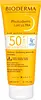
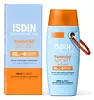
This chemical sunscreen covers the full UV range and blocks ~98% of UVB at SPF 50.
This chemical sunscreen covers the full UV range and blocks ~98% of UVB at SPF 50.


What's inside
What's inside
 Key Ingredients
Benefits
Concerns
Ingredients Side-by-side
Water
Skin ConditioningDibutyl Adipate
EmollientDicaprylyl Carbonate
EmollientC12-15 Alkyl Benzoate
AntimicrobialDiethylhexyl Butamido Triazone
UV Absorber
Bis-Ethylhexyloxyphenol Methoxyphenyl Triazine
UV Absorber
Propanediol
Solvent

Butyl Methoxydibenzoylmethane
UV Absorber
Ethylhexyl Triazone
UV Absorber
Polyglyceryl-6 Stearate
Emollient

Glycerin
Humectant
Brassica Campestris/Aleurites Fordi Oil Copolymer
Skin Conditioning
C20-22 Alkyl Phosphate
Emulsifying1,2-Hexanediol
Skin Conditioning
C20-22 Alcohols
Emulsion Stabilising
Microcrystalline Cellulose
AbsorbentPolyglyceryl-6 Behenate
Emulsion Stabilising
Sodium Citrate
BufferingXanthan Gum
EmulsifyingCellulose Gum
Emulsion StabilisingCaprylyl Glycol
Emollient
Ectoin
Skin Conditioning



Mannitol
Humectant
Xylitol
Humectant
O-Cymen-5-Ol
Antimicrobial
Sodium Hydroxide
BufferingRhamnose
HumectantCitric Acid
Buffering

Tocopherol
Antioxidant


Diisopropyl Sebacate
EmollientFructooligosaccharides
Humectant
Propylheptyl Caprylate
EmollientCaprylic/Capric Triglyceride
Masking
Laminaria Ochroleuca Extract
Skin Conditioning
Water, Dibutyl Adipate, Dicaprylyl Carbonate, C12-15 Alkyl Benzoate, Diethylhexyl Butamido Triazone, Bis-Ethylhexyloxyphenol Methoxyphenyl Triazine, Propanediol, Butyl Methoxydibenzoylmethane, Ethylhexyl Triazone, Polyglyceryl-6 Stearate, Glycerin, Brassica Campestris/Aleurites Fordi Oil Copolymer, C20-22 Alkyl Phosphate, 1,2-Hexanediol, C20-22 Alcohols, Microcrystalline Cellulose, Polyglyceryl-6 Behenate, Sodium Citrate, Xanthan Gum, Cellulose Gum, Caprylyl Glycol, Ectoin, Mannitol, Xylitol, O-Cymen-5-Ol, Sodium Hydroxide, Rhamnose, Citric Acid, Tocopherol, Diisopropyl Sebacate, Fructooligosaccharides, Propylheptyl Caprylate, Caprylic/Capric Triglyceride, Laminaria Ochroleuca Extract
Alcohol Denat.
Antimicrobial



Dibutyl Adipate
EmollientButyl Methoxydibenzoylmethane
UV Absorber
Ethylhexyl Salicylate
UV Absorber
Ethylhexyl Triazone
UV Absorber
Water
Skin ConditioningDiethylamino Hydroxybenzoyl Hexyl Benzoate
UV Filter
Diethylhexyl Butamido Triazone
UV Absorber
Butyloctyl Salicylate
Skin Conditioning
Acrylates/Octylacrylamide Copolymer
Silica Dimethyl Silylate
EmollientHydroxypropylcellulose
EmulsifyingPentaerythrityl Tetra-Di-T-Butyl Hydroxyhydrocinnamate
Antioxidant
Tocopheryl Acetate
Antioxidant
Parfum
Masking

Zingiber Officinale Root Extract
Masking
Silica
Abrasive


Alcohol Denat., Dibutyl Adipate, Butyl Methoxydibenzoylmethane, Ethylhexyl Salicylate, Ethylhexyl Triazone, Water, Diethylamino Hydroxybenzoyl Hexyl Benzoate, Diethylhexyl Butamido Triazone, Butyloctyl Salicylate, Acrylates/Octylacrylamide Copolymer, Silica Dimethyl Silylate, Hydroxypropylcellulose, Pentaerythrityl Tetra-Di-T-Butyl Hydroxyhydrocinnamate, Tocopheryl Acetate, Parfum, Zingiber Officinale Root Extract, Silica
Reviews
Ingredients Explained
These ingredients are found in both products.
Ingredients higher up in an ingredient list are typically present in a larger amount.
Also known as Avobenzone, this ingredient is an oil-soluble used to absorb the full spectrum of UVA rays (peak 357 nm).
It's one of the most effective UVA filters available but has a major caveat of photostability: avobenzone is susceptible to photodegradation.
This means it can lose efficacy when exposed to sunlight without the help of a stabilizing agent.
Studies show antioxidants (like vitamin E or vitamin C) and some UV filters (like octocrylene and Tinosorb S) can meaningfully improve its stability in a formulation.
The maximum allowable concentration according to regulation is 3% in the US + Canada, and 5% in the EU, Australia, China, Korea, and ASEAN countries.
It has a well-support safety profile: a comprehensive 2025 review found minimal toxicity with no evidence of carcinogenicity.
Overall, avobenzone is a safe and regulated ingredient used in sunscreen for over 40 years.
Learn more about Butyl MethoxydibenzoylmethaneDibutyl Adipate is a lightweight, oil-soluble ester that acts as an emollient and solvent. It helps products spread more easily and leaves a soft, silky, dry-touch finish without being greasy.
You'll likely see this ingredient in sunscreens because it does a nice job dissolving UV filters and keeping them evenly distributed.
This ingredient has been found to be safe as used in cosmetics, wasn't a skin or eye irritant in clinical patch testing, and wasn't phototoxic.
In a clinical comedogenicity test, this ingredient tested negative so it isn't likely to clog pores.
Typical use levels are about 5-8% for sunscreens + nail products, but can range from 0.005%-8% depending on the product.
Learn more about Dibutyl AdipateDiethylhexyl Butamido Triazone (aka Iscotrizinol) is an oil-soluble organic UV filter that mainly absorbs UVB and a bit of UVA II light.
This ingredient is great at preventing sunburn but doesn't cover the deep UVA I range. This is why it's often paired with a UVA filter like Avobenzone or Bemotrizinol.
Two of its biggest selling points are efficiency and stability:
Most of the other chemical filters are considered "photostable" if they can last for two hours.
Because this ingredient is oil-loving, it can sit neatly into the oil phase of emulsions and shines in water-repellent/water-resistant formulations.
The EU and Canada allow it to be used up to 10% and Japan allows it up to 5%.
Unfortunately, it's not yet an FDA approved sunscreen agent so you won't be able to find it in sunscreens in the US.
Safety-wise, it has a pretty solid record: the EU's Scientific Committee on Consumer Safety (SCCS) has reviewed it and found low skin absorption, no capacity to produce skin irritation or photo-irritation.
In vitro testing has found less than 0.1% of the applied dose is absorbed by the skin over 24 hours (mostly due to its large molecule size).
Fun fact: This ingredient even has anti-inflammatory properties similar to those of ketoprofe, an anti-inflammatory medication.
Learn more about Diethylhexyl Butamido TriazoneEthylhexyl Triazone (aka Octyl Triazone) is an oil-soluble organic UVB filter. It has peak absorption around 314 nm, right in the middle of the UVB range.
This ingredient is described as one of the most effective UVB filters available and small concentrations are enough to deliver a high SPF thanks to its strong UV absorbing power.
Formulators love it for its stability; its ability to filter UV stays practically unchanged even under intense radiation and it can also help boost the photostability of less stable filters like avobenzone.
It's also a great pick for water resistant products because it's insoluble in water and has a good affinity for keratin.
Because it's a big, heavy molecule, the European Scientific Committee has found to to have very low dermal penetration and negative results for allergenicity.
In vitro testing also showed a low absorption rate and clean results on irritation.
Typical use levels are 1-5% with 5% being the maximum in the EU, Japan, and other markets that allow it. However, this ingredient is not approved yet in the US or Canada.
Learn more about Ethylhexyl TriazoneWater. It's the most common cosmetic ingredient of all. You'll usually see it at the top of ingredient lists, meaning that it makes up the largest part of the product.
So why is it so popular? Water most often acts as a solvent - this means that it helps dissolve other ingredients into the formulation.
You'll also recognize water as that liquid we all need to stay alive. If you see this, drink a glass of water. Remember to stay hydrated!
Learn more about Water

