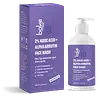
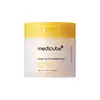
Bake 2% Kojic Acid + Alpha Arbutin Face Wash Versus MediCube Kojic Acid Turmeric Clarifying Toner Pad
This mild gel cleanser is mild enough to cleanse without leaving skin feeling tight or stripped.
This brightening toner pad uses a pre-saturated pad with Glycolic Acid and Niacinamide to fade the look of dark spots and refine skin texture.


What's inside
What's inside
 Key Ingredients
Benefits
Concerns
Ingredients Side-by-side



Water
Skin ConditioningGlycolic Acid
Buffering











Methylpropanediol
SolventNiacinamide
Smoothing



Glycerin
Humectant
Dipropylene Glycol
HumectantSodium Hydroxide
BufferingCurcuma Longa Root Extract
Antioxidant

Butylene Glycol
Humectant
1,2-Hexanediol
Skin Conditioning
Hydroxyacetophenone
Antioxidant
Glycereth-26
Humectant
Gardenia Florida Fruit Extract
Skin ConditioningDextrin
AbsorbentC12-14 Alketh-12
EmulsifyingEthylhexylglycerin
Skin ConditioningAllantoin
Skin Conditioning
Adenosine
Skin Conditioning
Dipotassium Glycyrrhizate
Humectant
Disodium EDTA
ChelatingKojic Acid
Antioxidant
Citrus Junos Peel Extract
Skin ConditioningCastanea Crenata Shell Extract
Skin ConditioningFragaria Ananassa Fruit Extract
Skin Conditioning
Cyanocobalamin
Skin ConditioningSalicylic Acid
Masking



Tocopherol
Antioxidant
Ascorbic Acid
Antioxidant
Panthenol
Skin Conditioning
Sodium Hyaluronate
Humectant
Hydroxypropyltrimonium Hyaluronate
Hydrolyzed Hyaluronic Acid
Humectant
Sodium Acetylated Hyaluronate
Humectant
Hyaluronic Acid
Humectant
Hydrolyzed Sodium Hyaluronate
Skin Conditioning
Sodium Hyaluronate Crosspolymer
Humectant
Potassium Hyaluronate
Skin ConditioningWater, Glycolic Acid, Methylpropanediol, Niacinamide, Glycerin, Dipropylene Glycol, Sodium Hydroxide, Curcuma Longa Root Extract, Butylene Glycol, 1,2-Hexanediol, Hydroxyacetophenone, Glycereth-26, Gardenia Florida Fruit Extract, Dextrin, C12-14 Alketh-12, Ethylhexylglycerin, Allantoin, Adenosine, Dipotassium Glycyrrhizate, Disodium EDTA, Kojic Acid, Citrus Junos Peel Extract, Castanea Crenata Shell Extract, Fragaria Ananassa Fruit Extract, Cyanocobalamin, Salicylic Acid, Tocopherol, Ascorbic Acid, Panthenol, Sodium Hyaluronate, Hydroxypropyltrimonium Hyaluronate, Hydrolyzed Hyaluronic Acid, Sodium Acetylated Hyaluronate, Hyaluronic Acid, Hydrolyzed Sodium Hyaluronate, Sodium Hyaluronate Crosspolymer, Potassium Hyaluronate
Reviews
Ingredients Explained
These ingredients are found in both products.
Ingredients higher up in an ingredient list are typically present in a larger amount.
Glycerin (or glycerol) is a compound naturally found in your skin. It's a powerhouse humectant that pulls water into the stratum corneum.
Topically, glycerin does several things at once:
Your skin makes glycerin on its own (mostly from sebaceous oil breakdown) and shuttles it to your outermost layer of skin, or your epidermis, via aquaporin-3.
Aquaporin-3 is a transporter that is essential for normal skin hydration, elasticity, and repair. Interestingly, mice lacking in AQP3 have dry and less elastic skin that can be fully corrected with glycerin.
This ingredient is non-irritating, plays well with almost every ingredient, and works across all skin types. Typical use is anywhere between 3-10% but can go up to 79% in some leave-on products.
Just know very high concentrations (>40%) can feel tacky in low humidity.
Glycerin is the name for this ingredient in American English. British English uses Glycerol/Glycerine.
Learn more about GlycerinKojic Acid is a naturally occurring organic acid that is produced during the fermentation of certain fungi. It is one of the most well-studied brightening ingredients (tyrosinase inhibitors) out there.
That's why you'll see Kojic Acid in products that target dark spots, hyperpigmentation, and general uneven skin tone. It also pairs well with other brightening actives like Alpha Arbutin, Glycolic Acid, and Vitamin C derivatives.
By latching onto the copper that the enzyme tyrosinase needs to function, Kojic Acid prevents less pigment from being made. It's so well-established that researchers regularly use it as the go-to benchmark when testing new brightening ingredients.
Some other perks include documented antioxidant and antimicrobial properties. The The CIR (Cosmetic Ingredient Review) Expert Panel concluded Kojic Acid is safe for use in cosmetic products at concentrations up to 1% and the EU's SCCS (Scientific Committee on Consumer Safety) considers it safe as a skin lightening agent at concentrations up to 0.7%.
One thing to know about Kojic Acid is that stability is its weak spot; it is sensitive to light, heat, and air exposure and will oxidize/turn brown in formulations. Its derivative, Kojic Dipalmitate, was developed as a stable alternative.
Some individuals have reported contact sensitization so be sure to patch test if you have reactive or sensitive skin.
Fun fact: It was first discovered in 1907 and naturally occurs in the production of sake, soy sauce, and miso.
Learn more about Kojic AcidWater. It's the most common cosmetic ingredient of all. You'll usually see it at the top of ingredient lists, meaning that it makes up the largest part of the product.
So why is it so popular? Water most often acts as a solvent - this means that it helps dissolve other ingredients into the formulation.
You'll also recognize water as that liquid we all need to stay alive. If you see this, drink a glass of water. Remember to stay hydrated!
Learn more about Water

