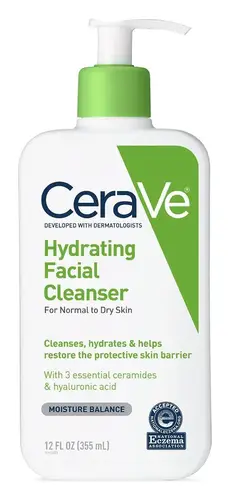
This mild cream cleanser is made to cleanse without leaving your skin tight or dry.
This mild cream cleanser is made to cleanse without leaving your skin tight or dry.


What's inside
What's inside
 Key Ingredients
Benefits
Concerns
Ingredients Side-by-side
Water
Skin ConditioningDisodium Cocoyl Glutamate
Cleansing
Glycerin
Humectant


Decyl Glucoside
Cleansing
Cetearyl Alcohol
Emollient





Zea Mays Starch
Absorbent
Coco-Betaine
Cleansing
Helianthus Annuus Seed Oil
Emollient
Xanthan Gum
EmulsifyingCitric Acid
Buffering

Silybum Marianum Seed Oil
Skin Conditioning
Sodium Benzoate
Masking
Sodium Dextran Sulfate
Gel FormingSodium Stearoyl Glutamate
CleansingTocopherol
Antioxidant




Water
Skin ConditioningHelianthus Annuus Seed Oil
Emollient
Cetearyl Alcohol
Emollient
Glyceryl Stearate
Emollient
Butyrospermum Parkii Butter
Skin Conditioning
Glycerin
Humectant
Ceteareth-20
Cleansing
Laminaria Digitata Extract
Skin Protecting
Rosmarinus Officinalis Leaf Extract
AntimicrobialMagnesium Ascorbyl Phosphate
Antioxidant


Cetearyl Glucoside
Emulsifying
Tocopherol
Antioxidant
Rosa Damascena Flower Oil
Masking



Malva Sylvestris Extract
AstringentMentha Piperita Leaf Extract
Skin ConditioningPrimula Veris Flower Extract
Skin ConditioningAlchemilla Vulgaris Extract
AstringentVeronica Officinalis Extract
Skin ConditioningMelissa Officinalis Leaf Extract
Skin ConditioningAchillea Millefolium Extract
CleansingMagnesium Aspartate
Skin ConditioningZinc Gluconate
Skin Conditioning

Copper Gluconate
Skin Conditioning
Olea Europaea Leaf Extract
Perfuming
Equisetum Arvense Extract
AstringentEchinacea Purpurea Extract
MoisturisingArnica Montana Extract
Skin ConditioningXanthan Gum
EmulsifyingIodopropynyl Butylcarbamate
Preservative
Spirulina Platensis Extract
Skin ProtectingDecyl Glucoside
Cleansing
Hippophae Rhamnoides Fruit Extract
Skin Conditioning
Centella Asiatica Extract
Cleansing
Curcuma Longa Root Extract
Antioxidant
Pteris Multifida Extract
Antioxidant
Melia Azadirachta Leaf Extract
Skin ConditioningSodium Hyaluronate
Humectant
Polyglyceryl-10 Oleate
Skin Conditioning
Polyglyceryl-10 Myristate
Skin Conditioning
Caprylic Acid
CleansingGlycine
Buffering
Water, Helianthus Annuus Seed Oil, Cetearyl Alcohol, Glyceryl Stearate, Butyrospermum Parkii Butter, Glycerin, Ceteareth-20, Laminaria Digitata Extract, Rosmarinus Officinalis Leaf Extract, Magnesium Ascorbyl Phosphate, Cetearyl Glucoside, Tocopherol, Rosa Damascena Flower Oil, Malva Sylvestris Extract, Mentha Piperita Leaf Extract, Primula Veris Flower Extract, Alchemilla Vulgaris Extract, Veronica Officinalis Extract, Melissa Officinalis Leaf Extract, Achillea Millefolium Extract, Magnesium Aspartate, Zinc Gluconate, Copper Gluconate, Olea Europaea Leaf Extract, Equisetum Arvense Extract, Echinacea Purpurea Extract, Arnica Montana Extract, Xanthan Gum, Iodopropynyl Butylcarbamate, Spirulina Platensis Extract, Decyl Glucoside, Hippophae Rhamnoides Fruit Extract, Centella Asiatica Extract, Curcuma Longa Root Extract, Pteris Multifida Extract, Melia Azadirachta Leaf Extract, Sodium Hyaluronate, Polyglyceryl-10 Oleate, Polyglyceryl-10 Myristate, Caprylic Acid, Glycine
Reviews
Ingredients Explained
These ingredients are found in both products.
Ingredients higher up in an ingredient list are typically present in a larger amount.
Cetearyl alcohol is a waxy mixture of two fatty alcohols: cetyl alcohol and stearyl alcohol. It is an emollient and emulsifier.
Despite having "alcohol" in its name, it has nothing to do with drying solvent alcohols; the FDA also allows "alcohol-free" products to contain fatty alcohols like this ingredient.
It plays several roles in a formula:
Typical use levels for this ingredient sit around 1-10% and the Cosmetic Ingredient Review Expert Panel has affirmed safety at concentrations up to 25% in leave-on products.
Multiple assessments have found it to be non-irritating and non-sensitizing to most people.
However, there have been some cases of allergic contact dermatitis in patients with chronically compromised skin barriers.
Cetearyl alcohol has a comedogenic rating of 2 and irritancy rating of 1. Both of these numbers come from the 1989 study that used rabbit ears; a "2" means mildly comedogenic and a "1" means low irritancy.
Here's the catch: rabbit skin is more sensitive than human skin and throws a lot of false positives. A 1996 reappraisal found that ingredients rated 1-2 in the rabbit ear tests are generally safe for humans.
Remember comedogenic ratings are unable to assess the entire formula of a product or how it will react on your skin. Just be sure to patch test if you are unsure about certain ingredients.
This ingredient is not fungal acne safe. Cetearyl alcohol is a fatty alcohol with chain lengths that fall within the range that Malassezia can metabolize.
A 2019 study has also observed Malassezia growth in the presence of this ingredient, confirming it to be not-fungal acne safe.
Learn more about Cetearyl AlcoholDecyl Glucoside is a plant-derived surfactant and emulsion stabilizer. It is created by reacting glucose with the fatty acids from plants.
Like all surfactants, it works by lowering the surface tension between water and oil. This makes it so that dirt, sebum, and makeup can be lifted off your skin and rinsed away. It also produces a dense and creamy foam.
Because it has a neutral charge, it is compatible with a wide range of ingredients and stays stable across a broad pH range/water hardiness conditions.
Patch testing has shown it to have the lowest irritation potential among common cleansing surfactants (like SLS).
Typical use levels range from 5-20% in rinse-off cleansers.
One thing worth knowing: The American Contact Dermatitis Society named the parent family, alkyl glucosides, "Allergen of the Year" in 2017. The prevalence of allergy is pretty low but be sure to patch test if you've reacted to "gentle" or sulfate-free cleansers before.
This ingredient is fungal acne safe because the fatty alcohol portion of this ingredient is not within the C11-24 chain length that Malassezia can metabolize.
Learn more about Decyl GlucosideGlycerin (or glycerol) is a compound naturally found in your skin. It's a powerhouse humectant that pulls water into the stratum corneum.
Topically, glycerin does several things at once:
Your skin makes glycerin on its own (mostly from sebaceous oil breakdown) and shuttles it to your outermost layer of skin, or your epidermis, via aquaporin-3.
Aquaporin-3 is a transporter that is essential for normal skin hydration, elasticity, and repair. Interestingly, mice lacking in AQP3 have dry and less elastic skin that can be fully corrected with glycerin.
This ingredient is non-irritating, plays well with almost every ingredient, and works across all skin types. Typical use is anywhere between 3-10% but can go up to 79% in some leave-on products.
Just know very high concentrations (>40%) can feel tacky in low humidity.
Glycerin is the name for this ingredient in American English. British English uses Glycerol/Glycerine.
Learn more about GlycerinHelianthus Annuus Seed Oil is a plant oil derived from the seeds of a sunflower.
It is rich in fatty acids, primarily linoleic acid and oleic acid. This gives it emollient and skin conditioning properties.
The reason this ingredient is so effective is because it forms a thin film on the skin that reduces transepidermal water loss (TEWL) while supplying linoleic acid to the stratum corneum to improve barrier strength.
The high linoleic acid content is particularly noteworthy for acne-prone skin.
Research suggests that acne-prone skin tends to be deficient in linoleic acid in sebum. Topical application may help replenish this to support a healthier follicular environment and less comedone-promoting sebum.
One randomized study found sunflower seed oil preserved skin barrier integrity in adult volunteers with and without atopic dermatitis (outperforming olive oil).
This ingredient is well-studied, gentle, and an effective emollient suitable for most skin types.
On fungal acne: This ingredient may not be Fungal acne (Malassezia folliculitis) safe. This is because it contains fatty acids with carbon chain lengths in the C11-C24 range.
Learn more about Helianthus Annuus Seed OilTocopherol is a fat-soluble antioxidant known as Vitamin E.
You'll find this ingredient in the vast majority of skincare (for good reason). It works to neutralize free radicals, or unstable molecules generated by UV exposure, pollution, and other environmental stressors, before they can cause oxidative damage to your skin cells.
Topically applied tocopherol has been shown to protect against UV damage by ramping up the skin's own natural defense enzymes.
It also acts as a skin conditioning agent; some studies show that regular topical use can improve the skin's water-binding capacity over 2-4 weeks.
This ingredient is especially loved for being a team player. When combined with Vitamin C, the photoprotective effect of both ingredients roughly doubles and the combo also helps reduce UV-induced DNA damage.
This ingredient has some brightening potential but it's more of a prevention ingredient than spot-fader. Cell studies show it can slow down melanin production but it's worth noting that it's not the most powerful brightener out there.
In formulations, it also serves as a stabilizer that helps protect other oxidation-prone ingredients from degrading.
Concentrations usually range from 0.1-1% in most leave-on products.
Learn more about TocopherolWater. It's the most common cosmetic ingredient of all. You'll usually see it at the top of ingredient lists, meaning that it makes up the largest part of the product.
So why is it so popular? Water most often acts as a solvent - this means that it helps dissolve other ingredients into the formulation.
You'll also recognize water as that liquid we all need to stay alive. If you see this, drink a glass of water. Remember to stay hydrated!
Learn more about WaterXanthan gum is used as a stabilizer and thickener within cosmetic products. It helps give products a sticky, thick feeling - preventing them from being too runny.
On the technical side of things, xanthan gum is a polysaccharide - a combination consisting of multiple sugar molecules bonded together.
Xanthan gum is a pretty common and great ingredient. It is a natural, non-toxic, non-irritating ingredient that is also commonly used in food products.
Learn more about Xanthan Gum