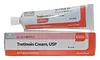
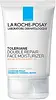
Actavis Tretinoin Cream, USP 0.025% Versus La Roche-Posay Toleriane Double Repair Face Moisturizer UV SPF 30
This chemical sunscreen covers most of the UV range, lighter on the deep UVA that drives aging.


What's inside
What's inside
 Key Ingredients
Benefits
Concerns
Ingredients Side-by-side


Butyl Methoxydibenzoylmethane 3%
UV Absorber
Homosalate 5%
Skin Conditioning
Ethylhexyl Salicylate 5%
UV Absorber
Octocrylene 7%
UV Absorber

Water
Skin ConditioningGlycerin
Humectant


Silica
Abrasive


Dimethicone
Emollient
Niacinamide
Smoothing







PEG-100 Stearate
Surfactant

Glyceryl Stearate
Emollient
Stearic Acid
Cleansing
Stearyl Alcohol
Emollient
Allantoin
Skin Conditioning
Ceramide NP
Skin Conditioning
Dimethicone/Vinyl Dimethicone Crosspolymer
Skin Conditioning
Sodium Hydroxide
BufferingMyristic Acid
Cleansing
Myristyl Alcohol
Emollient
Palmitic Acid
Emollient
Ammonium Polyacryloyldimethyl Taurate
Emulsion StabilisingDisodium EDTA
ChelatingCapryloyl Glycine
CleansingCaprylyl Glycol
Emollient
Citric Acid
Buffering
Xanthan Gum
EmulsifyingT-Butyl Alcohol
Perfuming



Cetyl Alcohol
Emollient
Tocopherol
Antioxidant

Butyl Methoxydibenzoylmethane 3%, Homosalate 5%, Ethylhexyl Salicylate 5%, Octocrylene 7%, Water, Glycerin, Silica, Dimethicone, Niacinamide, PEG-100 Stearate, Glyceryl Stearate, Stearic Acid, Stearyl Alcohol, Allantoin, Ceramide NP, Dimethicone/Vinyl Dimethicone Crosspolymer, Sodium Hydroxide, Myristic Acid, Myristyl Alcohol, Palmitic Acid, Ammonium Polyacryloyldimethyl Taurate, Disodium EDTA, Capryloyl Glycine, Caprylyl Glycol, Citric Acid, Xanthan Gum, T-Butyl Alcohol, Cetyl Alcohol, Tocopherol
Reviews
Alternatives
Ingredients Explained
These ingredients are found in both products.
Ingredients higher up in an ingredient list are typically present in a larger amount.
Stearic Acid is a fatty acid that is already found in your skin. It's one of the free fatty acids that works alongside ceramides and cholesterols to maintain your barrier.
In cosmetics, it is a multitasker:
Safety-wise, the CIR Expert Panel has concluded it to be safe in cosmetics when formulated to be non-irritating and non-sensitizing.
Free stearic acid is a C18 fatty acid that the Malassezia yeast can substrate, so this ingredient may not be fungal acne safe.
This ingredient does have a comedogenic rating of 2-3, but this doesn't mean a formula with this ingredient will clog pores.
Human testing has proved that any finished product with this ingredient won't automatically make you break out; it really comes down to concentration, formula, and your skin.
Learn more about Stearic AcidStearyl Alcohol is a type of fatty alcohol from stearic acid. It is a white, waxy compound used to emulsify ingredients used as an emollient or to thicken a product.
Emollients help soothe and hydrate the skin by trapping moisture.
Fatty alcohols are usually derived from natural fats and oils and therefore do not have the same drying or irritating effect as solvent (ethanol) alcohols.
The FDA allows products labeled "alcohol-free" to have fatty alcohols.
This ingredient may not be fungal acne safe. It is a primary fatty alcohol with a chain length above 12 carbons. A study from 2019 show Malassezia can feed on fatty alcohols in this range, so it may trigger fungal acne in those prone to it.
Learn more about Stearyl AlcoholWater. It's the most common cosmetic ingredient of all. You'll usually see it at the top of ingredient lists, meaning that it makes up the largest part of the product.
So why is it so popular? Water most often acts as a solvent - this means that it helps dissolve other ingredients into the formulation.
You'll also recognize water as that liquid we all need to stay alive. If you see this, drink a glass of water. Remember to stay hydrated!
Learn more about WaterXanthan gum is used as a stabilizer and thickener within cosmetic products. It helps give products a sticky, thick feeling - preventing them from being too runny.
On the technical side of things, xanthan gum is a polysaccharide - a combination consisting of multiple sugar molecules bonded together.
Xanthan gum is a pretty common and great ingredient. It is a natural, non-toxic, non-irritating ingredient that is also commonly used in food products.
Learn more about Xanthan Gum

