Proya Double Effect Whitening & Brightening Essence Serum
A serum with 41 ingredients, including niacinamide, vitamin E, and hyaluronic acid.
This brightening serum is formulated around Niacinamide and Tranexamic Acid to fade the look of dark spots and brighten dull-looking skin.
Worth noting
Contains Lavandula Angustifolia Flower Extract, an EU-listed fragrance allergen.
We independently verify ingredients, backed by peer-reviewed research. Suggest an update.
What's inside
Ingredients List
Water
Skin ConditioningGlycerin
Humectant


PPG-20 Methyl Glucose Ether
Skin ConditioningButylene Glycol
Humectant
Niacinamide
Smoothing









PEG-75
HumectantGlyceryl Glucoside
Humectant
1,2-Hexanediol
Skin Conditioning
Tranexamic Acid
Astringent
Hydroxyacetophenone
Antioxidant
Arginine
Masking
Carbomer
Emulsion StabilisingPPG-13-Decyltetradeceth-24
EmulsifyingLavandula Angustifolia Flower Extract
Cleansing

Panthenol
Skin Conditioning
Decarboxy Carnosine Hcl
Skin ConditioningErgothioneine
Antioxidant
Naringin
Skin ProtectingDipeptide-4
Skin Conditioning
Ethylbisiminomethylguaiacol Manganese Chloride
Antioxidant
Bacillus Ferment
Skin Conditioning

Salvia Miltiorrhiza Root Extract
Skin ConditioningThiotaurine
Antioxidant
Palmitoyl Tripeptide-5
Skin Conditioning
Diglucosyl Gallic Acid
Sodium Hyaluronate
Humectant
Acetyl Glucosamine
Skin Conditioning
Hydroxyethylpiperazine Ethane Sulfonic Acid
BufferingAllantoin
Skin Conditioning
Hydroxypropyl Cyclodextrin
MaskingTocopherol
Antioxidant
Dipropylene Glycol
HumectantXanthan Gum
EmulsifyingPropanediol
Solvent
Caprylyl Glycol
Emollient
Hydrogenated Lecithin
Emulsifying
Sucrose Laurate
Emollient
Sodium Dilauramidoglutamide Lysine
HumectantSucrose Dilaurate
Emollient
Sucrose Polylaurate
EmollientAroma


Water, Glycerin, PPG-20 Methyl Glucose Ether, Butylene Glycol, Niacinamide, PEG-75, Glyceryl Glucoside, 1,2-Hexanediol, Tranexamic Acid, Hydroxyacetophenone, Arginine, Carbomer, PPG-13-Decyltetradeceth-24, Lavandula Angustifolia Flower Extract, Panthenol, Decarboxy Carnosine Hcl, Ergothioneine, Naringin, Dipeptide-4, Ethylbisiminomethylguaiacol Manganese Chloride, Bacillus Ferment, Salvia Miltiorrhiza Root Extract, Thiotaurine, Palmitoyl Tripeptide-5, Diglucosyl Gallic Acid, Sodium Hyaluronate, Acetyl Glucosamine, Hydroxyethylpiperazine Ethane Sulfonic Acid, Allantoin, Hydroxypropyl Cyclodextrin, Tocopherol, Dipropylene Glycol, Xanthan Gum, Propanediol, Caprylyl Glycol, Hydrogenated Lecithin, Sucrose Laurate, Sodium Dilauramidoglutamide Lysine, Sucrose Dilaurate, Sucrose Polylaurate, Aroma
Key Ingredients
Benefits
Concerns
Ingredients Explained
Water. It's the most common cosmetic ingredient of all. You'll usually see it at the top of ingredient lists, meaning that it makes up the largest part of the product.
So why is it so popular? Water most often acts as a solvent - this means that it helps dissolve other ingredients into the formulation.
You'll also recognize water as that liquid we all need to stay alive. If you see this, drink a glass of water. Remember to stay hydrated!
Learn more about WaterGlycerin (or glycerol) is a compound naturally found in your skin. It's a powerhouse humectant that pulls water into the stratum corneum.
Topically, glycerin does several things at once:
Your skin makes glycerin on its own (mostly from sebaceous oil breakdown) and shuttles it to your outermost layer of skin, or your epidermis, via aquaporin-3.
Aquaporin-3 is a transporter that is essential for normal skin hydration, elasticity, and repair. Interestingly, mice lacking in AQP3 have dry and less elastic skin that can be fully corrected with glycerin.
This ingredient is non-irritating, plays well with almost every ingredient, and works across all skin types. Typical use is anywhere between 3-10% but can go up to 79% in some leave-on products.
Just know very high concentrations (>40%) can feel tacky in low humidity.
Glycerin is the name for this ingredient in American English. British English uses Glycerol/Glycerine.
Learn more about GlycerinWe don't have a description for PPG-20 Methyl Glucose Ether yet.
Butylene Glycol (or BG) is used within cosmetic products for a few different reasons:
Overall, Butylene Glycol is a safe and well-rounded ingredient that works well with other ingredients.
Though this ingredient works well with most skin types, some people with sensitive skin may experience a reaction such as allergic rashes, closed comedones, or itchiness.
Learn more about Butylene GlycolNiacinamide is a multitasking form of vitamin B3 that strengthens the skin barrier, reduces pores and dark spots, regulates oil, and improves signs of aging.
And the best part? It's gentle and well-tolerated by most skin types, including sensitive and reactive skin.
You might have heard of "niacin flush", or the reddening of skin that causes itchiness. Niacinamide has not been found to cause this.
In very rare cases, some individuals may not be able to tolerate niacinamide at all or experience an allergic reaction to it.
If you are experiencing flaking, irritation, and dryness with this ingredient, be sure to double check all your products as this ingredient can be found in all categories of skincare.
When incorporating niacinamide into your routine, look out for concentration amounts. Typically, 5% niacinamide provides benefits such as fading dark spots. However, if you have sensitive skin, it is better to begin with a smaller concentration.
When you apply niacinamide to your skin, your body converts it into nicotinamide adenine dinucleotide (NAD). NAD is an essential coenzyme that is already found in your cells as "fuel" and powers countless biological processes.
In your skin, NAD helps repair cell damage, produce new healthy cells, support collagen production, strengthen the skin barrier, and fight environmental stressors (like UV and pollution).
Our natural NAD levels start to decline with age, leading to slower skin repair, visible aging, and a weaker skin barrier. By providing your skin niacinamide, you're recharging your skin's NAD levels. This leads to stronger, healthier, and younger looking skin.
Another name for vitamin B3 is nicotinamide. This vitamin is water-soluble and our bodies don't store it. We obtain Vitamin B3 from either food or skincare. Meat, fish, wheat, yeast, and leafy greens contain vitamin B3.
The type of niacinamide used in skincare is synthetically created.
Learn more about NiacinamideThis ingredient is also known as Macrogol 4000. It is a polyethylene glycol with an average molecular weight of about 3,000 - 4,000 and functions as a humectant and solvent.
Solvents help dissolve and evenly distribute other ingredients within a formula.
Due to its high molecular weight, PEG-75 has limited skin penetration and remains mostly on the surface.
Learn more about PEG-75Glyceryl Glucoside is made from glycerol and glucose.
It is a humectant. Humectants help hydrate your skin by drawing moisture to it from the air.
Some foods that contain glyceryl glucoside include sake, miso, and wines.
Learn more about Glyceryl Glucoside1,2-Hexanediol is a synthetic liquid and another multi-functional powerhouse.
It is a:
- Humectant, drawing moisture into the skin
- Emollient, helping to soften skin
- Solvent, dispersing and stabilizing formulas
- Preservative booster, enhancing the antimicrobial activity of other preservatives
Tranexamic Acid (TXA) is a synthetic lysine derivative that is becoming one of the most exciting brightening ingredients in skincare.
Originally used in medicine as an anti-hemorrhagic agent, its skin brightening potential was discovered by accident; patients taking it orally started noticing their melasma was fading.
Unlike most brighteners that target tyrosinase (the enzyme that synthesizes melanin), TXA works further upstream. It basically blocks your cells from receiving the signal to produce pigment.
This makes it one of the rare actives that works on three pathways at once:
This makes it effective for treating melasma, post-inflammatory hyperpigmentation (PIH), and sun-induced dark spots.
The most effective cosmetic concentration sits between 2-5% and going higher doesn't boost results.
Side effects are generally mild; occasional irritation, flaking, or dryness have been reported at the start of use. Overall, this ingredient is pretty well tolerated, even by sensitive skin types.
Another perk of this ingredient is that it does not cause photosensitivity, so it's safe to use in the AM and PM.
"Does it actually penetrate?" is the part that gets argued about online and the honest answer from research + clinical trials at this time is "yes, but not easily."
TXA is a small molecule that loves water and carries both a positive and negative charge at the same time. Skin's outer layer is oily so a water-loving molecule like this has a hard time getting through it. Liu et al. 2021 showed that it doesn't really stick around well in the deeper layer where pigment-making cells actually live.
A 2025 paper puts it simply: penetration is poor and it depends heavily on how the product is formulated (Winn et al., J Cosmet Dermatol).
But "poor" isn't "none" and the research is fairly clear that topical TXA does something. A 2026 review that pooled results from multiple studies found it helped with moderate melasma but it didn't outperform hydroquinone. Some individual studies at 3% and 5% went head to head with hydroquinone and help up well.
So the fair takeaway is that it works, it's just slower and fussier about formulation than other actives (how the serum is built matters a lot).
There's real evidence here and it's not just clinic marketing. Reviews of microneedling plus TXA report less pigmentation, less melanin, and less redness (Zhang et al., Chinese Journal of Plastic and Reconstructive Surgery, 2024).
The most useful study compared 42 patients getting microneedling plus TXA against microneedling on its own; the group that got the acid saw much bigger improvement. This suggests the acid is pulling its weight and the needling isn't doing all the work.
Just two things worth flagging here:
Oral TXA also works well for melasma and gets used in clinics. However, it is a systemic drug with clotting-related risks and needs a prescription. Injections into the skin have also been studied with good results.
Neither is something a cosmetic product can do, but they help explain why so much attention goes into getting the topical version right.
Learn more about Tranexamic AcidHydroxyacetophenone is a small phenolic molecule that earns its place in a formulas as an antioxidant and preservative booster.
As a phenol, it is able to neutralize free radicals to protect both the product and the skin from oxidative stress.
Though it can't kill microbes on its own, it works as a good supporting agent when combined with other preservatives like Phenoxyethanol or 1,2-Hexanediol.
This ingredient naturally occurs as piceol in Norwegian spruce needles (~0.4-1.1% dry weight and in cloudberries). Though the cosmetic-grade material is synthesized for purity and consistency.
You'll usually see it used at low levels and suppliers recommend up to 1% added to a water phase.
Safety testing was done at concentrations like 0.05% in SPF products and 0.5% in a Human Repeated Insult Patch Test. The safety evidence is assuring; this ingredient is safe for cosmetics in current use and also holds safety status as a food flavoring as well.
An honest caveat: the "soothing" and "anti-inflammatory" claims come mostly from supplier marketing rather than published clinical trials. The Cosmetic Ingredient Review's own literature search found no useful efficacy studies on this ingredient.
So the antioxidant and preservative-boosting roles are the well supported ones while the calming benefit is plausible but thinly evidenced.
Overall, this is a well-tolerated, low-irritation multitasker that quietly helps a formula stay fresh and stable.
Learn more about HydroxyacetophenoneArginine is a semi-essential amino acid. This just means our bodies can product a bit on its own, but sometimes needs a little boost from food sources.
It is a part of your skin's natural moisturizing factor (NMF), or the water-loving molecules in your outermost layer of skin (stratum corneum) that keeps everything hydrated and happy.
Here's an interesting thing about Arginine: your skin converts it into urea through the Krebs-Henseleit urea cycle. Urea is one of the most effective humectants your skin naturally produces.
A clinical study showed applying 2.5% arginine hydrochloride to atopic dermatitis skin showed significant urea levels in the stratum corneum and improved moisture in just four weeks.
Arginine is also a precursor to nitric oxide; nitric oxide improves microcirculation and supports wound healing and collagen synthesis.
One study found that an amino acid complex containing Arginine reduced skin irritation, improved hydration, and accelerated skin repair in clinical / in-vivo studies.
Arginine itself is an amino acid and not a fatty acid, oil, or ester. On its own, it's not a direct food source for Malassezia, or the yeast that causes fungal acne.
Learn more about ArginineCarbomer is a synthetic thickening and gelling agent. It's basically the ingredient that gives a lot of serums, gels, creams, and sunscreens their smooth, non-sticky texture.
Although legally permitted at very high levels, carbomers are normally used at concentrations below 1%.
It also needs to be neutralized to actually thicken, and because it is a large molecule, it doesn't really penetrate the skin barrier.
Allergy-wise, the risk is very low. Clinical studies show carbomers have low potential for skin irritation/sensitization even at concentrations up to 100%.
A 2024 UK study patch-tested 1,302 patients and found true allergy to the parent group of carbomer to be rare with no confirmed relevant reactions.
Learn more about CarbomerWe don't have a description for PPG-13-Decyltetradeceth-24 yet.
Lavandula Angustifolia Flower Extract comes from the lavender plant.
Many components of lavender flowers are antioxidants, such as ferulic acid, caffeic acid, and several flavonoids.
Traditional Iranian folk medicine uses Lavender extract to help treat inflammation.
Lavender extract may have a scent.
It contains linalool, a known allergen. However, lavender extract contains less linalool than lavender essential oil.
Learn more about Lavandula Angustifolia Flower ExtractPanthenol is a common ingredient that helps hydrate and soothe the skin. It is found naturally in our skin and hair.
There are two forms of panthenol: D and L.
D-panthenol is also known as dexpanthenol. Most cosmetics use dexpanthenol or a mixture of D and L-panthenol.
Panthenol is famous due to its ability to go deeper into the skin's layers. Using this ingredient has numerous pros (and no cons):
Like hyaluronic acid, panthenol is a humectant. Humectants are able to bind and hold large amounts of water to keep skin hydrated.
This ingredient works well for wound healing. It works by increasing tissue in the wound and helps close open wounds.
Once oxidized, panthenol converts to pantothenic acid. Panthothenic acid is found in all living cells.
This ingredient is also referred to as pro-vitamin B5.
Learn more about PanthenolWe don't have a description for Decarboxy Carnosine Hcl yet.
Ergothioneine is an amino acid found naturally in mushrooms, grains, and meat. It has antioxidant and skin soothing properties.
This amino acid helps with:
- Maintaining DNA stability and cell reproduction
- Enhances cellular immunity
- Skin brightening
- Anti-aging
- Skin soothing
We don't have a description for Naringin yet.
Dipeptide-4 is a peptide.
This ingredient is also known as EUK-134.
EUK-134 is known for its ability to mimic SOD and catalase, two potent antioxidants. Antioxidants protect our cells from oxidative damage and premature aging.
According to a manufacturer and studies from Estee Lauder, EUK-134 protects the skin against UV induced DNA damage, reduces redness, and protects skin against toxic compounds.
Like SOD, EUK-134 specifically targets superoxide anions and pro-oxidant molecules.
EUK-134 is able to transform ROS (reactive oxygen species) into water and oxygen while destroying hydrogen peroxide.
Our cells create ROS as a byproduct of every day cell activity. Studies show overproduction of ROS is linked to inflammation and aging.
Why is there hydrogen peroxide in our cells? Our bodies produce hydrogen peroxide as a natural defense against superoxide.
Superoxide is a reactive form of oxygen ion that damages our cells. It is toxic in high concentrations, hence why our bodies produce hydrogen peroxide to protect itself.
However, this hydrogen peroxide is a double-edged sword. While it protects us against superoxide, hydrogen peroxide is corrosive on skin. It is also linked to the aging process.
This is where EUK-134 comes in: it can neutralize superoxide and hydrogen peroxide, making it a great anti-aging ingredient.
Learn more about Ethylbisiminomethylguaiacol Manganese ChlorideBacillus Ferment is created by fermenting Bacillus bacteria with yeast extract and carbohydrates. It acts as a humectant and, depending on the strain, can also provide gentle enzymatic exfoliation.
Depending on the strain and formulation, it may also act as a peptide, probiotic, or prebiotic. Certain strains of Bacillus Ferment help support the skin’s microbiome, soothe inflammation, and promote barrier repair and hydration.
It’s typically used at 0.5-5% concentration, either for mild exfoliation or to improve overall skin health and texture.
Some studies show that Bacillus species can inhibit certain plant fungi (such as Fusarium verticillioides and Fusarium oxysporum) used in agricultural biocontrol. However, these are filamentous molds, not the yeast (Malassezia furfur) responsible for fungal acne.
At this time, there are no studies showing that Bacillus Ferment inhibits Malassezia or that it has been tested on human skin or in cosmetic formulations. Because of this lack of cosmetic and dermatological research, we list Bacillus Ferment as not safe for fungal acne as a precaution. However, it may not trigger breakouts for everyone.
Learn more about Bacillus FermentWe don't have a description for Salvia Miltiorrhiza Root Extract yet.
Thiotaurine is an antioxidant.
Palmitoyl Tripeptide-5 is a synthetic signal lipopeptide. This just means it is a three amino acid chain bolted onto a palmitic acid tail so it can slip through the skin's lipid barrier.
This peptide has a "build more, lose less" approach.
It's designed to mimic the collagen-stimulating activity in your skin by copying a snippet of one of your skin's own matrix proteins. This nudges fibroblasts into making more collagen while inhibiting the enzyme that breaks down skin protein.
The manufacturer's in vivo study of 45 volunteers found 1% and 2.5% reduced the appearance of wrinkles by 7% and 12% respectively, after using it twice daily for 84 days.
This is in the expected range for peptides; they're slow and cumulative actives and not overnight fixers.
Typical use levels range from 1-3% and this ingredient gets along with pretty much everything.
On the fungal acne front:
Although palmitic acid sits in the chain length that Malassezia can feed on, this ingredient has it locked in an amine bond. This makes it hard for Malassezia to access as a source of food, and therefore fungal acne safe.
We don't have a description for Diglucosyl Gallic Acid yet.
Sodium Hyaluronate is the salt form of hyaluronic acid. It is a long sugar chain that is naturally found in your skin, joints, and connective tissue that maintains hydration and elasticity.
In skincare, it works as a humectant. It pulls water from the environment and deeper layers of skin and binds it to the surface.
Interestingly, the size of the molecule affects its behavior:
Some clinical evidence links low molecular weight versions to improved wrinkle depth, elasticity, anti-inflammatory effects, and barrier repair.
Many serums use a blend of both weights so you can get surface hydration plus longer-lasting and deeper effects.
You'll typically see concentrations between 0.1-2% for this ingredient.
Learn more about Sodium HyaluronateAcetyl Glucosamine is an antioxidant and humectant. It is an amino acid sugar and is naturally found in our skin.
The cool thing about this ingredient? It helps the skin produce hyaluronic acid and boost hydration. It also has antioxidant benefits to protect skin cells.
When paired with niacinamide, Acetyl Glucosamine has been shown to be effective at reducing discoloration.
Learn more about Acetyl GlucosamineWe don't have a description for Hydroxyethylpiperazine Ethane Sulfonic Acid yet.
Allantoin is a soothing ingredient known for its protective and moisturizing properties; it's basically a quiet workhorse ingredient you can find in a huge range of cosmetics.
Though it can be derived from the comfrey plant, allantoin is produced synthetically for cosmetic products to ensure purity.
Research shows it can encourage your skin cells to turn over and renew by stimulating keratinocyte and fibroblast proliferation.
It also has mild keratolytic properties to help loosen and shed dead skin cells without being harsh.
Studies also suggest allantoin can help calm inflammation by dialing down some of the chemical signals your skin sends out when it is irritated.
This ingredient is typically used in the 0.1-0.5% range, and the FDA recognizes it as a skin protectant in OTC products up to 2%.
Overall, allantoin is a wonderful addition to most routines; it is stable across a wide pH range (~4-8), works well with other ingredients, and is considered non-sensitizing/non-irritating.
Fun fact: Allantoin is naturally occurring in comfrey root, beets, chamomile, and wheat sprouts. Our bodies even produce it as a byproduct of uric acid metabolism.
Learn more about AllantoinThis ingredient is used in skincare as a delivery system.
It works by "encapsulating" active ingredients with its unique ring shape that is water-loving on the outside and oil-loving on the inside. This improves the stability and absorption of the product into the skin.
According to a manufacturer, it also offer some moisturizing effects.
Learn more about Hydroxypropyl CyclodextrinTocopherol is a fat-soluble antioxidant known as Vitamin E.
You'll find this ingredient in the vast majority of skincare (for good reason). It works to neutralize free radicals, or unstable molecules generated by UV exposure, pollution, and other environmental stressors, before they can cause oxidative damage to your skin cells.
Topically applied tocopherol has been shown to protect against UV damage by ramping up the skin's own natural defense enzymes.
It also acts as a skin conditioning agent; some studies show that regular topical use can improve the skin's water-binding capacity over 2-4 weeks.
This ingredient is especially loved for being a team player. When combined with Vitamin C, the photoprotective effect of both ingredients roughly doubles and the combo also helps reduce UV-induced DNA damage.
This ingredient has some brightening potential but it's more of a prevention ingredient than spot-fader. Cell studies show it can slow down melanin production but it's worth noting that it's not the most powerful brightener out there.
In formulations, it also serves as a stabilizer that helps protect other oxidation-prone ingredients from degrading.
Concentrations usually range from 0.1-1% in most leave-on products.
Learn more about TocopherolDipropylene Glycol is a synthetically created humectant, stabilizer, and solvent.
This ingredient helps:
Dipropylene glycol is technically an alcohol, but it belongs to the glycol family (often considered part of the ‘good’ alcohols). This means it is hydrating and gentle on skin unlike drying solvent alcohols like denatured alcohol.
As a masking agent, Dipropylene Glycol can be used to cover the smell of other ingredients. However, it does not have a scent.
Studies show Dipropylene Glycol is considered safe to use in skincare.
Learn more about Dipropylene GlycolXanthan gum is used as a stabilizer and thickener within cosmetic products. It helps give products a sticky, thick feeling - preventing them from being too runny.
On the technical side of things, xanthan gum is a polysaccharide - a combination consisting of multiple sugar molecules bonded together.
Xanthan gum is a pretty common and great ingredient. It is a natural, non-toxic, non-irritating ingredient that is also commonly used in food products.
Learn more about Xanthan GumPropanediol is an all-star ingredient. It softens, hydrates, and smooths the skin.
It’s often used to:
Propanediol is not likely to cause sensitivity and considered safe to use. It is derived from corn or petroleum with a clear color and no scent.
Learn more about PropanediolCaprylyl Glycol is a humectant, skin conditioner, emollient, and preservative booster derived from either caprylic acid or synthetically created.
Typical use levels vary from 0.3-1% as a preservative booster and go up to 2% to condition skin.
Because it is not a free-fatty acid, this ingredient is fungal acne safe (there's nothing for Malassezia to feed on).
Learn more about Caprylyl GlycolHydrogenated Lecithin is a more stable version of lecithin.
It's made by taking lecithin (a phospholipid commonly found in soybeans and egg yolks) and hydrogenating it. This just means the unsaturated fatty acids are turned into saturated ones so they don't go bad as easily.
This ingredient is an emollient, emulsifier, and penetration enhancer. As an emollient, it helps soften and hydrate skin by trapping moisture within. As an emulsifier, it prevents oil and water ingredients from separating.
Hydrogenated Lecithin can form tiny spherical structures made of phospholipid bilayers called liposomes. These liposomes are able to capture compounds inside their structure and deliver them through the skin barrier.
Because phospholipids are a natural component of our cell membranes, this ingredient is inherently compatible with skin.
A 2021 study found lecithin-based surfactants were less harsh and more tolerable comared to Sodium Lauryl Sulfate (SLS).
Learn more about Hydrogenated LecithinSucrose Laurate isn't fungal acne safe.
Sodium Dilauramidoglutamide Lysine (aka DLGL) is an amino-acid based surfactant. Because it has two fatty tails and two water-loving ends, it's really great at mixing oils and water into stable textures.
It is also a humectant; like hyaluronic acid, it can draw moisture to your skin.
DLGL has been studied as a skin delivery helper. In lab skin models, it increased accumulation/penetration of hydrophilic actives (like vitamin C).
An Australian NICNAS report states DLGL to be non-irritating to skin at less than 10% and non-irritating to eyes at less than 1%. There's no evidence of skin sensitization in animal tests, but be sure to patch test if you are sensitive to surfactants.
Learn more about Sodium Dilauramidoglutamide LysineSucrose Dilaurate isn't fungal acne safe.
We don't have a description for Sucrose Polylaurate yet.
Aroma refers to an ingredient, or mixture of ingredients, that impart or mask a flavor.
The name is slightly confusing. This is because INCI associates aroma with flavor instead of smell.
Here is the official definition from the The International Cosmetic Ingredient Dictionary and Handbook:
“Aroma is a term for ingredient labeling used to identify that a product contains a material or combination of materials normally added to a cosmetic to produce or to mask a particular flavor.”
INCI shows the only purpose of aroma to be "flavouring".
However, due to regulation differences, some companies may use aroma in place of parfum.
In Canada, this ingredient only has to be listed in concentrations above 1%.
Learn more about AromaReviews
No written reviews yet. Be the first to review this product.
Recent searches
Search reviews by skin type, ingredient, or keyword.
Where it's from
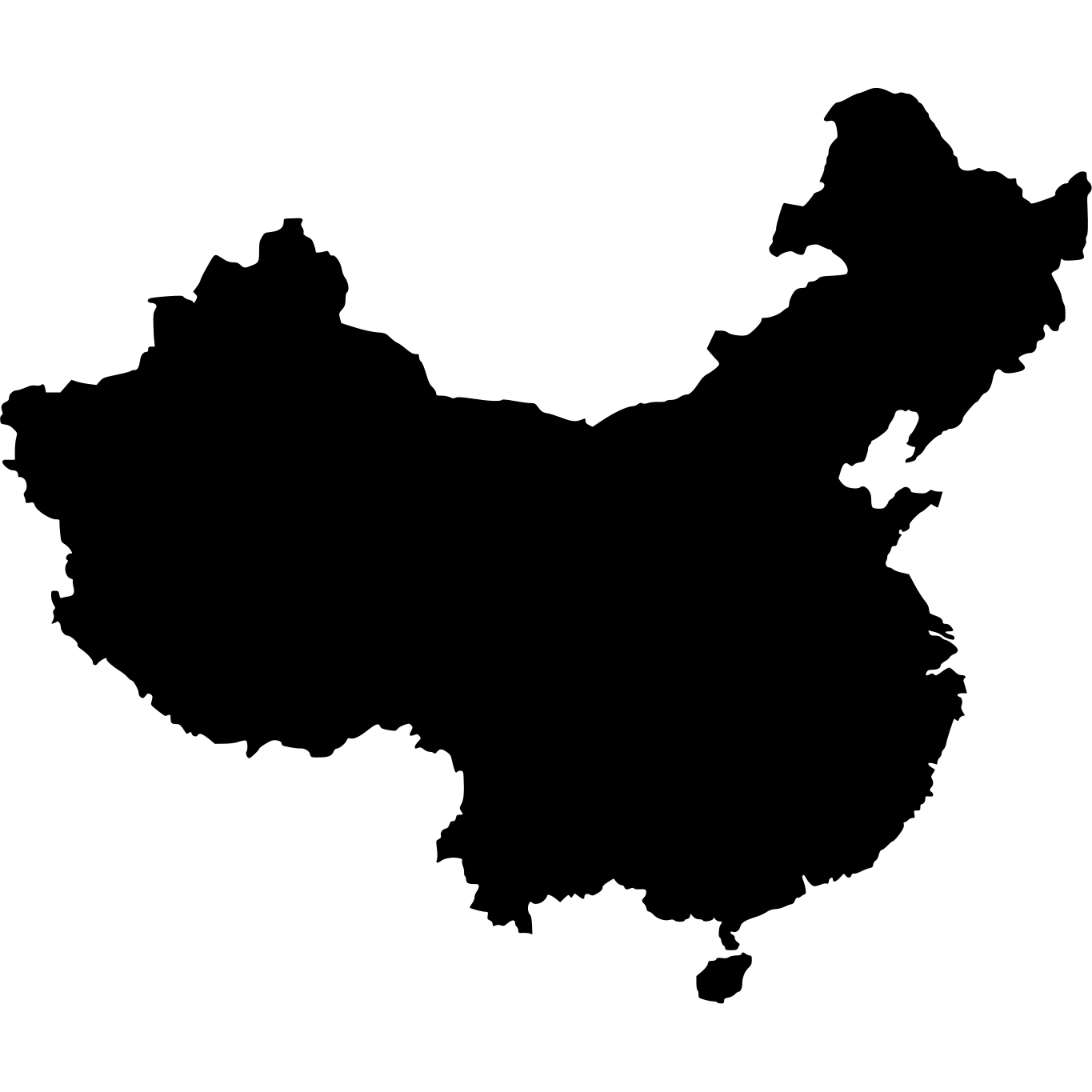
Proya is a Chinese brand

We're dedicated to providing you with the most up-to-date and science-backed ingredient info out there.
The data we've presented on this page has been verified by a member of the SkinSort Team.
Read more about us· Updated April 9, 2026 • Added by crysv2797


