Pili Ani Intense Hydrating Facial Cream
A moisturizer with 22 ingredients.
This barrier-repair moisturizer is formulated around Linoleic Acid and Linolenic Acid to strengthen the skin barrier and hydrate skin.
We independently verify ingredients, backed by peer-reviewed research. Suggest an update.
What's inside
Ingredients List
Water
Skin ConditioningCanarium Ovatum Fruit Oil
Emollient
Caprylic/Capric Triglyceride
Masking


Glyceryl Stearate
Emollient

Stearyl Alcohol
Emollient
Glycerin
Humectant
Propanediol
Solvent
Linoleic Acid
Cleansing

Linolenic Acid
Cleansing

Diheptyl Succinate
EmollientCapryloyl Glycerin/Sebacic Acid Copolymer
Skin ConditioningGlyceryl Caprylate
EmollientGlyceryl Undecylenate
Emollient
Phenoxyethanol
Preservative
Sodium Acrylates/Beheneth-25 Methacrylate Crosspolymer
Skin ConditioningHydrogenated Polydecene
EmollientLauryl Glucoside
CleansingHydrolyzed Corn Starch
HumectantBeta Vulgaris Root Extract
Skin ConditioningCanarium Luzonicum Gum Oil
Perfuming

Parfum
Masking
Ethylhexylglycerin
Skin ConditioningWater, Canarium Ovatum Fruit Oil, Caprylic/Capric Triglyceride, Glyceryl Stearate, Stearyl Alcohol, Glycerin, Propanediol, Linoleic Acid, Linolenic Acid, Diheptyl Succinate, Capryloyl Glycerin/Sebacic Acid Copolymer, Glyceryl Caprylate, Glyceryl Undecylenate, Phenoxyethanol, Sodium Acrylates/Beheneth-25 Methacrylate Crosspolymer, Hydrogenated Polydecene, Lauryl Glucoside, Hydrolyzed Corn Starch, Beta Vulgaris Root Extract, Canarium Luzonicum Gum Oil, Parfum, Ethylhexylglycerin
Benefits
Concerns
Ingredients Explained
Water. It's the most common cosmetic ingredient of all. You'll usually see it at the top of ingredient lists, meaning that it makes up the largest part of the product.
So why is it so popular? Water most often acts as a solvent - this means that it helps dissolve other ingredients into the formulation.
You'll also recognize water as that liquid we all need to stay alive. If you see this, drink a glass of water. Remember to stay hydrated!
Learn more about WaterCanarium Ovatum Fruit Oil is an oil.
Caprylic/Capric Triglyceride (aka MCT Oil) is a lightweight emollient, solvent, and texture enhancer. It is considered a skin-softener by helping to prevent moisture loss.
Though it behaves like an oil, it is not technically one due to its chemical composition. One perk of this ingredient is that it is very stable, resistant to oxidation, and unlikely to go rancid.
In practice, that translates to a long shelf life and a consistently elegant skin feel.
While there is an assumption Caprylic Triglyceride can clog pores due to it being derived from coconut oil, there is no research supporting this. Just patch test if you have concerns.
Fractionated coconut oil and MCT Oil are both listed as Caprylic/Capric Triglyceride according to INCI. This is because INCI names are based on the ingredient’s final chemical composition and not its marketing name or source.
This ingredient is treated as the gold standard fungal acne safe oil. Even though it is coconut derived, the problematic lauric acid is stripped out.
This leaves just caprylic (C8) and capric (C10) acid. These chain lengths actually trend antifungal; a 2020 study found caprylic acid was enough to disrupt Malassezia furfur cell membrane, with a caprylic acid derivative damaging membrane structures at concentrations as low as 0.2%.
Learn more about Caprylic/Capric TriglycerideGlyceryl Stearate is made by reacting glycerin with stearic acid (typically sourced from plant oils like palm or coconut). It's an emulsifier, emollient, and mild occlusive.
Emulsifiers help ingredients like oil and water stay mixed so your formula stays nicely blended and uniform in texture.
This ingredient is typically used in concentrations between 1-10%. Studies have found it to be non-sensitizing, non-phototoxic, and non-photoallergenic.
A close cousin of this ingredient is Glyceryl Stearate SE ("self-emulsifying"). This just has a small amount of sodium or potassium stearate added so it can emulsify without a co-emulsifier.
Since this ingredient is an ester of a C18 fatty acid, it may not be fungal acne safe. The Malassezia yeast can potentially metabolize within the C11-C24 range.
Fun fact: The human body also creates Glyceryl Stearate naturally.
Learn more about Glyceryl StearateStearyl Alcohol is a type of fatty alcohol from stearic acid. It is a white, waxy compound used to emulsify ingredients used as an emollient or to thicken a product.
Emollients help soothe and hydrate the skin by trapping moisture.
Fatty alcohols are usually derived from natural fats and oils and therefore do not have the same drying or irritating effect as solvent (ethanol) alcohols.
The FDA allows products labeled "alcohol-free" to have fatty alcohols.
This ingredient may not be fungal acne safe. It is a primary fatty alcohol with a chain length above 12 carbons. A study from 2019 show Malassezia can feed on fatty alcohols in this range, so it may trigger fungal acne in those prone to it.
Learn more about Stearyl AlcoholGlycerin (or glycerol) is a compound naturally found in your skin. It's a powerhouse humectant that pulls water into the stratum corneum.
Topically, glycerin does several things at once:
Your skin makes glycerin on its own (mostly from sebaceous oil breakdown) and shuttles it to your outermost layer of skin, or your epidermis, via aquaporin-3.
Aquaporin-3 is a transporter that is essential for normal skin hydration, elasticity, and repair. Interestingly, mice lacking in AQP3 have dry and less elastic skin that can be fully corrected with glycerin.
This ingredient is non-irritating, plays well with almost every ingredient, and works across all skin types. Typical use is anywhere between 3-10% but can go up to 79% in some leave-on products.
Just know very high concentrations (>40%) can feel tacky in low humidity.
Glycerin is the name for this ingredient in American English. British English uses Glycerol/Glycerine.
Learn more about GlycerinPropanediol is an all-star ingredient. It softens, hydrates, and smooths the skin.
It’s often used to:
Propanediol is not likely to cause sensitivity and considered safe to use. It is derived from corn or petroleum with a clear color and no scent.
Learn more about PropanediolLinoleic Acid is also known as Vitamin F. It is a fatty acid with emollient and skin conditioning properties.
Our top layer of skin, or epidermis, naturally contains high amounts of linoleic acid.
Your body uses linoleic acid to build ceramides and prostaglandins. Ceramides keep your skin's barrier hydrated and strong while prosaglandins help control inflammation and healing.
Needless to say, linoleic acid is crucial for having a strong skin barrier.
One study found applying linoleic acid rich sunflower oil to be more effective at repairing the skin barrier than olive oil.
This ingredient can also help treat acne by softening sebum to prevent clogged pores. Another study found using 2.5% linoleic acid gel for 4 weeks showed a 25% reduction in small comedones.
Studies show it can also help lighten hyperpigmentation or sun spots by disrupting the melanin production process. It also helps your skin shed melanin pigment from your skin caused by UV exposure.
Due to its role in the production of the fatty acid prostaglandin, linoleic acid can also help reduce inflammation and support wound healing.
Fun fact: Linoleic acid is an essential fatty acid. This means our bodies cannot create it on its own and we need to get it through foods such as nuts and vegetable oils.
Just know this ingredient is not always fungal-acne safe because it is a long-chain fatty acid (with 18 carbon atoms) that directly feeds the Malassezia yeast responsible for fungal acne.
Learn more about Linoleic AcidLinolenic Acid is also known as "ALA" or alpha-linolenic acid. It is a key fatty acid.
Our skin uses this ingredient for maintaining a healthy skin barrier, regulating inflammation, and supporting keratinocyte function.
ALA is a great skin hydrator because it has the ability to restore lipids in our stratum corneum, or outermost layer of our skin; it also helps prevent transepidermal water loss.
This ingredient also helps soothe irritated skin by downregulating inflammation.
Chia seed oil is one of the highest natural sources of ALA. Research shows topical chia seed oil significantly improves skin hydration, reduces itch, and strengthens the barrier in both healthy and extremely dry skin.
Additionally, in-vivo and in-vitro studies show ALA exhibits antioxidant properties, reduces UV-induced inflammation, and supports wound healing.
Early research showed a fatty-acid deficiency in animals leads to abnormal skin barrier function. It is believed a deficiency in linolenic acid may be linked to skin disorders like eczema.
Fun fact: This ingredient is considered an essential fatty acid for humans. This means our bodies cannot naturally produce it and we must get it from food. Some foods rich in linolenic acid include walnuts, fish oils, soy, and canola.
Learn more about Linolenic AcidWe don't have a description for Diheptyl Succinate yet.
We don't have a description for Capryloyl Glycerin/Sebacic Acid Copolymer yet.
Glyceryl Caprylate comes from glycerin and caprylic acid. It is an emollient, co-emulsifier, and preservative booster.
Its short C8 fatty acid chain makes it behave differently from its longer-chain emollient cousins like Glyceryl Stearate. It feels more lightweight, fast-absorbing, and silky instead of rich and waxy.
As a co-emulsifier, its "head" and "tail" sit at the oil-water interface. But overall, the short C8 tail and not being water soluble means it doesn't really have the muscle to emulsify a formula on its own. That's why you'll often see it paired with a primary emulsifier like Cetearyl Glucoside.
Interestingly, Glyceryl Caprylate acts as a preservative booster. This is because its fatty-acid backbone disrupts microbial lipid membranes. It shows excellent activity against bacteria and yeast but is weaker against mold.
Typical concentrations range from 0.5-1% and this ingredient is generally non-irritating.
Because this ingredient has a C8 fatty acid chain, it is outside the range that the Malassezia yeast metabolizes (making it fungal acne safe).
Learn more about Glyceryl CaprylateGlyceryl Undecylenate is a gentle ester made by joining glycerin and undecylenic acid (a fatty acid pulled from castor oil).
In formulations, it pulls double duty as a skin-conditioning emollient and mild preservative.
The glycerin side attracts and binds water to support skin hydration and the undeclyenic acid side adds a bit of broad-spectrum antimicrobial activity.
Undecylenic acid inhibits the formation of fungal biofilm and the branching filaments that let fungi spread.
Typical use concentrations range from 0.1-5%, but it is generally used on the lower end and paired with other mild preservative boosters like caprylyl glycol.
On the fungal acne front:
This ingredient is described in the patent literature as a Malassezia-active ingredient used to treat an excess of Malassezia on the skin (Malassezia is actually a yeast and not fungal).
Though it leans anti-fungal, the leftover Malassezia yeast may feed on the Undecylenic Acid portion of this ingredient. Just know this ingredient may not be a trigger for everyone.
Learn more about Glyceryl UndecylenatePhenoxyethanol is one of the most widely used preservatives in skincare (and for good reason!).
It has a large spectrum of antimicrobial activity and especially effective bacteria, yeast, and mold while only having a weak effect on your skin's natural microbiome.
On a cellular level, it disrupts the cell membranes of microbes by poking holes that make the cell leak. This shuts down the chemical reactions the microbe needs to make energy so it can no longer survive.
Another perk of this ingredient is that it stays functional across a wide pH range (3-10).
You'll often see it paired with boosters like Ethylhexylglycerin; one study showed that a 1:9 ratio of Ethylhexylglycerin to Phenoxyethanol damages bacterial membranes as effectively as doubling the Phenoxyethanol concentration on its own.
Typical use concentrations range from 0.3-1% depending on the formula, and this ingredient is capped at 1% int the EU.
Safety-wise, the fear mongering does not hold up to the evidence. The EU's Scientific Committee on Consumer Safety and FDA consider it safe as a preservative at up to 1%, including for children of all ages.
Adverse systemic effects only showed up in animal studies at exposures roughly 200x higher than what people get from cosmetics. And despite its very widespread use, this ingredient is a rare sensitizer and allergic reactions are uncommon.
Learn more about PhenoxyethanolWe don't have a description for Sodium Acrylates/Beheneth-25 Methacrylate Crosspolymer yet.
Hydrogenated Polydecene is a synthetic emollient. It forms a non-occlusive film on the skin's surface to provide a silky feel without being greasy.
In vivo studies in volunteers with atopic and dry skin showed no irritation or intolerance. The volunteers also saw a positive effect in dryness, scaling, and roughness after 28 days of use.
Concentrations up to 100% in guinea pig tests found it to be non-sensitizing and completely safe for use in cosmetics.
Learn more about Hydrogenated PolydeceneLauryl Glucoside sugar- and lipid-based cleansing agent. It is created from glucose and lauryl alcohol.
This ingredient is a surfactant, making it easier to rinse oil, dirt, and other pollutants away.
A British study found lauryl glucoside to cause skin sensitivity for some people. We recommend speaking with a professional if you have concerns.
Other names for this ingredient include "Lauryl Polyglucose", "Lauryl glycoside", and "D-Glucopyranoside".
Learn more about Lauryl GlucosideHydrolyzed Corn Starch is made by breaking down corn starch into smaller sugar and carbohydrate units through acid or enzyme hydrolysis. The result is a blend of sugars (glucose, maltose, and maltodextrins).
It has skin conditioning and humectant properties and helps the skin stay hydrated. According to a manufacturer, this ingredient helps provide humidity resistance and frizz control in haircare.
Beta Vulgaris Root Extract comes from the beet root plant. Beet Root has high Vitamin C content.
Beet roots also contain antioxidants. Antioxidants help fight free-radicals. Free-radicals are molecules that may damage your skin cells, such as pollution.
Beet root has many benefits when eaten. More research is needed on applying beetroot in skincare.
Beet Root is used to add pink/red color.
Learn more about Beta Vulgaris Root ExtractCanarium Luzonicum Gum Oil is a fragrance and is an oil.
Parfum is a catch-all term for an ingredient or more that is used to give a scent to products.
Also called "fragrance", this ingredient can be a blend of hundreds of chemicals or plant oils. This means every product with "fragrance" or "parfum" in the ingredients list is a different mixture.
For instance, Habanolide is a proprietary trade name for a specific aroma chemical. When used as a fragrance ingredient in cosmetics, most aroma chemicals fall under the broad labeling category of “FRAGRANCE” or “PARFUM” according to EU and US regulations.
The term 'parfum' or 'fragrance' is not regulated in many countries. In many cases, it is up to the brand to define this term.
For instance, many brands choose to label themselves as "fragrance-free" because they are not using synthetic fragrances. However, their products may still contain ingredients such as essential oils that are considered a fragrance by INCI standards.
One example is Calendula flower extract. Calendula is an essential oil that still imparts a scent or 'fragrance'.
Depending on the blend, the ingredients in the mixture can cause allergies and sensitivities on the skin. Some ingredients that are known EU allergens include linalool and citronellol.
Parfum can also be used to mask or cover an unpleasant scent.
The bottom line is: not all fragrances/parfum/ingredients are created equally. If you are worried about fragrances, we recommend taking a closer look at an ingredient. And of course, we always recommend speaking with a professional.
Learn more about ParfumEthylhexylglycerin is created from glycerin. It is a multitasker ingredient that:
The CIR Expert Panel found minimal skin absorption or sensitization of any kind in a safety assessment. Though this ingredient is considered well-tolerated, a small number of cases of allergic dermatitis have been published since 2002. Just be sure to patch test if you are unsure.
Industry-reported use ranges from 8% in rinse-off products and 2% in leave-on formulations.
Learn more about EthylhexylglycerinReviews
No written reviews yet. Be the first to review this product.
Recent searches
Search reviews by skin type, ingredient, or keyword.
Where it's from
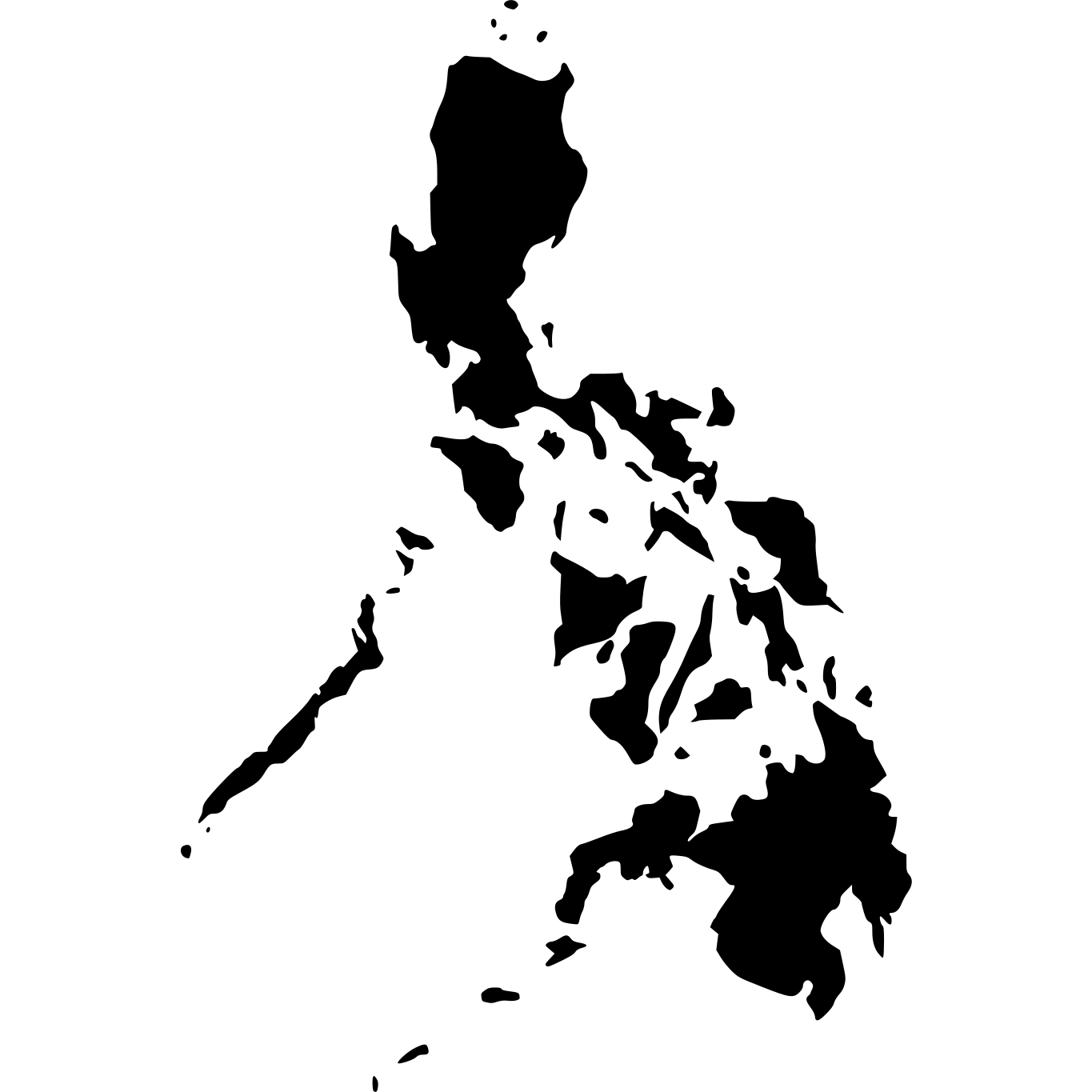
Pili Ani is a Filipino brand

We're dedicated to providing you with the most up-to-date and science-backed ingredient info out there.
The data we've presented on this page has been verified by a member of the SkinSort Team.
Read more about us· Updated January 30, 2025 • Added by jnm


