C9 Beauty Of Sweden Face Oil
A oil with 17 ingredients, including vitamin C and vitamin E.
This hydrating oil is formulated around Simmondsia Chinensis Seed Oil and Squalane to hydrate skin and strengthen the skin barrier.
We independently verify ingredients, backed by peer-reviewed research. Suggest an update.
What's inside
Ingredients List
Caprylic/Capric Triglyceride
Masking


Helianthus Annuus Seed Oil
Emollient


Simmondsia Chinensis Seed Oil
Emollient
Canola Oil
Emollient


C15-19 Alkane
SolventTocopheryl Acetate
Antioxidant


Squalane
Emollient
Beta-Carotene
Skin ConditioningSqualene
Emollient
Ascorbyl Tetraisopalmitate
Antioxidant

Daucus Carota Sativa Root Extract
Skin Conditioning
Daucus Carota Sativa Seed Oil
Emollient
Tocopherol
Antioxidant
Cannabidiol - Derived From Extract Or Tincture Or Resin Of Cannabis
Antioxidant
Glycine Soja Oil
Emollient
Beta-Sitosterol
Emulsion Stabilising
Parfum
Masking


Caprylic/Capric Triglyceride, Helianthus Annuus Seed Oil, Simmondsia Chinensis Seed Oil, Canola Oil, C15-19 Alkane, Tocopheryl Acetate, Squalane, Beta-Carotene, Squalene, Ascorbyl Tetraisopalmitate, Daucus Carota Sativa Root Extract, Daucus Carota Sativa Seed Oil, Tocopherol, Cannabidiol - Derived From Extract Or Tincture Or Resin Of Cannabis, Glycine Soja Oil, Beta-Sitosterol, Parfum
Key Ingredients
Benefits
Concerns
Ingredients Explained
Caprylic/Capric Triglyceride (aka MCT Oil) is a lightweight emollient, solvent, and texture enhancer. It is considered a skin-softener by helping to prevent moisture loss.
Though it behaves like an oil, it is not technically one due to its chemical composition. One perk of this ingredient is that it is very stable, resistant to oxidation, and unlikely to go rancid.
In practice, that translates to a long shelf life and a consistently elegant skin feel.
While there is an assumption Caprylic Triglyceride can clog pores due to it being derived from coconut oil, there is no research supporting this. Just patch test if you have concerns.
Fractionated coconut oil and MCT Oil are both listed as Caprylic/Capric Triglyceride according to INCI. This is because INCI names are based on the ingredient’s final chemical composition and not its marketing name or source.
This ingredient is treated as the gold standard fungal acne safe oil. Even though it is coconut derived, the problematic lauric acid is stripped out.
This leaves just caprylic (C8) and capric (C10) acid. These chain lengths actually trend antifungal; a 2020 study found caprylic acid was enough to disrupt Malassezia furfur cell membrane, with a caprylic acid derivative damaging membrane structures at concentrations as low as 0.2%.
Learn more about Caprylic/Capric TriglycerideHelianthus Annuus Seed Oil is a plant oil derived from the seeds of a sunflower.
It is rich in fatty acids, primarily linoleic acid and oleic acid. This gives it emollient and skin conditioning properties.
The reason this ingredient is so effective is because it forms a thin film on the skin that reduces transepidermal water loss (TEWL) while supplying linoleic acid to the stratum corneum to improve barrier strength.
The high linoleic acid content is particularly noteworthy for acne-prone skin.
Research suggests that acne-prone skin tends to be deficient in linoleic acid in sebum. Topical application may help replenish this to support a healthier follicular environment and less comedone-promoting sebum.
One randomized study found sunflower seed oil preserved skin barrier integrity in adult volunteers with and without atopic dermatitis (outperforming olive oil).
This ingredient is well-studied, gentle, and an effective emollient suitable for most skin types.
On fungal acne: This ingredient may not be Fungal acne (Malassezia folliculitis) safe. This is because it contains fatty acids with carbon chain lengths in the C11-C24 range.
Learn more about Helianthus Annuus Seed OilJojoba oil is one of the most well-studied plant-derived ingredients in cosmetics. It is an emollient with a special structure.
Because it is made up of 97-98% wax esters, it closely mirrors the linear monoesters found in human sebum. This makes it skin compatible, non-greasy, and lightweight.
Unlike other plant oils, jojoba wax doesn't easily penetrate skin. It mostly works in the uppermost layers as an emollient. This just means it forms a light barrier on the skin to help retain moisture.
Formulations with jojoba esters up to 90% reduced transepidermal water loss (TEWL) and increased barrier recovery by 81% (outperforming bisabolol at 47%).
Besides barrier support, the science also suggests jojoba to have anti-inflammatory effects and potential applications for skin infections, aging, and wound healing.
Fun fact: Indigenous cultures have used jojoba as a moisturizer and to help treat burns for centuries.
Fungal acne: The Malassezia yeast is known to metabolize fatty acids in the C11-24 range and jojoba's dominant fatty acid components fall into this range. This ingredient may not be fungal acne safe.
Learn more about Simmondsia Chinensis Seed OilCanola Oil is a plant-oil and low-erucic-acid variety of rapeseed. Like other seed oils, it functions as an emollient that softens skin and slows water loss.
Its fatty acid profile is mostly linoleic acid (55-65%) with some oleic, palmitic, and stearic acids. There are also some small amounts of vitamin E and plant sterols.
The sterol content is pretty interesting:
In a controlled human study, a single application of canola oil and especially its sterol-enriched fraction reduced visible irritation, redness, and water loss caused by SLS. Plain canola oil and most other tested oils did little on healthy, un-irritated skin.
It's pretty much just a calm, moisturizing oil that helps with soothing if your skin is already irritated.
Fun fact: Canadian growers bred the low-erucic variety in the 1970's, and the name stands for "Canadian oil, Low Acid").
Since canola oil is made up of C18 fatty acids, it may not be fungal acne safe. The Malassezia yeast feeds on chain lengths C11-24.
This ingredient shows up on a lot of "pore-clogging" lists but there's no real evidence behind that. It doesn't even have a comedogenic rating from an actual study; the numbers you'll find online come from blogs citing other blogs.
Some people still find it breaks them out. So if that's you, definitely trust your skin.
Learn more about Canola OilC15-19 alkane is a mixture of alkanes. Alkanes are hydrocarbons with carbon atoms held together by single bonds.
It is a synthetically created solvent and emollient often used to replace silicones or mineral oil. As an emollient, C15-19 Alkane helps soften and soothe the skin. Emollients create a barrier to trap moisture inside.
You'll often see this ingredient used with mineral UV filters such as titanium dioxidide and zinc oxide. It helps these UV filter ingredients be more spreadable.
This ingredient is biodegradable. According to a manufacturer, it is also known as Hydrogenated Polyfarnesene.
Learn more about C15-19 AlkaneTocopheryl Acetate is a stable, shelf-friendly form of vitamin E.
Formulators love it because plain vitamin E oxidizes quickly once it hits air. This acetate version stays stable and resists going off, helping to extend a product's shelf life.
It's actually inactive on its own and works like a slow-release "storage" form; the enzymes in your skin called esterases gradually convert it into active vitamin E over time.
One in vivo study showed 5% of the acetate in the living layer of the epidermis converted to vitamin E after 5 days of application. This study also found the skin gained protection against UV damage even though the conversion was slow and small.
Once converted, vitamin E acts as a skin's main fat-soluble antioxidant that fights free radicals to protect skin from damage.
Topical vitamin E generally boosts the skin's photoprotection, and it reduced UV-damage in animal models.
This ingredient has some brightening potential but it's more of a prevention ingredient than spot-fader. Cell studies show it can slow down melanin production but it's worth noting that it's not the most powerful brightener out there.
Overall, it has a pretty solid safety profile and has been found to be non-irritating and non-comedogenic. Allergic reactions may happen but stay rare due to how widely the ingredient gets used.
The concentration will vary depending on the formula; industry data shows 0.1% in baby lotions, 3% in lipsticks, and 5% in foot powders. You can also find this ingredient at 100% in a pure vitamin E oil.
Most leave-on skincare keeps it at the lower end, often between 0.5-1%.
Learn more about Tocopheryl AcetateSqualane is the hydrogenated and shelf-stable form of squalene (a lipid that naturally occurs in human sebum).
It is an emollient and skin conditioning agent that is able to integrate seamlessly into the skin's lipid barrier without clogging pores.
This is due to how structurally similar it is to what your skin already produces.
Though it is mostly an emollient that helps soften and hydrate skin, it also has some humectant and occlusive action. Humectants help the skin retain moisture while occlusives seal it in, making squalane a triple-threat moisturizer.
Research shows it has antioxidant capabilities that help protect against stressors like UV exposure, specifically UVA induced oxidative stress. This study also found that it supports collagen biosynthesis in human dermal fibroblasts.
No clinical study has reported significant adverse effects and irritation reactions are very rare from this ingredient (even at 100% concentration).
Overall, it's a fantastic ingredient for hydration and is suitable for all skin types.
This depends on the source. Squalane can be derived from both plants and animals. Most squalane used in skincare comes from plants.
Please note: the source of squalane is only known if disclosed by the brand. We recommend reaching out to the brand if you have any questions about their squalane.
Read more about squalene with an "e".
Though squalane is often called an oil, it’s technically not one. It is a hydrocarbon, meaning it is only made of carbon and hydrogen. True oils are triglycerides and made of fatty acids and glycerol.
The term “oil-free” isn’t regulated so companies can define it however they want. Some exclude all oils, while others just avoid mineral oil or comedogenic oils.
Squalane has a comedogenic rating of 1 from the original 1972 study that tested raw ingredients under occlusion on rabbit ears. This system is not standardized or peer-reviewed, and using the raw ingredients is very different from how diluted cosmetic formulations are used on human skin.
A comedogenic rating of 1 means it is "unlikely to clog pores" according to the original rating system.
The overall formula of a product matters more than the individual ingredients on whether or not it will cause clogged pores.
Learn more about SqualaneBeta-Carotene is a fat-soluble carotenoid pigment. It is the thing responsible for giving carrots, sweet potatoes, apricots, and other orange-yellow produce their color.
It is a potent antioxidant that neutralizes free radicals (mainly reactive oxygen species) that come at your skin from both the environment and internal processes.
When applied topically, beta-carotene accumulates in your outermost layer of skin and acts as a first-line defense against photo-oxidative stress.
Research has established that carotenoids like beta-carotene boosts your skin's innate resistance against UVB induced erythema. Please know this does not mean beta-carotene can replace your sunscreen.
Newer studies show it can also help inhibit molecular markers of oxidative stress like MMP-1 and MMP-9, enzymes that break down collagen.
In some cases, it can be used as a cosmetic colorant as well (INCI name: CI 40800).
Beta-carotene pairs well with other antioxidants like Vitamin E and Vitamin C for a synergistic effect.
Learn more about Beta-CaroteneSqualene is one of the main components of skin surface lipids. It is naturally found in our skin and makes up about 13% of sebum.
Topically, it is an emollient and skin conditioning agent.
Research highlights its role in antioxidant activity, anti-inflammatory effects, skin barrier protection, and wound healing support.
In vivo research has shown that transepidermal water loss (TEWL) caused by irritant exposure can be reverse with squalene supplementation (pointing to barrier recovery support).
Its antioxidant activity is backed by ex vivo and cell-based evidence showing it can scavenge free radicals but large-scale human clinical trials isolating this effect remain limited.
One study found squalene regulated proinflammatory behavior in ways relevant to wound healing, and in vitro fibroblast studies also shows it stimulates cell migration which is a key step in skin repair.
There's just one nuance to know about this ingredient:
Squalene is particularly vulnerable to oxidation; it breaks down from UV exposure 10x faster than the other lipids on your skin's surface. The byproducts of that breakdown can clog pores and trigger inflammation, potentially worsening acne.
This is why squalene is often hydrogenated into its stable counterpart: squalane (with an "a"). Most great formulations will have alreadu kept this in mind.
Squalene has shown no significant clinical evidence of sensitization and is a great hydrating ingredient.
Learn more about SqualeneAscorbyl Tetraisopalmitate is a version of ascorbic acid, or Vitamin C.
This ingredient has many benefits including reducing wrinkles, skin soothing, dark spot fading, and fighting against free radicals.
It helps with dark spot fading by interfering with the process of skin darkening, helping to reduce hyperpigmentation. Like other forms of vitamin C, this ingredient encourages the skin to create more collagen.
As an antioxidant, it helps fight free-radicals. Free-radicals are molecules that may damage your skin cells.
One study found Ascorbyl Tetraisopalmitate to degrade in sunlight, but is stabilized when combined with acetyl zingerone.
Learn more about Ascorbyl TetraisopalmitateDaucus Carota Sativa Root Extract comes from the root commonly known as carrot (the orange kind we eat!).
This extract contains beta-carotene, a pigment responsible for giving plants the orange color. Beta-carotene is a potent antioxidant. Antioxidants may help reduce the signs of aging.
Beta-carotene is the reason we turn orange if we eat too many carrots.
It should be noted coming into contact with the leaves of wild carrots can cause skin irritation. The sap causes phytophotodermatitis, or sensitivity exposed to sunlight.
This ingredient is created using the edible parts of the carrot.
Learn more about Daucus Carota Sativa Root ExtractDaucus Carota Sativa Seed Oil is also known as carrot seed oil. In skincare, it behaves as an emollient as a fixed oil and as a fragrance ingredient as an essential oil.
It's a fatty emollient oil whose main fatty acids are petroselinic (about 59%), linoleic (about 12%), palmitic (about 10%) and stearic (about 2%).
All studies done on this ingredient are in vitro or animal; carrot seed essential oil has been shown to speed up wound closure in rats. Cell culture has also shown it to have anti-inflammatory and anti-microbial activity against gram-positive bacteria.
There is a myth going around that this ingredient has an SPF of 38-40. It traces back to a 2009 paper that tested multi-ingredient herbal sunscreen and not just this oil. When tested properly, carrot seed oil measured SPF 0.1 in vitro and 2.5 in vivo. Please do not treat this ingredient as sun protection!
Allergies are documented but uncommon and most of the documented cases come from canning factory workers. It's safe to patch test if you have botanical sensitivities or allergies.
The essential oil version of this ingredient is a terpene-rich fragrance material so those with fragrance sensitivities should also patch test.
There is a published case of phytophotodermatitis after use of a carrot extract-containing sunscreen that presented as a hyperpigmented patch. This is because Apiaceae plants can carry furanocoumarins.
Carrot is in the same plant family as celery and parsley, which contain furanocoumarins. These are compounds that can make skin more reactive to sunlight.
Carrots themselves have very little of them (usually only trace amounts) and the steam-distilled version shouldn't carry them at all since they're too heavy to come through distillation.
If you're using a leave-on product with it during the day, wearing sunscreen covers it.
This ingredient shows up on a lot of "pore-clogging" lists but there's no real evidence behind that. It doesn't even have a comedogenic rating from an actual study; the numbers you'll find online come from blogs citing other blogs.
Ratings for other ingredients mostly come from a 1980s rabbit ear test. This test doesn't translate well to human skin or to real products because the ingredient sits at a much lower percentage.
Some people still find it breaks them out due to the fatty acid profile. So if that's you, definitely trust your skin.
The Malassezia yeast feeds on long-chain fatty acids (C11-24). The fatty acids in this ingredient fall right into that range, making it not fungal acne safe.
Learn more about Daucus Carota Sativa Seed OilTocopherol is a fat-soluble antioxidant known as Vitamin E.
You'll find this ingredient in the vast majority of skincare (for good reason). It works to neutralize free radicals, or unstable molecules generated by UV exposure, pollution, and other environmental stressors, before they can cause oxidative damage to your skin cells.
Topically applied tocopherol has been shown to protect against UV damage by ramping up the skin's own natural defense enzymes.
It also acts as a skin conditioning agent; some studies show that regular topical use can improve the skin's water-binding capacity over 2-4 weeks.
This ingredient is especially loved for being a team player. When combined with Vitamin C, the photoprotective effect of both ingredients roughly doubles and the combo also helps reduce UV-induced DNA damage.
This ingredient has some brightening potential but it's more of a prevention ingredient than spot-fader. Cell studies show it can slow down melanin production but it's worth noting that it's not the most powerful brightener out there.
In formulations, it also serves as a stabilizer that helps protect other oxidation-prone ingredients from degrading.
Concentrations usually range from 0.1-1% in most leave-on products.
Learn more about TocopherolCannabidiol goes by the more common name of CBD, the main component of the cannabis plants. It is found in the flowering portion of the plants.
CBD has a soothing effect on skin and works as an antioxidant. When applied to the skin, it works with the cannabinoid receptors found in our skin, which tell us body when there is pain or irritation. It has also been found to help reduce excess sebum.
As an antioxidant, CBD helps combat the damage from free-radical molecules. This may help fight the signs of aging.
Learn more about Cannabidiol - Derived From Extract Or Tincture Or Resin Of CannabisGlycine Soja Oil is a plant-derived oil from soybean seeds. Like other oils, it is rich in essential fatty acids (mostly linoleic and oleic) that support skin hydration and barrier function.
The fatty acids are able to integrate into the lipid matrix of the stratum corneum to help soften skin and reduce water loss.
On top of that, soybean oil is rich in vitamins like vitamin E, a potent antioxidant.
Research on soybean's active components also point to anti-inflammatory, collagen-stimulating, antioxidant activity, and protection against UV-induced oxidative damage.
Most of this research applies to the broader soybean plant and not just the oil fraction alone.
This ingredient does carry a comedogenic rating of 3 from the old rabbit-ear assay. Just remember testing finished products in humans showed that formulas built with "comedogenic" ingredients are not necessarily comedogenic themselves. It's worth patch testing if you're breakout prone, and always listen to your skin.
Because this ingredient is a saturated triglyceride, it may not be fungal acne safe. This is because Malassezia breaks down sebum triglycerides into fatty acids it can consume, making this ingredient a possible source for the yeast.
Learn more about Glycine Soja OilBeta-Sitosterol is a plant-derived fatty acid with a structure similar to cholesterol (which naturally occurs in skin). It helps hydrate the skin and stabilize formulations.
This ingredient can be naturally found in fruits, veggies, nuts, and seeds.
Parfum is a catch-all term for an ingredient or more that is used to give a scent to products.
Also called "fragrance", this ingredient can be a blend of hundreds of chemicals or plant oils. This means every product with "fragrance" or "parfum" in the ingredients list is a different mixture.
For instance, Habanolide is a proprietary trade name for a specific aroma chemical. When used as a fragrance ingredient in cosmetics, most aroma chemicals fall under the broad labeling category of “FRAGRANCE” or “PARFUM” according to EU and US regulations.
The term 'parfum' or 'fragrance' is not regulated in many countries. In many cases, it is up to the brand to define this term.
For instance, many brands choose to label themselves as "fragrance-free" because they are not using synthetic fragrances. However, their products may still contain ingredients such as essential oils that are considered a fragrance by INCI standards.
One example is Calendula flower extract. Calendula is an essential oil that still imparts a scent or 'fragrance'.
Depending on the blend, the ingredients in the mixture can cause allergies and sensitivities on the skin. Some ingredients that are known EU allergens include linalool and citronellol.
Parfum can also be used to mask or cover an unpleasant scent.
The bottom line is: not all fragrances/parfum/ingredients are created equally. If you are worried about fragrances, we recommend taking a closer look at an ingredient. And of course, we always recommend speaking with a professional.
Learn more about ParfumReviews
No written reviews yet. Be the first to review this product.
Recent searches
Search reviews by skin type, ingredient, or keyword.
Where it's from
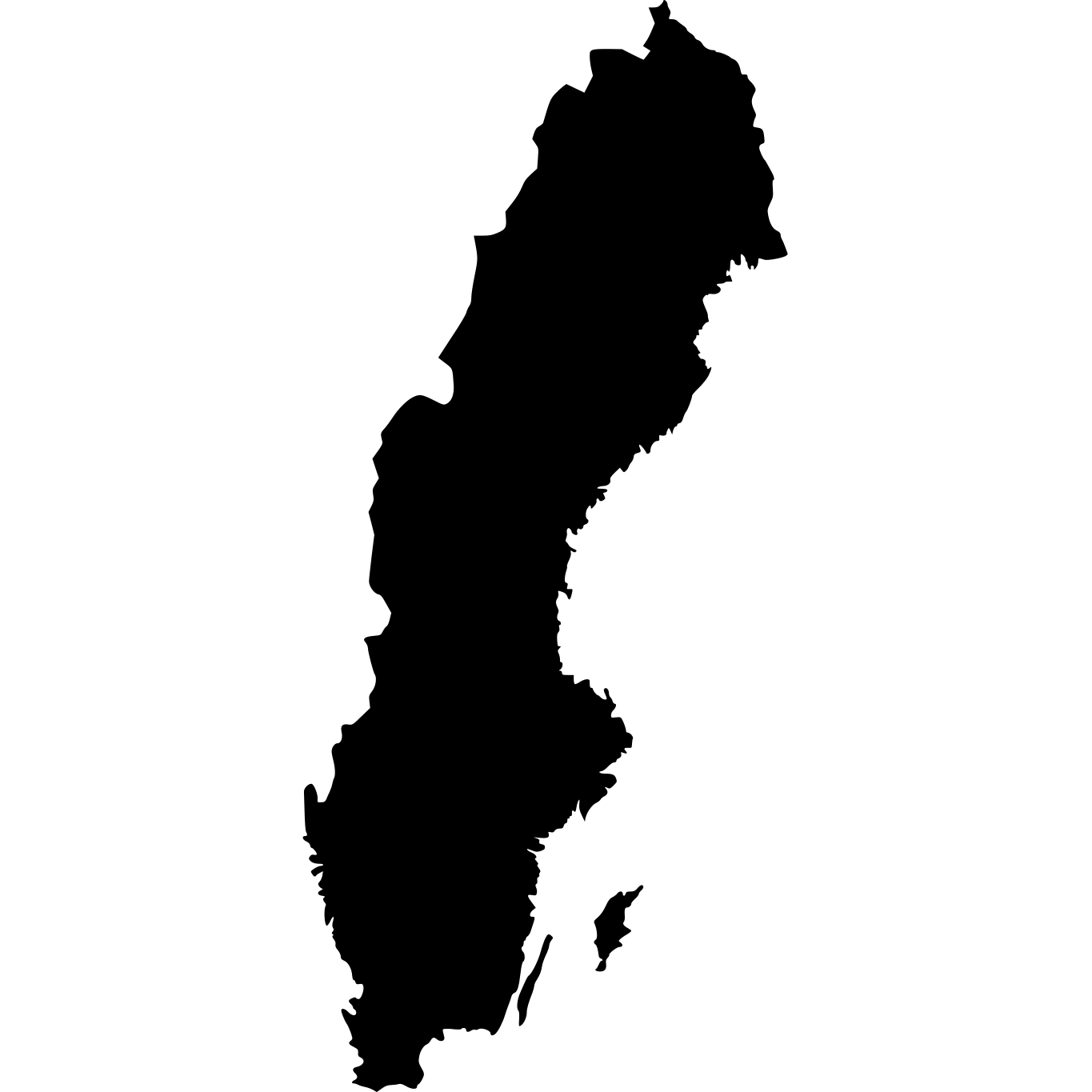
C9 Beauty Of Sweden is a Swedish brand
Often compared with

We're dedicated to providing you with the most up-to-date and science-backed ingredient info out there.
The data we've presented on this page has been verified by a member of the SkinSort Team.
Read more about us· Updated July 1, 2025 • Added by jnm


