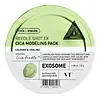
VT Cosmetics Reedle Shot Ex Modeling Pack Versus SKIN1004 Madagascar Centella Poremizing Quick Clay Stick Mask
This wash off mask is made with Diatomaceous Earth and Kaolin for a rinse-off oil-control boost.

What's inside
What's inside
 Key Ingredients
Benefits
Concerns
No concerns
Ingredients Side-by-side
Diatomaceous Earth
Abrasive

Glucose
Humectant

CI 77231
Cosmetic ColorantAlgin
MaskingTetrasodium Pyrophosphate
BufferingSpirulina Platensis Powder
Skin ProtectingMagnesium Oxide
AbsorbentCentella Asiatica Leaf/Stem Powder
Cellulose Gum
Emulsion StabilisingKaolin
Abrasive

Dehydroacetic Acid
Preservative
Allantoin
Skin Conditioning


Houttuynia Cordata Powder
Skin ConditioningSilica
Abrasive
Camellia Sinensis Leaf Powder
Betaine
Humectant
Glycyrrhiza Glabra Root Powder
Skin ConditioningAloe Barbadensis Leaf Juice Powder
Skin Conditioning
Centella Asiatica Extract
Cleansing

Whey Filtrate
Skin ConditioningMilk Exosomes
EmollientSodium Hyaluronate
Humectant
Madecassoside
Antioxidant
Propolis Extract
Skin Conditioning
Asiaticoside
Antioxidant
Madecassic Acid
Skin Conditioning
Asiatic Acid
Skin Conditioning
Diatomaceous Earth, Glucose, CI 77231, Algin, Tetrasodium Pyrophosphate, Spirulina Platensis Powder, Magnesium Oxide, Centella Asiatica Leaf/Stem Powder, Cellulose Gum, Kaolin, Dehydroacetic Acid, Allantoin, Houttuynia Cordata Powder, Silica, Camellia Sinensis Leaf Powder, Betaine, Glycyrrhiza Glabra Root Powder, Aloe Barbadensis Leaf Juice Powder, Centella Asiatica Extract, Whey Filtrate, Milk Exosomes, Sodium Hyaluronate, Madecassoside, Propolis Extract, Asiaticoside, Madecassic Acid, Asiatic Acid
Water
Skin ConditioningKaolin 18%
Abrasive
Dipropylene Glycol
HumectantGlycerin
Humectant
CI 77891
Cosmetic ColorantButylene Glycol
Humectant
Sodium Stearate
Cleansing1,2-Hexanediol
Skin Conditioning
Aloe Barbadensis Leaf Extract
Emollient
Phaseolus Angularis Seed Powder
Cetearyl Olivate


Propanediol
Solvent
Sorbitan Olivate
Emulsifying
Dimethicone
Emollient
CI 77491
Cosmetic ColorantCentella Asiatica Extract 0.05%
Cleansing
Ethylhexylglycerin
Skin ConditioningSodium Phytate
ChelatingBentonite
Absorbent
Illite
Abrasive
Mineral Salts
Skin ConditioningMontmorillonite
AbsorbentCalamine
AbsorbentWater, Kaolin 18%, Dipropylene Glycol, Glycerin, CI 77891, Butylene Glycol, Sodium Stearate, 1,2-Hexanediol, Aloe Barbadensis Leaf Extract, Phaseolus Angularis Seed Powder, Cetearyl Olivate, Propanediol, Sorbitan Olivate, Dimethicone, CI 77491, Centella Asiatica Extract 0.05%, Ethylhexylglycerin, Sodium Phytate, Bentonite, Illite, Mineral Salts, Montmorillonite, Calamine
Reviews
Ingredients Explained
These ingredients are found in both products.
Ingredients higher up in an ingredient list are typically present in a larger amount.
Centella Asiatica Extract (Centella) is one of the most researched botanical extracts in skincare with decades of studies backing its effects on inflammation, collagen, and the skin barrier.
That research keeps pointing back to the same four triterpenoid saponins: Asiaticoside, Madecassoside, Asiatic Acid, and Madecassic Acid.
These compounds allow centella to dial back inflammation, encourage the skin to build and hold onto collagen, support the barrier and hydration, and bring solid antioxidant activity to protect against signs of aging.
Centella also carries a nice supporting cast of Vitamin A, vitamin C, several B vitamins, and amino acids. Put it all together and you get an ingredient that soothes, hydrates, and protects, all at once.
Most of centella's magic comes from the four big compounds (Asiaticoside, Madecassoside, Asiatic Acid, and Madecassic Acid). These are the actives doing the heavy lifting in almost every centella study.
Here is the short version of what they do in the skin:
So it is not just soothing for the sake of soothing. Centella calms the skin AND helps it rebuild.
Just FYI, not all centella on an ingredient list is the same. What you are getting actually depends on the extract:
Fun fact on the ratios: the leaves tend to be richest in Madecassoside and Asiaticoside, and lower in the two acids. The exact amounts shift with where the plant is grown and how it is processed. This means purity really does vary brand to brand.
Centella is one of the most easygoing actives out there.
It layers well with basically everything: niacinamide, hyaluronic acid, peptides, and vitamin C, and also pairs nicely with stronger actives like retinoids and exfoliating acids where it can help take the edge off irritation.
On the safety side, centella and its triterpenes are classified as weak sensitizers, meaning allergic reactions are possible but uncommon.
Patch tests at 1% and 5% came back negative in test panels, and creams at typical use levels did not cause allergic reactions across large groups of people.
But as with any new active, a patch test is still a smart move for very reactive skin.
Centella is widely used because it is effective at low percentages. For context, human safety testing found no meaningful irritation from creams containing centella extract at everyday use levels (the tested amounts were well under 1%).
The irritancy threshold in animal testing was also above 30% (so real-world formulas sit far below anything concerning).
In collagen lab studies, higher concentrations drove more collagen synthesis, so serums built around centella tend to feature it more prominently.
Bottom line: you will find centella working nicely anywhere from a fraction of a percent up to hero-ingredient levels depending on whether it is a supporting soother or the main event.
Fun fact: Centella has been used as a medicine and in food for many centuries. As a medicine, it is used to treat burns, scratches, and wounds.
Learn more about Centella Asiatica ExtractKaolin is a clay. It is used for oil control and to help minimize pores. Like other clays, kaolin has the ability to absorb excess sebum or oil. This can help clean out pores and mattify the skin.
Some types of kaolin may have exfoliating properties. When water is added to kaolin, it becomes a paste with small abrasive particles.
Most kaolin is a white color, but may be pink/orange/red depending on where it comes from.
The name 'kaolin' comes from a Chinese village named 'Gaoling'. Kaolin clay comes from rocks rich in kaolinite. Kaolinite, the mineral, has a silicate layered structure. Kaolinite is formed from chemical weathering of aluminum siilicate minerals.
Besides skincare, kaolin is commonly used to make glossy paper, in ceramics, toothpaste, and as medicine to soothe stomach issues.
Learn more about Kaolin

