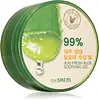
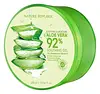
The Saem Jeju Fresh Aloe Soothing Gel 99% Versus Nature Republic Soothing & Moisture Aloe Vera 92% Soothing Gel
This calming moisturizer is formulated around Aloe Barbadensis Leaf Extract and Portulaca Oleracea Extract to calm redness and hydrate skin.
This calming moisturizer is formulated around Aloe Barbadensis Leaf Juice and Calendula Officinalis Flower Extract to calm redness and hydrate skin.

What's inside
What's inside
 Key Ingredients
Benefits
Concerns
Ingredients Side-by-side
Water
Skin ConditioningAlcohol Denat.
Antimicrobial




Glycerin
Humectant


Polysorbate 20
Emulsifying
Carbomer
Emulsion StabilisingDisodium EDTA
ChelatingBetaine
Humectant
Butylene Glycol
Humectant
Aloe Barbadensis Leaf Extract
Emollient
Portulaca Oleracea Extract
Skin Conditioning
Ocimum Basilicum Leaf Extract
Skin ConditioningSalvia Officinalis Leaf Extract
CleansingMentha Viridis Extract
MaskingOriganum Vulgare Leaf Extract
Skin ConditioningMelilotus Officinalis Extract
AstringentSarothamnus Scoparius Extract
Antioxidant
Ethylhexylglycerin
Skin ConditioningAngelica Dahurica Root Extract
Skin ConditioningChrysanthemum Morifolium Flower Extract
Skin ConditioningChamomilla Recutita Leaf Extract
Masking
Hippophae Rhamnoides Extract
MaskingMorus Alba Root Extract
BleachingThuja Occidentalis Leaf Extract
Antioxidant
Vitex Trifolia Fruit Extract
Skin ConditioningUrtica Dioica Extract
AstringentPersea Gratissima Fruit Extract
EmollientSambucus Nigra Fruit Extract
AstringentAsarum Sieboldii Root Extract
Skin ConditioningCnidium Officinale Root Extract
Skin ConditioningEclipta Prostrata Extract
Skin Conditioning
Juglans Regia Seed Extract
Skin ConditioningSimmondsia Chinensis Seed Extract
Abrasive
Phenoxyethanol
Preservative
Chlorphenesin
Antimicrobial
Potassium Hydroxide
BufferingParfum
Masking
Water, Alcohol Denat., Glycerin, Polysorbate 20, Carbomer, Disodium EDTA, Betaine, Butylene Glycol, Aloe Barbadensis Leaf Extract, Portulaca Oleracea Extract, Ocimum Basilicum Leaf Extract, Salvia Officinalis Leaf Extract, Mentha Viridis Extract, Origanum Vulgare Leaf Extract, Melilotus Officinalis Extract, Sarothamnus Scoparius Extract, Ethylhexylglycerin, Angelica Dahurica Root Extract, Chrysanthemum Morifolium Flower Extract, Chamomilla Recutita Leaf Extract, Hippophae Rhamnoides Extract, Morus Alba Root Extract, Thuja Occidentalis Leaf Extract, Vitex Trifolia Fruit Extract, Urtica Dioica Extract, Persea Gratissima Fruit Extract, Sambucus Nigra Fruit Extract, Asarum Sieboldii Root Extract, Cnidium Officinale Root Extract, Eclipta Prostrata Extract, Juglans Regia Seed Extract, Simmondsia Chinensis Seed Extract, Phenoxyethanol, Chlorphenesin, Potassium Hydroxide, Parfum
Water
Skin ConditioningDipropylene Glycol
HumectantButylene Glycol
Humectant
Alcohol
Antimicrobial
Glycerin
Humectant
1,2-Hexanediol
Skin Conditioning
Aloe Barbadensis Leaf Juice
Skin Conditioning
Betaine
Humectant
Calendula Officinalis Flower Extract
Masking
Carbomer
Emulsion StabilisingDisodium EDTA
ChelatingGlyceryl Polyacrylate
Melissa Officinalis Leaf Extract
Skin ConditioningMentha Viridis Extract
MaskingParfum
Masking
PEG-60
HumectantHydrogenated Castor Oil
Emollient
Polyglutamic Acid
Skin Conditioning
Propylene Glycol
Humectant
Sodium Hyaluronate
Humectant

Triethanolamine
BufferingPhenoxyethanol
Preservative
Butylphenyl Methylpropional
Perfuming
Linalool
Perfuming
Water, Dipropylene Glycol, Butylene Glycol, Alcohol, Glycerin, 1,2-Hexanediol, Aloe Barbadensis Leaf Juice, Betaine, Calendula Officinalis Flower Extract, Carbomer, Disodium EDTA, Glyceryl Polyacrylate, Melissa Officinalis Leaf Extract, Mentha Viridis Extract, Parfum, PEG-60, Hydrogenated Castor Oil, Polyglutamic Acid, Propylene Glycol, Sodium Hyaluronate, Triethanolamine, Phenoxyethanol, Butylphenyl Methylpropional, Linalool
Reviews
Ingredients Explained
These ingredients are found in both products.
Ingredients higher up in an ingredient list are typically present in a larger amount.
Betaine is a humectant. Like hyaluronic acid, it helps attract and retain moisture in the skin. It’s known for being gentle and for helping the skin maintain balanced hydration.
Betaine is mainly used to improve hydration and support calmer skin. It helps skin cells regulate water balance because it functions as an osmolyte.
Some studies suggest betaine may support making skin tone more even.
Fun fact: Betaine naturally exists in the skin and the body. In cosmetic products, it can be either plant-derived (most commonly from sugar beets) or synthetically produced for consistency and stability.
Betaine is also known as trimethylglycine.
Learn more about BetaineButylene Glycol (or BG) is used within cosmetic products for a few different reasons:
Overall, Butylene Glycol is a safe and well-rounded ingredient that works well with other ingredients.
Though this ingredient works well with most skin types, some people with sensitive skin may experience a reaction such as allergic rashes, closed comedones, or itchiness.
Learn more about Butylene GlycolCarbomer is a synthetic thickening and gelling agent. It's basically the ingredient that gives a lot of serums, gels, creams, and sunscreens their smooth, non-sticky texture.
Although legally permitted at very high levels, carbomers are normally used at concentrations below 1%.
It also needs to be neutralized to actually thicken, and because it is a large molecule, it doesn't really penetrate the skin barrier.
Allergy-wise, the risk is very low. Clinical studies show carbomers have low potential for skin irritation/sensitization even at concentrations up to 100%.
A 2024 UK study patch-tested 1,302 patients and found true allergy to the parent group of carbomer to be rare with no confirmed relevant reactions.
Learn more about CarbomerDisodium EDTA is a chelating agent. It grabs onto and deactivates metal ions that sneak into your products from water, packaging, or air.
This ingredient mainly works behind the scenes and helps with:
On top of that, this ingredient can counteract the effects of hard water by binding to the minerals in it.
One thing worth knowing is that Disodium EDTA has been shown to be a mild penetration enhancer. It can help other ingredients absorb into skin more effectively which can be a double-edged sword (great for actives, but can also make the active too strong if you have sensitive skin).
Clinical patch testing showed no significant skin irritation at typical use concentrations and minimal dermal absorption.
You'll most likely see this ingredient near the end of an ingredient list. It's typically found in concentrations less than 1%.
Learn more about Disodium EDTAGlycerin (or glycerol) is a compound naturally found in your skin. It's a powerhouse humectant that pulls water into the stratum corneum.
Topically, glycerin does several things at once:
Your skin makes glycerin on its own (mostly from sebaceous oil breakdown) and shuttles it to your outermost layer of skin, or your epidermis, via aquaporin-3.
Aquaporin-3 is a transporter that is essential for normal skin hydration, elasticity, and repair. Interestingly, mice lacking in AQP3 have dry and less elastic skin that can be fully corrected with glycerin.
This ingredient is non-irritating, plays well with almost every ingredient, and works across all skin types. Typical use is anywhere between 3-10% but can go up to 79% in some leave-on products.
Just know very high concentrations (>40%) can feel tacky in low humidity.
Glycerin is the name for this ingredient in American English. British English uses Glycerol/Glycerine.
Learn more about GlycerinWe don't have a description for Mentha Viridis Extract yet.
Parfum is a catch-all term for an ingredient or more that is used to give a scent to products.
Also called "fragrance", this ingredient can be a blend of hundreds of chemicals or plant oils. This means every product with "fragrance" or "parfum" in the ingredients list is a different mixture.
For instance, Habanolide is a proprietary trade name for a specific aroma chemical. When used as a fragrance ingredient in cosmetics, most aroma chemicals fall under the broad labeling category of “FRAGRANCE” or “PARFUM” according to EU and US regulations.
The term 'parfum' or 'fragrance' is not regulated in many countries. In many cases, it is up to the brand to define this term.
For instance, many brands choose to label themselves as "fragrance-free" because they are not using synthetic fragrances. However, their products may still contain ingredients such as essential oils that are considered a fragrance by INCI standards.
One example is Calendula flower extract. Calendula is an essential oil that still imparts a scent or 'fragrance'.
Depending on the blend, the ingredients in the mixture can cause allergies and sensitivities on the skin. Some ingredients that are known EU allergens include linalool and citronellol.
Parfum can also be used to mask or cover an unpleasant scent.
The bottom line is: not all fragrances/parfum/ingredients are created equally. If you are worried about fragrances, we recommend taking a closer look at an ingredient. And of course, we always recommend speaking with a professional.
Learn more about ParfumPhenoxyethanol is one of the most widely used preservatives in skincare (and for good reason!).
It has a large spectrum of antimicrobial activity and especially effective bacteria, yeast, and mold while only having a weak effect on your skin's natural microbiome.
On a cellular level, it disrupts the cell membranes of microbes by poking holes that make the cell leak. This shuts down the chemical reactions the microbe needs to make energy so it can no longer survive.
Another perk of this ingredient is that it stays functional across a wide pH range (3-10).
You'll often see it paired with boosters like Ethylhexylglycerin; one study showed that a 1:9 ratio of Ethylhexylglycerin to Phenoxyethanol damages bacterial membranes as effectively as doubling the Phenoxyethanol concentration on its own.
Typical use concentrations range from 0.3-1% depending on the formula, and this ingredient is capped at 1% int the EU.
Safety-wise, the fear mongering does not hold up to the evidence. The EU's Scientific Committee on Consumer Safety and FDA consider it safe as a preservative at up to 1%, including for children of all ages.
Adverse systemic effects only showed up in animal studies at exposures roughly 200x higher than what people get from cosmetics. And despite its very widespread use, this ingredient is a rare sensitizer and allergic reactions are uncommon.
Learn more about PhenoxyethanolWater. It's the most common cosmetic ingredient of all. You'll usually see it at the top of ingredient lists, meaning that it makes up the largest part of the product.
So why is it so popular? Water most often acts as a solvent - this means that it helps dissolve other ingredients into the formulation.
You'll also recognize water as that liquid we all need to stay alive. If you see this, drink a glass of water. Remember to stay hydrated!
Learn more about Water

