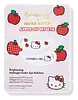
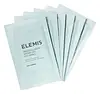
The Creme Shop Hello Kitty Apple Of My Eye Brightening Hydrogel Under Eye Patches Versus Elemis Pro-Collagen Hydro Gel Mask
This brightening eye mask is formulated around Pyrus Malus Fruit Extract and Ascorbic Acid to brighten dull-looking skin and hydrate skin.
This hydrating eye mask is formulated around Panthenol and Sodium Hyaluronate to hydrate skin and soften the look of wrinkles.


What's inside
What's inside
 Key Ingredients
Benefits
Concerns
Ingredients Side-by-side
Water
Skin ConditioningGlycerin
Humectant


Methylpropanediol
Solvent1,2-Hexanediol
Skin Conditioning
Simmondsia Chinensis Seed Oil
Emollient


Ceratonia Siliqua Gum
EmollientChondrus Crispus Extract
Skin Conditioning


Polysorbate 20
Emulsifying
Cellulose Gum
Emulsion StabilisingPEG-60 Hydrogenated Castor Oil
Emulsifying
Pyrus Malus Fruit Extract
Skin Conditioning
Tremella Fuciformis Extract
Humectant
Tamarindus Indica Seed Gum
Emulsion Stabilising
Potassium Chloride
Xanthan Gum
EmulsifyingCalcium Disodium EDTA
ChelatingDextrin
AbsorbentSodium Hydroxide
BufferingSodium Hyaluronate
Humectant

Ascorbic Acid
Antioxidant




Parfum
Masking


Water, Glycerin, Methylpropanediol, 1,2-Hexanediol, Simmondsia Chinensis Seed Oil, Ceratonia Siliqua Gum, Chondrus Crispus Extract, Polysorbate 20, Cellulose Gum, PEG-60 Hydrogenated Castor Oil, Pyrus Malus Fruit Extract, Tremella Fuciformis Extract, Tamarindus Indica Seed Gum, Potassium Chloride, Xanthan Gum, Calcium Disodium EDTA, Dextrin, Sodium Hydroxide, Sodium Hyaluronate, Ascorbic Acid, Parfum
Water
Skin ConditioningGlycerin
Humectant
Ceratonia Siliqua Gum
EmollientCarrageenan

Phenoxyethanol
Preservative
Panthenol
Skin Conditioning
Lactobacillus/Scutellaria Baicalensis Root/Camellia Sinensis Leaf/Artemisia Princeps Leaf/Houttuynia Cordata Leaf/Citrus Junos Fruit Extract Ferment Filtrate
Antimicrobial
PEG-60 Hydrogenated Castor Oil
Emulsifying
Simmondsia Chinensis Seed Oil
Emollient
Maris Aqua
HumectantEthylhexylglycerin
Skin ConditioningSodium Hyaluronate
Humectant
Caprylyl Glycol
Emollient
1,2-Hexanediol
Skin Conditioning
Plankton Extract
Skin ConditioningDisodium EDTA
ChelatingChlorella Vulgaris Extract
Skin ConditioningPotassium Hydroxide
BufferingRicinus Communis Seed Oil
Masking
Butylene Glycol
Humectant
Padina Pavonica Thallus Extract
Skin ConditioningWater, Glycerin, Ceratonia Siliqua Gum, Carrageenan, Phenoxyethanol, Panthenol, Lactobacillus/Scutellaria Baicalensis Root/Camellia Sinensis Leaf/Artemisia Princeps Leaf/Houttuynia Cordata Leaf/Citrus Junos Fruit Extract Ferment Filtrate, PEG-60 Hydrogenated Castor Oil, Simmondsia Chinensis Seed Oil, Maris Aqua, Ethylhexylglycerin, Sodium Hyaluronate, Caprylyl Glycol, 1,2-Hexanediol, Plankton Extract, Disodium EDTA, Chlorella Vulgaris Extract, Potassium Hydroxide, Ricinus Communis Seed Oil, Butylene Glycol, Padina Pavonica Thallus Extract
Ingredients Explained
These ingredients are found in both products.
Ingredients higher up in an ingredient list are typically present in a larger amount.
1,2-Hexanediol is a synthetic liquid and another multi-functional powerhouse.
It is a:
- Humectant, drawing moisture into the skin
- Emollient, helping to soften skin
- Solvent, dispersing and stabilizing formulas
- Preservative booster, enhancing the antimicrobial activity of other preservatives
Ceratonia Siliqua Gum is extracted from the seeds of the carob tree. You might know this ingredient as Carob Gum or Locust Bean Gum. It is used to stabilize other ingredients and improve the texture of products.
Carob gum is made up of long-chain polysaccharides. This makes it a natural thickener.
Yes! This ingredient comes from the seeds of a tree. The name 'Locust Bean Gum' can be misleading.
Learn more about Ceratonia Siliqua GumGlycerin (or glycerol) is a compound naturally found in your skin. It's a powerhouse humectant that pulls water into the stratum corneum.
Topically, glycerin does several things at once:
Your skin makes glycerin on its own (mostly from sebaceous oil breakdown) and shuttles it to your outermost layer of skin, or your epidermis, via aquaporin-3.
Aquaporin-3 is a transporter that is essential for normal skin hydration, elasticity, and repair. Interestingly, mice lacking in AQP3 have dry and less elastic skin that can be fully corrected with glycerin.
This ingredient is non-irritating, plays well with almost every ingredient, and works across all skin types. Typical use is anywhere between 3-10% but can go up to 79% in some leave-on products.
Just know very high concentrations (>40%) can feel tacky in low humidity.
Glycerin is the name for this ingredient in American English. British English uses Glycerol/Glycerine.
Learn more about GlycerinPeg-60 Hydrogenated Castor Oil comes from hydrogenated castor oil. It is a solubilizer and emulsifier.
As a solubilizer, it helps dissolve ingredients into a water-based version. It is also an emulsifer. Emulsifier help prevent oils and water from separating. Both these properties help create evenly-spread and uniform products.
Basically, Peg-60 Hydrogenated Castor Oil helps hold ingredients together.
Learn more about PEG-60 Hydrogenated Castor OilJojoba oil is one of the most well-studied plant-derived ingredients in cosmetics. It is an emollient with a special structure.
Because it is made up of 97-98% wax esters, it closely mirrors the linear monoesters found in human sebum. This makes it skin compatible, non-greasy, and lightweight.
Unlike other plant oils, jojoba wax doesn't easily penetrate skin. It mostly works in the uppermost layers as an emollient. This just means it forms a light barrier on the skin to help retain moisture.
Formulations with jojoba esters up to 90% reduced transepidermal water loss (TEWL) and increased barrier recovery by 81% (outperforming bisabolol at 47%).
Besides barrier support, the science also suggests jojoba to have anti-inflammatory effects and potential applications for skin infections, aging, and wound healing.
Fun fact: Indigenous cultures have used jojoba as a moisturizer and to help treat burns for centuries.
Fungal acne: The Malassezia yeast is known to metabolize fatty acids in the C11-24 range and jojoba's dominant fatty acid components fall into this range. This ingredient may not be fungal acne safe.
Learn more about Simmondsia Chinensis Seed OilSodium Hyaluronate is the salt form of hyaluronic acid. It is a long sugar chain that is naturally found in your skin, joints, and connective tissue that maintains hydration and elasticity.
In skincare, it works as a humectant. It pulls water from the environment and deeper layers of skin and binds it to the surface.
Interestingly, the size of the molecule affects its behavior:
Some clinical evidence links low molecular weight versions to improved wrinkle depth, elasticity, anti-inflammatory effects, and barrier repair.
Many serums use a blend of both weights so you can get surface hydration plus longer-lasting and deeper effects.
You'll typically see concentrations between 0.1-2% for this ingredient.
Learn more about Sodium HyaluronateWater. It's the most common cosmetic ingredient of all. You'll usually see it at the top of ingredient lists, meaning that it makes up the largest part of the product.
So why is it so popular? Water most often acts as a solvent - this means that it helps dissolve other ingredients into the formulation.
You'll also recognize water as that liquid we all need to stay alive. If you see this, drink a glass of water. Remember to stay hydrated!
Learn more about Water

