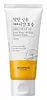
This barrier-repair moisturizer is formulated around Squalane and Honey Extract to strengthen the skin barrier and hydrate skin.
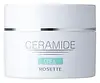
This barrier-repair moisturizer is formulated around Ceramide EOP and Ceramide NP to strengthen the skin barrier and hydrate skin.


What's inside
What's inside
 Key Ingredients
Benefits
Concerns
Ingredients Side-by-side
Water
Skin ConditioningGlycerin
Humectant


Olea Europaea Fruit Oil
Masking





Helianthus Annuus Seed Oil
Emollient
Macadamia Ternifolia Seed Oil
Emollient
Squalane
Emollient
Hydrogenated Lecithin
Emulsifying
Mangifera Indica Seed Butter
Skin Conditioning
Betaine
Humectant
Honey Extract
Humectant
Royal Jelly Extract
Skin Conditioning
Beta-Glucan
Skin Conditioning
Portulaca Oleracea Extract
Skin Conditioning
Phytosteryl/Octyldodecyl Lauroyl Glutamate
Skin ConditioningEthylhexylglycerin
Skin ConditioningCeramide AP
Skin Conditioning
1,2-Hexanediol
Skin Conditioning
Sodium Carbomer
Emulsion StabilisingCarbomer
Emulsion StabilisingChamomilla Recutita Flower Extract
Masking
Aloe Barbadensis Leaf Juice Powder
Skin Conditioning
Xanthan Gum
EmulsifyingHydroxyethylcellulose
Emulsion StabilisingWater, Glycerin, Olea Europaea Fruit Oil, Helianthus Annuus Seed Oil, Macadamia Ternifolia Seed Oil, Squalane, Hydrogenated Lecithin, Mangifera Indica Seed Butter, Betaine, Honey Extract, Royal Jelly Extract, Beta-Glucan, Portulaca Oleracea Extract, Phytosteryl/Octyldodecyl Lauroyl Glutamate, Ethylhexylglycerin, Ceramide AP, 1,2-Hexanediol, Sodium Carbomer, Carbomer, Chamomilla Recutita Flower Extract, Aloe Barbadensis Leaf Juice Powder, Xanthan Gum, Hydroxyethylcellulose
Water
Skin ConditioningButylene Glycol
Humectant
Glycerin
Humectant
Betaine
Humectant
Macadamia Ternifolia Seed Oil
Emollient
PEG-400
Emulsion StabilisingImperata Cylindrica Root Extract
Skin ConditioningPvm/Ma Decadiene Crosspolymer
Sodium Lauroyl Lactylate
EmulsifyingCeramide EOP
Skin Conditioning
Ceramide NP
Skin Conditioning
Ceramide AP
Skin Conditioning
Phytosphingosine
Skin Conditioning
Cholesterol
Emollient
Soluble Collagen
Humectant
Sodium Hyaluronate
Humectant
Potassium Hydroxide
BufferingXanthan Gum
EmulsifyingPEG-8
HumectantCarbomer
Emulsion StabilisingSodium Paraben
Preservative

Water, Butylene Glycol, Glycerin, Betaine, Macadamia Ternifolia Seed Oil, PEG-400, Imperata Cylindrica Root Extract, Pvm/Ma Decadiene Crosspolymer, Sodium Lauroyl Lactylate, Ceramide EOP, Ceramide NP, Ceramide AP, Phytosphingosine, Cholesterol, Soluble Collagen, Sodium Hyaluronate, Potassium Hydroxide, Xanthan Gum, PEG-8, Carbomer, Sodium Paraben
Reviews
Ingredients Explained
These ingredients are found in both products.
Ingredients higher up in an ingredient list are typically present in a larger amount.
Betaine is a humectant. Like hyaluronic acid, it helps attract and retain moisture in the skin. It’s known for being gentle and for helping the skin maintain balanced hydration.
Betaine is mainly used to improve hydration and support calmer skin. It helps skin cells regulate water balance because it functions as an osmolyte.
Some studies suggest betaine may support making skin tone more even.
Fun fact: Betaine naturally exists in the skin and the body. In cosmetic products, it can be either plant-derived (most commonly from sugar beets) or synthetically produced for consistency and stability.
Betaine is also known as trimethylglycine.
Learn more about BetaineCarbomer is a synthetic thickening and gelling agent. It's basically the ingredient that gives a lot of serums, gels, creams, and sunscreens their smooth, non-sticky texture.
Although legally permitted at very high levels, carbomers are normally used at concentrations below 1%.
It also needs to be neutralized to actually thicken, and because it is a large molecule, it doesn't really penetrate the skin barrier.
Allergy-wise, the risk is very low. Clinical studies show carbomers have low potential for skin irritation/sensitization even at concentrations up to 100%.
A 2024 UK study patch-tested 1,302 patients and found true allergy to the parent group of carbomer to be rare with no confirmed relevant reactions.
Learn more about CarbomerCeramide AP is is a skin-identical lipid that mimics what your skin already makes naturally. Ceramides help maintain epidermal integrity and barrier function.
You'll often see this ingredient paired with other ceramides (like ceramide NP), cholesterol, or fatty acids because this combination best mimics the natural lipid mix your skin already has.
The skin's ability to produce ceramides gets disrupted in skin conditions like eczema. This in turn weakens the skin barrier and applying ceramides topically has been shown to replenish what's been lost to restore barrier function.
Most of the studies with Ceramide AP test it as part of a multi-ceramide complex; studies reinforce ceramide AP's role in rebalancing ceramides in skin and improving skin hydration.
Learn more about Ceramide APGlycerin (or glycerol) is a compound naturally found in your skin. It's a powerhouse humectant that pulls water into the stratum corneum.
Topically, glycerin does several things at once:
Your skin makes glycerin on its own (mostly from sebaceous oil breakdown) and shuttles it to your outermost layer of skin, or your epidermis, via aquaporin-3.
Aquaporin-3 is a transporter that is essential for normal skin hydration, elasticity, and repair. Interestingly, mice lacking in AQP3 have dry and less elastic skin that can be fully corrected with glycerin.
This ingredient is non-irritating, plays well with almost every ingredient, and works across all skin types. Typical use is anywhere between 3-10% but can go up to 79% in some leave-on products.
Just know very high concentrations (>40%) can feel tacky in low humidity.
Glycerin is the name for this ingredient in American English. British English uses Glycerol/Glycerine.
Learn more about GlycerinThis ingredient is also known as Macadamia Seed Oil. It's an emollient with a fatty acid profile that closely mirrors the skin's own lipid makeup.
The palmitoleic acid content is especially notable as it's somewhat rare in plant oils. Palmitoleic acid is something your skin already makes naturally. It helps keep cell membranes structured and plays a role in fighting off harmful microbes.
This palmitoleic content is also part of why macademia seed oil absorbs quickly and doesn't leave much of a greasy residue.
It also contains oleic acid, linoleic acid, and phytosterols that can help reduce redness.
In vitro research has shown the oil to have meaningful antioxidant activity, protect fats in the skin from oxidative damage, and slow down the enzyme that breaks down hyaluronic acid.
A 2024 clinical study found it effective at improving skin hydratino and reducing wrinkle appearance when formulated into nanoemulsions.
Because it carries oleic acid (C18) and palmitic acid (C16), this ingredient may not be fungal acne safe. This is because the Malassezia yeast metabolizes in the C11-24 chain length range.
You'll also see this ingredient listed as: Macadamia Integrifolia Seed Oil .
These two oils are identical in composition and M. ternifolia is an older INCI naming convention for the edible macadamia nut while M. integrifolia is the species actually cultivated for oil production. Both names refer to the same oil.
Learn more about Macadamia Ternifolia Seed OilWater. It's the most common cosmetic ingredient of all. You'll usually see it at the top of ingredient lists, meaning that it makes up the largest part of the product.
So why is it so popular? Water most often acts as a solvent - this means that it helps dissolve other ingredients into the formulation.
You'll also recognize water as that liquid we all need to stay alive. If you see this, drink a glass of water. Remember to stay hydrated!
Learn more about WaterXanthan gum is used as a stabilizer and thickener within cosmetic products. It helps give products a sticky, thick feeling - preventing them from being too runny.
On the technical side of things, xanthan gum is a polysaccharide - a combination consisting of multiple sugar molecules bonded together.
Xanthan gum is a pretty common and great ingredient. It is a natural, non-toxic, non-irritating ingredient that is also commonly used in food products.
Learn more about Xanthan Gum

