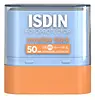
This chemical sunscreen covers the full UV range and blocks ~98% of UVB at SPF 50.
This chemical sunscreen covers the full UV range and blocks ~98% of UVB at SPF 50.


What's inside
What's inside
 Key Ingredients
Benefits
Concerns
Ingredients Side-by-side
Diphenylsiloxy Phenyl Trimethicone
Skin Conditioning
Paraffinum Liquidum
Emollient


Octocrylene
UV Absorber


Hydroxystearic Acid
Cleansing

Triethylhexanoin
MaskingMethyl Methacrylate Crosspolymer

PEG/PPG-9/2 Dimethyl Ether
Skin ConditioningEthylhexyl Salicylate
UV Absorber
Hydrogenated Polydecene
EmollientC12-15 Alkyl Benzoate
AntimicrobialButyl Methoxydibenzoylmethane
UV Absorber
Diethylamino Hydroxybenzoyl Hexyl Benzoate
UV Filter
Diisopropyl Sebacate
EmollientDibutyl Lauroyl Glutamide
Skin ConditioningBis-Ethylhexyloxyphenol Methoxyphenyl Triazine
UV Absorber
Polyamide-8
EmollientTriisostearin
Skin Conditioning
Silica Dimethyl Silylate
EmollientArgania Spinosa Kernel Oil
Emollient



PEG/PPG-14/7 Dimethyl Ether
Skin ConditioningTocopheryl Acetate
Antioxidant


Lecithin
Emollient
Bioflavonoids
Skin ConditioningTocopherol
Antioxidant

BHT
Antioxidant
Simethicone
Emollient
PEG-6
HumectantPentaerythrityl Tetra-Di-T-Butyl Hydroxyhydrocinnamate
Antioxidant
Silica
Abrasive

Parfum
Masking

Diphenylsiloxy Phenyl Trimethicone, Paraffinum Liquidum, Octocrylene, Hydroxystearic Acid, Triethylhexanoin, Methyl Methacrylate Crosspolymer, PEG/PPG-9/2 Dimethyl Ether, Ethylhexyl Salicylate, Hydrogenated Polydecene, C12-15 Alkyl Benzoate, Butyl Methoxydibenzoylmethane, Diethylamino Hydroxybenzoyl Hexyl Benzoate, Diisopropyl Sebacate, Dibutyl Lauroyl Glutamide, Bis-Ethylhexyloxyphenol Methoxyphenyl Triazine, Polyamide-8, Triisostearin, Silica Dimethyl Silylate, Argania Spinosa Kernel Oil, PEG/PPG-14/7 Dimethyl Ether, Tocopheryl Acetate, Lecithin, Bioflavonoids, Tocopherol, BHT, Simethicone, PEG-6, Pentaerythrityl Tetra-Di-T-Butyl Hydroxyhydrocinnamate, Silica, Parfum
Dicaprylyl Carbonate
EmollientDibutyl Adipate
EmollientHydrogenated Castor Oil
Emollient
Oryza Sativa Cera
Skin ConditioningCandelilla Cera
Emollient
Cocoglycerides
Emollient
Bis-Ethylhexyloxyphenol Methoxyphenyl Triazine
UV Absorber
Butyl Methoxydibenzoylmethane
UV Absorber
Ethylhexyl Triazone
UV Absorber
Diethylamino Hydroxybenzoyl Hexyl Benzoate
UV Filter
Silica
Abrasive
Butyrospermum Parkii Butter
Skin Conditioning
Brassica Campestris Sterols
EmollientCetearyl Alcohol
Emollient
Panthenol
Skin Conditioning
Tocopheryl Acetate
Antioxidant
Helianthus Annuus Seed Extract
Skin Conditioning
Tocopherol
Antioxidant
Phaeodactylum Tricornutum Extract
HumectantCitric Acid
Buffering
Dicaprylyl Carbonate, Dibutyl Adipate, Hydrogenated Castor Oil, Oryza Sativa Cera, Candelilla Cera, Cocoglycerides, Bis-Ethylhexyloxyphenol Methoxyphenyl Triazine, Butyl Methoxydibenzoylmethane, Ethylhexyl Triazone, Diethylamino Hydroxybenzoyl Hexyl Benzoate, Silica, Butyrospermum Parkii Butter, Brassica Campestris Sterols, Cetearyl Alcohol, Panthenol, Tocopheryl Acetate, Helianthus Annuus Seed Extract, Tocopherol, Phaeodactylum Tricornutum Extract, Citric Acid
Ingredients Explained
These ingredients are found in both products.
Ingredients higher up in an ingredient list are typically present in a larger amount.
This ingredient is better known as bemotrizinol or Tinosorb S and is one of the best broad-spectrum UV filters in modern sunscreen.
It works by absorbing UV light across a whole range (280-400 nm) with peaks around 310 nm (UVB) and 340-345 nm (UVA). This means it covers UVB plus the deeper UVA wavelengths that drive photoaging and pigmentation.
Another pro?
It's exceptionally photostable, barely degrades in sunlight, and acts as a "bodyguard" for less stable filters.
That's why you'll see it paired with avobenzone or octinoxate; this team up ensures they keep working through sun exposure.
Safety reviews have been reassuring across the board. This ingredient shows low absorption through the skin, rarely irritates, and lab studies found it doesn't act like a hormone in the body (a concern that's been raised about some older sunscreen filters).
On maximum concentrations:
In 2026, the US F.D.A finally added it as an OTC sunscreen ingredient at concentrations up to 6% for adults / children 6 months and older
Learn more about Bis-Ethylhexyloxyphenol Methoxyphenyl TriazineAlso known as Avobenzone, this ingredient is an oil-soluble used to absorb the full spectrum of UVA rays (peak 357 nm).
It's one of the most effective UVA filters available but has a major caveat of photostability: avobenzone is susceptible to photodegradation.
This means it can lose efficacy when exposed to sunlight without the help of a stabilizing agent.
Studies show antioxidants (like vitamin E or vitamin C) and some UV filters (like octocrylene and Tinosorb S) can meaningfully improve its stability in a formulation.
The maximum allowable concentration according to regulation is 3% in the US + Canada, and 5% in the EU, Australia, China, Korea, and ASEAN countries.
It has a well-support safety profile: a comprehensive 2025 review found minimal toxicity with no evidence of carcinogenicity.
Overall, avobenzone is a safe and regulated ingredient used in sunscreen for over 40 years.
Learn more about Butyl MethoxydibenzoylmethaneDiethylamino Hydroxybenzoyl Hexyl Benzoate (DHHB) is a chemical UV-A absorber. It is formulated for high UVA protection (320-400 nm).
DHHB is well-liked for:
DHHB has been approved by the EU, Japan, Taiwan, and South America for use up to 10%. Unfortunately, it has not been approved for use in the US or Canada due to slow regulatory processes.
This ingredient is soluble in oils, fats, and lipids.
Learn more about Diethylamino Hydroxybenzoyl Hexyl BenzoateSilica, also known as silicon dioxide, is a naturally occurring mineral. It is used as a fine, spherical, and porous powder in cosmetics.
Though it has exfoliant properties, the function of silica varies depending on the product.
The unique structure of silica enhances the spreadability and adds smoothness, making it a great texture enhancer.
It is also used as an active carrier, emulsifier, and mattifier due to its ability to absorb excess oil.
In some products, tiny microneedles called spicules are made from silica or hydrolyzed sponge. When you rub them in, they lightly polish away dead skin layers and enhance the penetration of active ingredients.
Learn more about SilicaTocopherol is a fat-soluble antioxidant known as Vitamin E.
You'll find this ingredient in the vast majority of skincare (for good reason). It works to neutralize free radicals, or unstable molecules generated by UV exposure, pollution, and other environmental stressors, before they can cause oxidative damage to your skin cells.
Topically applied tocopherol has been shown to protect against UV damage by ramping up the skin's own natural defense enzymes.
It also acts as a skin conditioning agent; some studies show that regular topical use can improve the skin's water-binding capacity over 2-4 weeks.
This ingredient is especially loved for being a team player. When combined with Vitamin C, the photoprotective effect of both ingredients roughly doubles and the combo also helps reduce UV-induced DNA damage.
This ingredient has some brightening potential but it's more of a prevention ingredient than spot-fader. Cell studies show it can slow down melanin production but it's worth noting that it's not the most powerful brightener out there.
In formulations, it also serves as a stabilizer that helps protect other oxidation-prone ingredients from degrading.
Concentrations usually range from 0.1-1% in most leave-on products.
Learn more about TocopherolTocopheryl Acetate is a stable, shelf-friendly form of vitamin E.
Formulators love it because plain vitamin E oxidizes quickly once it hits air. This acetate version stays stable and resists going off, helping to extend a product's shelf life.
It's actually inactive on its own and works like a slow-release "storage" form; the enzymes in your skin called esterases gradually convert it into active vitamin E over time.
One in vivo study showed 5% of the acetate in the living layer of the epidermis converted to vitamin E after 5 days of application. This study also found the skin gained protection against UV damage even though the conversion was slow and small.
Once converted, vitamin E acts as a skin's main fat-soluble antioxidant that fights free radicals to protect skin from damage.
Topical vitamin E generally boosts the skin's photoprotection, and it reduced UV-damage in animal models.
This ingredient has some brightening potential but it's more of a prevention ingredient than spot-fader. Cell studies show it can slow down melanin production but it's worth noting that it's not the most powerful brightener out there.
Overall, it has a pretty solid safety profile and has been found to be non-irritating and non-comedogenic. Allergic reactions may happen but stay rare due to how widely the ingredient gets used.
The concentration will vary depending on the formula; industry data shows 0.1% in baby lotions, 3% in lipsticks, and 5% in foot powders. You can also find this ingredient at 100% in a pure vitamin E oil.
Most leave-on skincare keeps it at the lower end, often between 0.5-1%.
Learn more about Tocopheryl Acetate

