
What's inside
What's inside
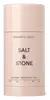 Key Ingredients
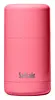
Benefits
Concerns
Ingredients Side-by-side
Propylene Glycol
Humectant


Water
Skin ConditioningSodium Stearate
CleansingPolyglyceryl-10 Caprylate/Caprate
EmulsifyingPropanediol
Solvent
Saccharomyces Ferment
Skin Conditioning
Parfum
Masking


Glycerin
Humectant
Glyceryl Caprylate
EmollientAloe Barbadensis Leaf Juice
Skin Conditioning

Hyaluronic Acid
Humectant

Macrocystis Pyrifera Extract
Skin Conditioning
Saccharina Longicruris Extract
HumectantMaranta Arundinacea Root Powder
Skin ConditioningZea Mays Starch
Absorbent
Glyceryl Undecylenate
Emollient
Potassium Sorbate
Preservative
Sodium Benzoate
Masking
Leuconostoc/Radish Root Ferment Filtrate
Antimicrobial
Propylene Glycol, Water, Sodium Stearate, Polyglyceryl-10 Caprylate/Caprate, Propanediol, Saccharomyces Ferment, Parfum, Glycerin, Glyceryl Caprylate, Aloe Barbadensis Leaf Juice, Hyaluronic Acid, Macrocystis Pyrifera Extract, Saccharina Longicruris Extract, Maranta Arundinacea Root Powder, Zea Mays Starch, Glyceryl Undecylenate, Potassium Sorbate, Sodium Benzoate, Leuconostoc/Radish Root Ferment Filtrate
Caprylic/Capric Triglyceride
Masking
Ozokerite
Emulsion StabilisingMaranta Arundinacea Root Powder
Skin ConditioningParfum
Masking
Zinc Ricinoleate
Salicylic Acid
Masking





Ascophyllum Nodosum Extract
Skin Conditioning
Laminaria Digitata Extract
Skin Protecting
Calophyllum Inophyllum Seed Oil
Antimicrobial

Saccharomyces Ferment
Skin Conditioning
Lauroyl Lysine
Skin Conditioning
Glycerin
Humectant
Cocos Nucifera Oil
Masking
Butyrospermum Parkii Butter
Skin Conditioning
Limonene
Perfuming
Coumarin
Perfuming
Hexyl Cinnamal
Perfuming
Caprylic/Capric Triglyceride, Ozokerite, Maranta Arundinacea Root Powder, Parfum, Zinc Ricinoleate, Salicylic Acid, Ascophyllum Nodosum Extract, Laminaria Digitata Extract, Calophyllum Inophyllum Seed Oil, Saccharomyces Ferment, Lauroyl Lysine, Glycerin, Cocos Nucifera Oil, Butyrospermum Parkii Butter, Limonene, Coumarin, Hexyl Cinnamal
Ingredients Explained
These ingredients are found in both products.
Ingredients higher up in an ingredient list are typically present in a larger amount.
Glycerin (or glycerol) is a compound naturally found in your skin. It's a powerhouse humectant that pulls water into the stratum corneum.
Topically, glycerin does several things at once:
Your skin makes glycerin on its own (mostly from sebaceous oil breakdown) and shuttles it to your outermost layer of skin, or your epidermis, via aquaporin-3.
Aquaporin-3 is a transporter that is essential for normal skin hydration, elasticity, and repair. Interestingly, mice lacking in AQP3 have dry and less elastic skin that can be fully corrected with glycerin.
This ingredient is non-irritating, plays well with almost every ingredient, and works across all skin types. Typical use is anywhere between 3-10% but can go up to 79% in some leave-on products.
Just know very high concentrations (>40%) can feel tacky in low humidity.
Glycerin is the name for this ingredient in American English. British English uses Glycerol/Glycerine.
Learn more about GlycerinWe don't have a description for Maranta Arundinacea Root Powder yet.
Parfum is a catch-all term for an ingredient or more that is used to give a scent to products.
Also called "fragrance", this ingredient can be a blend of hundreds of chemicals or plant oils. This means every product with "fragrance" or "parfum" in the ingredients list is a different mixture.
For instance, Habanolide is a proprietary trade name for a specific aroma chemical. When used as a fragrance ingredient in cosmetics, most aroma chemicals fall under the broad labeling category of “FRAGRANCE” or “PARFUM” according to EU and US regulations.
The term 'parfum' or 'fragrance' is not regulated in many countries. In many cases, it is up to the brand to define this term.
For instance, many brands choose to label themselves as "fragrance-free" because they are not using synthetic fragrances. However, their products may still contain ingredients such as essential oils that are considered a fragrance by INCI standards.
One example is Calendula flower extract. Calendula is an essential oil that still imparts a scent or 'fragrance'.
Depending on the blend, the ingredients in the mixture can cause allergies and sensitivities on the skin. Some ingredients that are known EU allergens include linalool and citronellol.
Parfum can also be used to mask or cover an unpleasant scent.
The bottom line is: not all fragrances/parfum/ingredients are created equally. If you are worried about fragrances, we recommend taking a closer look at an ingredient. And of course, we always recommend speaking with a professional.
Learn more about ParfumSaccharomyces Ferment is what you get when you ferment yeast from Saccharomyces genus and keep the ferment rather than just the strained liquid.
You can think of it like the water-like version of Saccharomyces Ferment Filtrate.
As yeast eats through its growth medium, it leaves behind a nutrient soup of amino acids, peptides, vitamins, and minerals.
The component with the most actual research behind it, beta-glucan, is a polysaccharide that acts as a barrier-supportive humectant with antioxidant and skin-soothing properties.
Typical use concentrations range from 1-3%.
Fungal acne: This ingredient may not be considered fungal-acne safe. Even though Saccharomyces isn't the same yeast as Malassezia, fermentation can produce fatty acids in the C11-24 range that Malassezia feeds on.
Learn more about Saccharomyces Ferment

