Provence Beauty Vitamin C + Niacinamide Brightening Serum Shot Versus By Nature Brightening Night Cream with Vitamin C + Turmeric
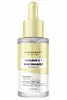
This brightening serum is formulated around Glycolic Acid and Niacinamide to brighten dull-looking skin and fade the look of dark spots.
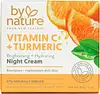
This brightening night moisturizer is formulated around Magnesium Ascorbyl Phosphate and Ascorbic Acid to brighten dull-looking skin.


What's inside
What's inside
 Key Ingredients
Benefits
Concerns
Ingredients Side-by-side
Water
Skin ConditioningGlycerin
Humectant


Sorbic Acid
Preservative
Glycolic Acid
Buffering










Niacinamide
Smoothing


Hibiscus Sabdariffa Callus Culture Lysate
Antioxidant
Aloe Barbadensis Leaf Extract
Emollient
Prunus Amygdalus Dulcis Oil
Skin Conditioning



Polysorbate 20
Emulsifying
Phenoxyethanol
Preservative
Ethylhexylglycerin
Skin ConditioningCarbomer
Emulsion StabilisingAquilaria Agallocha Wood Oil
Masking
Water
Skin ConditioningAloe Barbadensis Leaf Juice
Skin Conditioning
Prunus Amygdalus Dulcis Oil
Skin Conditioning
Glycerin
Humectant
Cetearyl Olivate
Glyceryl Stearate
Emollient
Sorbitan Olivate
Emulsifying
Cetyl Alcohol
Emollient

Stearic Acid
Cleansing
Benzyl Alcohol
Perfuming



Persea Gratissima Oil
Skin Conditioning
Cocos Nucifera Oil
Masking
Sodium Citrate
BufferingTocopheryl Acetate
Antioxidant
Xanthan Gum
EmulsifyingSodium Hyaluronate
Humectant
Parfum
Masking
Salicylic Acid
Masking

Magnesium Ascorbyl Phosphate
Antioxidant
Ascorbic Acid
Antioxidant
Sorbic Acid
Preservative
Citrus Reticulata Fruit Extract
Skin ProtectingCurcuma Longa Root Extract
Antioxidant
Sodium Hydroxide
BufferingAmyl Cinnamal
Perfuming
Citral
Perfuming
Limonene
Perfuming
Water, Aloe Barbadensis Leaf Juice, Prunus Amygdalus Dulcis Oil, Glycerin, Cetearyl Olivate, Glyceryl Stearate, Sorbitan Olivate, Cetyl Alcohol, Stearic Acid, Benzyl Alcohol, Persea Gratissima Oil, Cocos Nucifera Oil, Sodium Citrate, Tocopheryl Acetate, Xanthan Gum, Sodium Hyaluronate, Parfum, Salicylic Acid, Magnesium Ascorbyl Phosphate, Ascorbic Acid, Sorbic Acid, Citrus Reticulata Fruit Extract, Curcuma Longa Root Extract, Sodium Hydroxide, Amyl Cinnamal, Citral, Limonene
Ingredients Explained
These ingredients are found in both products.
Ingredients higher up in an ingredient list are typically present in a larger amount.
Glycerin (or glycerol) is a compound naturally found in your skin. It's a powerhouse humectant that pulls water into the stratum corneum.
Topically, glycerin does several things at once:
Your skin makes glycerin on its own (mostly from sebaceous oil breakdown) and shuttles it to your outermost layer of skin, or your epidermis, via aquaporin-3.
Aquaporin-3 is a transporter that is essential for normal skin hydration, elasticity, and repair. Interestingly, mice lacking in AQP3 have dry and less elastic skin that can be fully corrected with glycerin.
This ingredient is non-irritating, plays well with almost every ingredient, and works across all skin types. Typical use is anywhere between 3-10% but can go up to 79% in some leave-on products.
Just know very high concentrations (>40%) can feel tacky in low humidity.
Glycerin is the name for this ingredient in American English. British English uses Glycerol/Glycerine.
Learn more about GlycerinThis ingredient is also known as sweet almond oil. It is a lightweight, cold-pressed oil from the ripe seeds of the sweet almond tree.
Sweet almond oil is rich in skin-nourishing fatty acids such as oleic acid (55-86%) and linolenic acid (7-35%).
As an emollient, it softens and hydrates skin by forming a thin barrier that locks in moisture.
Clinical studies have found it to be non-irritating and non-sensitizing. The CIR Expert Panel has evaluated the available safety data and concluded it is safe for topical use.
Because of the oleic acid content, this ingredient may not be fungal acne safe.
Learn more about Prunus Amygdalus Dulcis OilSorbic Acid is a preservative that stops your product from spoiling by stopping microbes from growing.
As a preservative, it's kind of a specialist: it has a broad spectrum of activity against yeast and molds but is weaker against bacteria. That's why it's often paired with another preservative to cover that gap.
This ingredient is also pretty picky about pH; it performs best at pH 6.5 or below.
At the right pH level, sorbic acid is "active" and can slip through the outer wall of a microbe. Once inside, it turns the cell's interior more acidic to shut down the microbe from the inside.
The EU caps this ingredient at 0.6% while the CIR has concluded it's safe at concentrations up to 1%. It's most often used around 0.05-0.2% in cosmetics.
Though this ingredient is considered low-sensitizing and well-tolerated, a very small number of people may have a contact allergy to it. Be sure to patch test if you have a history of allergies towards preservatives.
Learn more about Sorbic AcidWater. It's the most common cosmetic ingredient of all. You'll usually see it at the top of ingredient lists, meaning that it makes up the largest part of the product.
So why is it so popular? Water most often acts as a solvent - this means that it helps dissolve other ingredients into the formulation.
You'll also recognize water as that liquid we all need to stay alive. If you see this, drink a glass of water. Remember to stay hydrated!
Learn more about Water

