Paula's Choice Ultra-Light Daily Hydrating Fluid SPF 30+ Versus The Ordinary Niacinamide 10% + Zinc 1%
This hybrid sunscreen covers the full UV range and blocks ~97% of UVB at SPF 30.
This oil-control serum is formulated around Niacinamide and Zinc PCA to balance excess oil and refine the look of pores.


What's inside
What's inside
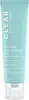 Key Ingredients
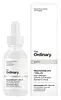
Benefits
Concerns
No concerns
Ingredients Side-by-side
Water
Skin ConditioningEthylhexyl Methoxycinnamate
UV Absorber


Glycerin
Humectant


Ethylhexyl Salicylate
UV Absorber
Silica
Abrasive


Octocrylene
UV Absorber
Butyl Methoxydibenzoylmethane
UV Absorber
Dimethicone
Emollient
Tocopherol
Antioxidant





Chamomilla Recutita Flower Extract
Masking
Vitis Vinifera Seed Extract
Antimicrobial
Camellia Sinensis Leaf Extract
Antimicrobial
Camellia Oleifera Leaf Extract
AstringentPeucedanum Graveolens Extract
TonicSambucus Nigra Fruit Extract
AstringentAvena Sativa Bran Extract
Abrasive
Punica Granatum Fruit Extract
Antioxidant
Lycium Barbarum Fruit Extract
Astringent
Hydrogenated Lecithin
Emulsifying
Titanium Dioxide
Cosmetic Colorant
Dimethicone/Vinyl Dimethicone Crosspolymer
Skin Conditioning
Diethylhexyl Syringylidenemalonate
Skin Protecting
Hydroxyethyl Acrylate/Sodium Acryloyldimethyl Taurate Copolymer
Emulsion StabilisingXanthan Gum
EmulsifyingSodium Carbomer
Emulsion StabilisingBenzyl Alcohol
Perfuming




Sodium Benzoate
Masking
Potassium Sorbate
Preservative
Phenoxyethanol
Preservative
Water, Ethylhexyl Methoxycinnamate, Glycerin, Ethylhexyl Salicylate, Silica, Octocrylene, Butyl Methoxydibenzoylmethane, Dimethicone, Tocopherol, Chamomilla Recutita Flower Extract, Vitis Vinifera Seed Extract, Camellia Sinensis Leaf Extract, Camellia Oleifera Leaf Extract, Peucedanum Graveolens Extract, Sambucus Nigra Fruit Extract, Avena Sativa Bran Extract, Punica Granatum Fruit Extract, Lycium Barbarum Fruit Extract, Hydrogenated Lecithin, Titanium Dioxide, Dimethicone/Vinyl Dimethicone Crosspolymer, Diethylhexyl Syringylidenemalonate, Hydroxyethyl Acrylate/Sodium Acryloyldimethyl Taurate Copolymer, Xanthan Gum, Sodium Carbomer, Benzyl Alcohol, Sodium Benzoate, Potassium Sorbate, Phenoxyethanol




Reviews
Ingredients Explained
These ingredients are found in both products.
Ingredients higher up in an ingredient list are typically present in a larger amount.
Phenoxyethanol is one of the most widely used preservatives in skincare (and for good reason!).
It has a large spectrum of antimicrobial activity and especially effective bacteria, yeast, and mold while only having a weak effect on your skin's natural microbiome.
On a cellular level, it disrupts the cell membranes of microbes by poking holes that make the cell leak. This shuts down the chemical reactions the microbe needs to make energy so it can no longer survive.
Another perk of this ingredient is that it stays functional across a wide pH range (3-10).
You'll often see it paired with boosters like Ethylhexylglycerin; one study showed that a 1:9 ratio of Ethylhexylglycerin to Phenoxyethanol damages bacterial membranes as effectively as doubling the Phenoxyethanol concentration on its own.
Typical use concentrations range from 0.3-1% depending on the formula, and this ingredient is capped at 1% int the EU.
Safety-wise, the fear mongering does not hold up to the evidence. The EU's Scientific Committee on Consumer Safety and FDA consider it safe as a preservative at up to 1%, including for children of all ages.
Adverse systemic effects only showed up in animal studies at exposures roughly 200x higher than what people get from cosmetics. And despite its very widespread use, this ingredient is a rare sensitizer and allergic reactions are uncommon.
Learn more about PhenoxyethanolWater. It's the most common cosmetic ingredient of all. You'll usually see it at the top of ingredient lists, meaning that it makes up the largest part of the product.
So why is it so popular? Water most often acts as a solvent - this means that it helps dissolve other ingredients into the formulation.
You'll also recognize water as that liquid we all need to stay alive. If you see this, drink a glass of water. Remember to stay hydrated!
Learn more about WaterXanthan gum is used as a stabilizer and thickener within cosmetic products. It helps give products a sticky, thick feeling - preventing them from being too runny.
On the technical side of things, xanthan gum is a polysaccharide - a combination consisting of multiple sugar molecules bonded together.
Xanthan gum is a pretty common and great ingredient. It is a natural, non-toxic, non-irritating ingredient that is also commonly used in food products.
Learn more about Xanthan Gum

