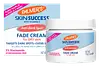
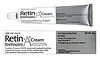
Palmer's Skin Success Anti-Dark Spot Fade Cream for Dry Skin Versus Retin-A (Tretinoin) Retin-A 0.025% (Tretinoin)
This brightening treatment is formulated around Niacinamide and Retinol to fade the look of dark spots and brighten dull-looking skin.


What's inside
What's inside
 Key Ingredients
Benefits
Concerns
Ingredients Side-by-side
Water
Skin ConditioningGlyceryl Stearate
Emollient

Paraffinum Liquidum
Emollient


Niacinamide
Smoothing











Propylene Glycol
Humectant

Stearyl Stearate
Emollient
Cetearyl Alcohol
Emollient


PEG-75 Lanolin
Emollient
PEG-100 Stearate
Surfactant
Dimethicone
Emollient
Ceteareth-20
Cleansing
Isopropyl Myristate
Emollient
Retinol
Skin Conditioning
Tricholoma Matsutake Extract
Skin ConditioningAscorbyl Glucoside
Antioxidant

Tocopheryl Acetate
Antioxidant
Ethylhexyl Salicylate
UV Absorber

Leuconostoc/Radish Root Ferment Filtrate
Antimicrobial
Citric Acid
Buffering
Disodium EDTA
ChelatingButylene Glycol
Humectant
Magnesium Aluminum Silicate
Absorbent
Xanthan Gum
EmulsifyingCaprylic/Capric Triglyceride
Masking
Sodium Sulfite
Preservative
Sodium Metabisulfite
Antioxidant
Sodium Lauryl Sulfate
Cleansing

Sodium Sulfate
BHT
Antioxidant
Ethylhexylglycerin
Skin ConditioningMethoxyethanol
SolventParfum
Masking

Citronellol
Perfuming
Hydroxycitronellal
Perfuming
Butylphenyl Methylpropional
Perfuming
Linalool
Perfuming
Limonene
Perfuming
Alpha-Isomethyl Ionone
Perfuming
Water, Glyceryl Stearate, Paraffinum Liquidum, Niacinamide, Propylene Glycol, Stearyl Stearate, Cetearyl Alcohol, PEG-75 Lanolin, PEG-100 Stearate, Dimethicone, Ceteareth-20, Isopropyl Myristate, Retinol, Tricholoma Matsutake Extract, Ascorbyl Glucoside, Tocopheryl Acetate, Ethylhexyl Salicylate, Leuconostoc/Radish Root Ferment Filtrate, Citric Acid, Disodium EDTA, Butylene Glycol, Magnesium Aluminum Silicate, Xanthan Gum, Caprylic/Capric Triglyceride, Sodium Sulfite, Sodium Metabisulfite, Sodium Lauryl Sulfate, Sodium Sulfate, BHT, Ethylhexylglycerin, Methoxyethanol, Parfum, Citronellol, Hydroxycitronellal, Butylphenyl Methylpropional, Linalool, Limonene, Alpha-Isomethyl Ionone
Reviews
Alternatives
Ingredients Explained
These ingredients are found in both products.
Ingredients higher up in an ingredient list are typically present in a larger amount.
BHT is a synthetic antioxidant and preservative.
As an antioxidant, it helps your body fight off free-radicals. Free-radicals are molecules that may damage your skin cells.
As a preservative, it is used to stabilize products and prevent them from degrading. Specifically, BHT prevents degradation from oxidation.
The concerns related to BHT come from oral studies; this ingredient is currently allowed for use by both the FDA and EU.
However, it was recently restricted for use in the UK as of April 2024.
Learn more about BHTIsopropyl Myristate is an ester made by combining isopropyl alcohol with myristic acid.
It is primarily an emollient and penetration enhancer that gives products a lightweight, silky feel without the heaviness of oils.
This ingredient is generally considered non-toxic, non-irritating, and has low absorption potential.
This ingredient does have a comedogenic rating of 3-5, but this doesn't mean a formula with this ingredient will clog pores.
Dermatologist Dr. Zoe Draelos has also confirmed in a peer-reviewed paper that products containing comedogenic ingredients are not necessarily comedogenic themselves.
A small subset of people (~2%) may experience contact sensitivity so patch testing is a reasonable idea if you have reactive skin.
Since this ingredient is an ester of myristic acid (a C14 fatty acid), it falls within the carbon chain range that is known to feed Malassezia. This ingredient may not be fungal acne safe.
Learn more about Isopropyl MyristateWater. It's the most common cosmetic ingredient of all. You'll usually see it at the top of ingredient lists, meaning that it makes up the largest part of the product.
So why is it so popular? Water most often acts as a solvent - this means that it helps dissolve other ingredients into the formulation.
You'll also recognize water as that liquid we all need to stay alive. If you see this, drink a glass of water. Remember to stay hydrated!
Learn more about WaterXanthan gum is used as a stabilizer and thickener within cosmetic products. It helps give products a sticky, thick feeling - preventing them from being too runny.
On the technical side of things, xanthan gum is a polysaccharide - a combination consisting of multiple sugar molecules bonded together.
Xanthan gum is a pretty common and great ingredient. It is a natural, non-toxic, non-irritating ingredient that is also commonly used in food products.
Learn more about Xanthan Gum

