
What's inside
What's inside
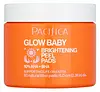 Key Ingredients
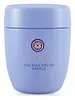
Benefits
Concerns
No concerns
Ingredients Side-by-side
Water
Skin ConditioningLactic Acid
Buffering









Aloe Barbadensis Leaf Juice
Skin Conditioning


Propanediol
Solvent
Glycolic Acid
Buffering

Salicylic Acid
Masking


Niacinamide
Smoothing
Amylopectin
Hordeum Vulgare Seed Extract
Skin ConditioningPyrus Malus Fruit Extract
Skin Conditioning
Glycerin
Humectant
Polydextrose
HumectantErythritol
Humectant
Dextrin
AbsorbentSodium Hydroxide
BufferingParfum
Masking

Sodium Phytate
Potassium Sorbate
Preservative
Microcrystalline Cellulose
AbsorbentOryza Sativa Powder
Sodium Lauryl Phosphate
EmulsifyingSodium Lauroyl Glutamate
SurfactantSodium Stearoyl Glutamate
CleansingWater
Skin ConditioningSodium Cocoyl Glutamate
Cleansing
Lauryl Betaine
CleansingSodium Lauroyl Methylaminopropionate
CleansingCamellia Sinensis Leaf
Perfuming
Papain
Skin Conditioning
Oryza Sativa Bran Extract
Skin Conditioning
Propanediol
Solvent
Dextrin
AbsorbentEthylhexylglycerin
Skin ConditioningKaolin
Abrasive
Tocopherol
Antioxidant

Phytosteryl/Octyldodecyl Lauroyl Glutamate
Skin ConditioningDipotassium Glycyrrhizate
Humectant
Silica
Abrasive
Butylene Glycol
Humectant
Phenoxyethanol
Preservative
CI 77492
Cosmetic ColorantCI 77007
Cosmetic ColorantMicrocrystalline Cellulose, Oryza Sativa Powder, Sodium Lauryl Phosphate, Sodium Lauroyl Glutamate, Sodium Stearoyl Glutamate, Water, Sodium Cocoyl Glutamate, Lauryl Betaine, Sodium Lauroyl Methylaminopropionate, Camellia Sinensis Leaf, Papain, Oryza Sativa Bran Extract, Propanediol, Dextrin, Ethylhexylglycerin, Kaolin, Tocopherol, Phytosteryl/Octyldodecyl Lauroyl Glutamate, Dipotassium Glycyrrhizate, Silica, Butylene Glycol, Phenoxyethanol, CI 77492, CI 77007
Reviews
Ingredients Explained
These ingredients are found in both products.
Ingredients higher up in an ingredient list are typically present in a larger amount.
Dextrin is a starch-derived polysaccharide. It's made by partially breaking down corn, potato, or other plant starches.
Think of it as "half-processed" starch; it's less complex than the original but not fully broken down into sugar like maltodextrin.
In cosmetics, it mainly functions as a bulking agent, viscosity controller, binder, and absorbent. It helps thicken products, stabilize powders, and get certain textures a less "wet" feel.
This ingredient has a pretty solid safety profile; it's recognized as a safe food additive and its large molecular size means it doesn't meaningfully penetrate skin.
Human repeat insult patch tests using a rinse-off facial product containing 42.69% dextrin found no skin irritation or sensitization in 54 subjects.
Typical real-world usage is much lower: usually under 1% as a texture modifier and up to 40% in masks (rinse off products use less).
Learn more about DextrinPropanediol is an all-star ingredient. It softens, hydrates, and smooths the skin.
It’s often used to:
Propanediol is not likely to cause sensitivity and considered safe to use. It is derived from corn or petroleum with a clear color and no scent.
Learn more about PropanediolWater. It's the most common cosmetic ingredient of all. You'll usually see it at the top of ingredient lists, meaning that it makes up the largest part of the product.
So why is it so popular? Water most often acts as a solvent - this means that it helps dissolve other ingredients into the formulation.
You'll also recognize water as that liquid we all need to stay alive. If you see this, drink a glass of water. Remember to stay hydrated!
Learn more about Water

