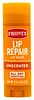
This barrier-repair lip moisturizer is formulated around Dimethicone and Petrolatum to strengthen the lip barrier and hydrate lips.
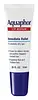
This barrier-repair lip moisturizer is formulated around Panthenol and Butyrospermum Parkii Butter to strengthen the lip barrier and hydrate lips.


What's inside
What's inside
 Key Ingredients
Benefits
Concerns
Ingredients Side-by-side
Beeswax
Emulsion Stabilising




Dimethicone
Emollient

Petrolatum
Emollient


Hydrogenated Poly(C6-14 Olefin)
EmollientPhenyl Trimethicone
Skin Conditioning
Prunus Amygdalus Dulcis Oil
Skin Conditioning
Butyrospermum Parkii Butter
Skin Conditioning
Trimethylpentanediol/Adipic Acid/Glycerin Crosspolymer
Skin ConditioningHydrogenated Polyisobutene
EmollientPolysilicone-11

Sodium Saccharin
MaskingEthylene/Propylene/Styrene Copolymer
Butylene/Ethylene/Styrene Copolymer
Pentaerythrityl Tetra-Di-T-Butyl Hydroxyhydrocinnamate
Antioxidant
Beeswax, Dimethicone, Petrolatum, Hydrogenated Poly(C6-14 Olefin), Phenyl Trimethicone, Prunus Amygdalus Dulcis Oil, Butyrospermum Parkii Butter, Trimethylpentanediol/Adipic Acid/Glycerin Crosspolymer, Hydrogenated Polyisobutene, Polysilicone-11, Sodium Saccharin, Ethylene/Propylene/Styrene Copolymer, Butylene/Ethylene/Styrene Copolymer, Pentaerythrityl Tetra-Di-T-Butyl Hydroxyhydrocinnamate
Octyldodecanol
Emollient
C18-38 Alkyl Hydroxystearoyl Stearate
EmollientRicinus Communis Seed Oil
Masking
Caprylic/Capric Triglyceride
Masking
Glycerin
Humectant
Panthenol
Skin Conditioning

Bis-Diglyceryl Polyacyladipate-2
Emollient
Water
Skin ConditioningPolyglyceryl-3 Diisostearate
Emulsifying
Butyrospermum Parkii Butter
Skin Conditioning
Hydrogenated Castor Oil
Emollient
Tocopherol
Antioxidant



Tocopheryl Acetate
Antioxidant
Sodium Ascorbyl Phosphate
Antioxidant


Bisabolol
Antioxidant
Beeswax
Emulsion Stabilising
C20-40 Alkyl Stearate
Skin ConditioningMagnesium Stearate
Cosmetic ColorantMagnesium Sulfate
Octyldodecanol, C18-38 Alkyl Hydroxystearoyl Stearate, Ricinus Communis Seed Oil, Caprylic/Capric Triglyceride, Glycerin, Panthenol, Bis-Diglyceryl Polyacyladipate-2, Water, Polyglyceryl-3 Diisostearate, Butyrospermum Parkii Butter, Hydrogenated Castor Oil, Tocopherol, Tocopheryl Acetate, Sodium Ascorbyl Phosphate, Bisabolol, Beeswax, C20-40 Alkyl Stearate, Magnesium Stearate, Magnesium Sulfate
Reviews
Alternatives
Ingredients Explained
These ingredients are found in both products.
Ingredients higher up in an ingredient list are typically present in a larger amount.
Beeswax is natural wax produced by honey bees to build their honeycomb.
Because it forms a protective layer on your skin, it can help lock in moisture and reduce water loss. It is also widely used as a thickener and emulsifier in lip balms and lotions. Research suggests beeswax containing moisturizers can support skin barrier integrity.
In comedogenic testing, Beeswax scored a 0-2, which is on the low end. Whether or not a product clogs your pores really comes down to the formula as a whole (not any single ingredient on its own) and your skin.
Cera Alba is the white, bleached form of this ingredient.
Just so you know, beeswax is not vegan since it is animal-derived. It cannot be removed with water, but can be taken off with an oil cleanser.
People with a known Propolis allergy also report to have reactions from beeswax.
Beeswax's wax esters are derived primarily from palmitic and oleic acid (C16 and C18:1). Both of these fall within the C11-C24 feeding window.
The Malassezia yeast can potentially cleave these esters and release usable fatty acids, so this ingredient may not be fungal acne safe. However, not everyone will react to this ingredient.
Learn more about BeeswaxThis ingredient is also known as shea butter. It is a plant-derived extract from the nuts of the Africa shea tree and one of the most well-studied emollients.
Because it has a high concentration of fatty acids (primarily oleic, stearic, and linoleic) it is able to form a protective barrier on the skin's surface. This helps seal in moisture and prevents transepidermal water loss (TEWL).
In vitro research found an increase in skin hydration by 58% and a decrease in TEWL by 37.8% after 24 hours of applying this ingredient (pretty impressive for a single ingredient!).
Besides hydration, shea butter also contains triterpenes that have anti-inflammatory potential. In particule, lupeol cinnamate has shown the highest anti-inflammatory activity in vivo.
Shea butter also contains vitamins A and E which may contribute to antioxidant activity.
While Shea Butter has an SPF rating of about 3-4, it is not a sunscreen replacement.
This ingredient may not be fungal acne safe because its fatty acids fall within the C11-C24 range that the Malassezia yeast can metabolize.
This ingredient shows up on a lot of "pore-clogging" lists but there's no real evidence behind that. It doesn't even have a comedogenic rating from an actual study; the numbers you'll find online come from blogs citing other blogs.
Ratings for other ingredients mostly come from a 1980s rabbit ear test. This test doesn't translate well to human skin or to real products because the ingredient sits at a much lower percentage.
Some people still find it breaks them out. So if that's you, definitely trust your skin. Just know this one's based on experience and not evidence.
Learn more about Butyrospermum Parkii Butter

