Nivea Hyaluron Cellular Filler Day Cream SPF15 Versus Nivea Hydra Skin Effect Micellar Water Hyaluronic Acid
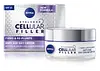
This anti-aging day moisturizer is formulated around Sodium Hyaluronate to soften the look of wrinkles and hydrate skin.
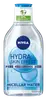
This mild micellar makeup remover is made to dissolve makeup, sunscreen, and daily buildup.

What's inside
What's inside
 Key Ingredients
Benefits
Concerns
No concerns
Ingredients Side-by-side
CI 16035
Cosmetic ColorantParfum
Masking




Butylphenyl Methylpropional
Perfuming
Benzyl Alcohol
Perfuming

Alpha-Isomethyl Ionone
Perfuming
Citronellol
Perfuming
Linalool
Perfuming
Limonene
Perfuming
Phenoxyethanol
Preservative
Sodium Hydroxide
BufferingMethylparaben
Preservative

Ethylhexylglycerin
Skin ConditioningParaffinum Liquidum
Emollient

Dimethicone
Emollient

Trisodium EDTA
ChelatingCera Microcristallina
Emulsion StabilisingC12-15 Alkyl Benzoate
AntimicrobialAcrylates/C10-30 Alkyl Acrylate Crosspolymer
Emulsion StabilisingTocopheryl Acetate
Antioxidant


Chondrus Crispus Extract
Skin Conditioning


Pimpinella Anisum Fruit Extract
MaskingSodium Hyaluronate
Humectant


Caprylic/Capric Triglyceride
Masking
Phenylbenzimidazole Sulfonic Acid
UV Absorber
Glyceryl Stearate Se
Emulsifying
Cetyl Alcohol
Emollient
Diethylamino Hydroxybenzoyl Hexyl Benzoate
UV Filter
Butylene Glycol Dicaprylate/Dicaprate
EmollientEthylhexyl Salicylate
UV Absorber
Cetearyl Alcohol
Emollient
Methylpropanediol
SolventButyrospermum Parkii Butter
Skin Conditioning
Glycerin
Humectant
Water
Skin ConditioningCI 16035, Parfum, Butylphenyl Methylpropional, Benzyl Alcohol, Alpha-Isomethyl Ionone, Citronellol, Linalool, Limonene, Phenoxyethanol, Sodium Hydroxide, Methylparaben, Ethylhexylglycerin, Paraffinum Liquidum, Dimethicone, Trisodium EDTA, Cera Microcristallina, C12-15 Alkyl Benzoate, Acrylates/C10-30 Alkyl Acrylate Crosspolymer, Tocopheryl Acetate, Chondrus Crispus Extract, Pimpinella Anisum Fruit Extract, Sodium Hyaluronate, Caprylic/Capric Triglyceride, Phenylbenzimidazole Sulfonic Acid, Glyceryl Stearate Se, Cetyl Alcohol, Diethylamino Hydroxybenzoyl Hexyl Benzoate, Butylene Glycol Dicaprylate/Dicaprate, Ethylhexyl Salicylate, Cetearyl Alcohol, Methylpropanediol, Butyrospermum Parkii Butter, Glycerin, Water

Ingredients Explained
These ingredients are found in both products.
Ingredients higher up in an ingredient list are typically present in a larger amount.
Glycerin (or glycerol) is a compound naturally found in your skin. It's a powerhouse humectant that pulls water into the stratum corneum.
Topically, glycerin does several things at once:
Your skin makes glycerin on its own (mostly from sebaceous oil breakdown) and shuttles it to your outermost layer of skin, or your epidermis, via aquaporin-3.
Aquaporin-3 is a transporter that is essential for normal skin hydration, elasticity, and repair. Interestingly, mice lacking in AQP3 have dry and less elastic skin that can be fully corrected with glycerin.
This ingredient is non-irritating, plays well with almost every ingredient, and works across all skin types. Typical use is anywhere between 3-10% but can go up to 79% in some leave-on products.
Just know very high concentrations (>40%) can feel tacky in low humidity.
Glycerin is the name for this ingredient in American English. British English uses Glycerol/Glycerine.
Learn more about GlycerinPhenoxyethanol is one of the most widely used preservatives in skincare (and for good reason!).
It has a large spectrum of antimicrobial activity and especially effective bacteria, yeast, and mold while only having a weak effect on your skin's natural microbiome.
On a cellular level, it disrupts the cell membranes of microbes by poking holes that make the cell leak. This shuts down the chemical reactions the microbe needs to make energy so it can no longer survive.
Another perk of this ingredient is that it stays functional across a wide pH range (3-10).
You'll often see it paired with boosters like Ethylhexylglycerin; one study showed that a 1:9 ratio of Ethylhexylglycerin to Phenoxyethanol damages bacterial membranes as effectively as doubling the Phenoxyethanol concentration on its own.
Typical use concentrations range from 0.3-1% depending on the formula, and this ingredient is capped at 1% int the EU.
Safety-wise, the fear mongering does not hold up to the evidence. The EU's Scientific Committee on Consumer Safety and FDA consider it safe as a preservative at up to 1%, including for children of all ages.
Adverse systemic effects only showed up in animal studies at exposures roughly 200x higher than what people get from cosmetics. And despite its very widespread use, this ingredient is a rare sensitizer and allergic reactions are uncommon.
Learn more about PhenoxyethanolSodium Hyaluronate is the salt form of hyaluronic acid. It is a long sugar chain that is naturally found in your skin, joints, and connective tissue that maintains hydration and elasticity.
In skincare, it works as a humectant. It pulls water from the environment and deeper layers of skin and binds it to the surface.
Interestingly, the size of the molecule affects its behavior:
Some clinical evidence links low molecular weight versions to improved wrinkle depth, elasticity, anti-inflammatory effects, and barrier repair.
Many serums use a blend of both weights so you can get surface hydration plus longer-lasting and deeper effects.
You'll typically see concentrations between 0.1-2% for this ingredient.
Learn more about Sodium HyaluronateTrisodium EDTA is one of those quietly essential helper ingredients that most people have never heard of. You'll most likely spot it near the end of ingredient lists in almost every category of skincare.
So what does it actually do?
Its main job is chelation; this is a fancy word to say it grabs onto metal ions and neutralizes them. This is because even purified water in cosmetics contains trace amounts of metals that can cause big problems in a formula.
These trace metals can break down actives faster, cause discoloration, promote rancidity in oils, and make preservatives less effective. Trisodium EDTA binds to these metals and takes them out of the equation so your products can stay stable and effective for longer.
There's also an added bonus: by neutralizing the metals ions that bacteria need to thrive, this ingredient also acts as a preservative booster.
The Cosmetic Ingredient Review has concluded this ingredient to be safe as used in cosmetic formulations. It is not considered an irritant, sensitizer, and is barely absorbed through the skin.
Learn more about Trisodium EDTA

