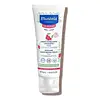
This calming moisturizer is formulated around Dipotassium Glycyrrhizate to calm redness.

What's inside
What's inside
 Key Ingredients
Benefits
Concerns
Ingredients Side-by-side
Water
Skin ConditioningTriisostearin
Skin Conditioning

Propanediol Dicaprylate
EmollientDicaprylyl Carbonate
EmollientC12-16 Alcohols
Emollient1,2-Hexanediol
Skin Conditioning
Glycerin
Humectant

Glyceryl Stearate Se
Emulsifying


Sodium Acrylates Copolymer
Hydrogenated Lecithin
Emulsifying
Palmitic Acid
Emollient
Cetyl Alcohol
Emollient

Microcrystalline Cellulose
AbsorbentGlyceryl Caprylate
EmollientCaprylyl Glycol
Emollient
Lecithin
Emollient
Dipotassium Glycyrrhizate
Humectant

Tocopherol
Antioxidant




Xanthan Gum
EmulsifyingMaltodextrin
Absorbent
Saccharide Hydrolysate
HumectantCitric Acid
Buffering
Persea Gratissima Fruit Extract
EmollientWater, Triisostearin, Propanediol Dicaprylate, Dicaprylyl Carbonate, C12-16 Alcohols, 1,2-Hexanediol, Glycerin, Glyceryl Stearate Se, Sodium Acrylates Copolymer, Hydrogenated Lecithin, Palmitic Acid, Cetyl Alcohol, Microcrystalline Cellulose, Glyceryl Caprylate, Caprylyl Glycol, Lecithin, Dipotassium Glycyrrhizate, Tocopherol, Xanthan Gum, Maltodextrin, Saccharide Hydrolysate, Citric Acid, Persea Gratissima Fruit Extract
Water
Skin ConditioningCoco-Caprylate/Caprate
Emollient
Caprylic/Capric Triglyceride
Masking
C10-18 Triglycerides
Emollient
Smithsonite Extract
Antioxidant
Glycerin
Humectant
C12-16 Alcohols
EmollientMethylpropanediol
SolventHydrogenated Lecithin
Emulsifying
Palmitic Acid
Emollient
Cetyl Alcohol
Emollient
Glyceryl Stearate Citrate
Emollient
Tapioca Starch
Secale Cereale Seed Extract
Abrasive
Paeonia Albiflora Root Extract
Skin ConditioningHelichrysum Stoechas Extract
TonicHelianthus Annuus Seed Oil
Emollient
Plantago Lanceolata Seed Extract
Skin ConditioningLycium Barbarum Callus Culture Extract
Skin ConditioningAlteromonas Ferment Extract
Skin Conditioning
Diaminopropionoyl Tripeptide-33
Skin Conditioning
Maltodextrin
Absorbent
Tocopherol
Antioxidant
Lecithin
Emollient
Isomalt
Humectant1,2-Hexanediol
Skin Conditioning
Sorbitan Isostearate
Emulsifying
Hydroxyethyl Acrylate/Sodium Acryloyldimethyl Taurate Copolymer
Emulsion StabilisingPolysorbate 60
Emulsifying
Caprylyl Glycol
Emollient
Phenylpropanol
Masking

Phenethyl Alcohol
MaskingWater, Coco-Caprylate/Caprate, Caprylic/Capric Triglyceride, C10-18 Triglycerides, Smithsonite Extract, Glycerin, C12-16 Alcohols, Methylpropanediol, Hydrogenated Lecithin, Palmitic Acid, Cetyl Alcohol, Glyceryl Stearate Citrate, Tapioca Starch, Secale Cereale Seed Extract, Paeonia Albiflora Root Extract, Helichrysum Stoechas Extract, Helianthus Annuus Seed Oil, Plantago Lanceolata Seed Extract, Lycium Barbarum Callus Culture Extract, Alteromonas Ferment Extract, Diaminopropionoyl Tripeptide-33, Maltodextrin, Tocopherol, Lecithin, Isomalt, 1,2-Hexanediol, Sorbitan Isostearate, Hydroxyethyl Acrylate/Sodium Acryloyldimethyl Taurate Copolymer, Polysorbate 60, Caprylyl Glycol, Phenylpropanol, Phenethyl Alcohol
Ingredients Explained
These ingredients are found in both products.
Ingredients higher up in an ingredient list are typically present in a larger amount.
1,2-Hexanediol is a synthetic liquid and another multi-functional powerhouse.
It is a:
- Humectant, drawing moisture into the skin
- Emollient, helping to soften skin
- Solvent, dispersing and stabilizing formulas
- Preservative booster, enhancing the antimicrobial activity of other preservatives
We don't have a description for C12-16 Alcohols yet.
Caprylyl Glycol is a humectant, skin conditioner, emollient, and preservative booster derived from either caprylic acid or synthetically created.
Typical use levels vary from 0.3-1% as a preservative booster and go up to 2% to condition skin.
Because it is not a free-fatty acid, this ingredient is fungal acne safe (there's nothing for Malassezia to feed on).
Learn more about Caprylyl GlycolCetyl Alcohol is a fatty alcohol. Fatty Alcohols are most often used as an emollient or to thicken a product.
Its main roles are:
Though it has "alcohol" in the name, it is not related to denatured alcohol or ethyl alcohol.
The FDA allows products labeled "alcohol-free" to have fatty alcohols.
This ingredient may not be fungal acne safe. It is a primary fatty alcohol with a chain length above 12 carbons. A study from 2019 show Malassezia can feed on fatty alcohols in this range, so it may trigger fungal acne in those prone to it.
Learn more about Cetyl AlcoholGlycerin (or glycerol) is a compound naturally found in your skin. It's a powerhouse humectant that pulls water into the stratum corneum.
Topically, glycerin does several things at once:
Your skin makes glycerin on its own (mostly from sebaceous oil breakdown) and shuttles it to your outermost layer of skin, or your epidermis, via aquaporin-3.
Aquaporin-3 is a transporter that is essential for normal skin hydration, elasticity, and repair. Interestingly, mice lacking in AQP3 have dry and less elastic skin that can be fully corrected with glycerin.
This ingredient is non-irritating, plays well with almost every ingredient, and works across all skin types. Typical use is anywhere between 3-10% but can go up to 79% in some leave-on products.
Just know very high concentrations (>40%) can feel tacky in low humidity.
Glycerin is the name for this ingredient in American English. British English uses Glycerol/Glycerine.
Learn more about GlycerinHydrogenated Lecithin is a more stable version of lecithin.
It's made by taking lecithin (a phospholipid commonly found in soybeans and egg yolks) and hydrogenating it. This just means the unsaturated fatty acids are turned into saturated ones so they don't go bad as easily.
This ingredient is an emollient, emulsifier, and penetration enhancer. As an emollient, it helps soften and hydrate skin by trapping moisture within. As an emulsifier, it prevents oil and water ingredients from separating.
Hydrogenated Lecithin can form tiny spherical structures made of phospholipid bilayers called liposomes. These liposomes are able to capture compounds inside their structure and deliver them through the skin barrier.
Because phospholipids are a natural component of our cell membranes, this ingredient is inherently compatible with skin.
A 2021 study found lecithin-based surfactants were less harsh and more tolerable comared to Sodium Lauryl Sulfate (SLS).
Learn more about Hydrogenated LecithinLecithin is a term for a group of substances found in the cell membranes of plants, animals, and humans. They are made up of phospholipids.
Thanks to its amphiphilic structure (water-loving head and oil-loving tail), it is a true multitasker:
It plays well with most ingredients and is typically used at 0.1-1%. However, concentrations up to 50% have been reported in moisturizers.
Learn more about LecithinMaltodextrin is a plant-derived carbohydrate made by breaking down starch (usually from corn, potato, or rice). In cosmetic formulas, it's a multitasking absorbent, emulsion stabilizer, and skin conditioner.
This ingredient is mostly used to stabilize emulsions and improve the powdery, non-greasy feel of products (like dry shampoos).
Safety-wise, this ingredient is pretty solid; it's even recognized as a food additive. Both animal and clinical studies found no adverse effects at the levels used in cosmetics.
Industry data shows this ingredient is used up to 45.7% in spray products and up to 33% in powder products.
Learn more about MaltodextrinPalmitic Acid is a fatty acid naturally found in our skin and in many plant and animal sources.
In cosmetics, it is usually derived from palm oil. It serves many purposes in skincare, acting as a cleanser, emollient, and emulsifier.
Interestingly, topically applied Palmitic Acid can be elongated into longer chain fatty acids and ceramides. A 2019 study found low levels of Palmitic Acid lead to slower development of cells, suggesting it plays a role in keeping your skin's renewal process on track.
The CIR (Cosmetic Ingredient Review) panel determined it safe as used in cosmetics at concentrations up to 13%. It is non-irritating and non-sensitizing in clinical studies.
The culprit behind fungal acne, the Malassezia yeast, feeds on fatty acids with carbon chain lengths between C11-C24. Palmitic Acid, at C16, falls right into that sweet spot.
In vitro studies have shown that Palmitic Acid is one of the fatty acids that induce rapid Malassezia growth in lab settings.
It's worth noting that what feeds yeast in a lab doesn't necessarily feed it on your face since formulation and your skin's chemistry play a bigger role.
This ingredient does have a comedogenic rating of 2, but this doesn't mean a formula with this ingredient will clog pores.
Human testing has proved that any finished product with a comedogenic ingredient won't automatically make you break out; it really comes down to concentration, formula, and your skin.
Learn more about Palmitic AcidTocopherol is a fat-soluble antioxidant known as Vitamin E.
You'll find this ingredient in the vast majority of skincare (for good reason). It works to neutralize free radicals, or unstable molecules generated by UV exposure, pollution, and other environmental stressors, before they can cause oxidative damage to your skin cells.
Topically applied tocopherol has been shown to protect against UV damage by ramping up the skin's own natural defense enzymes.
It also acts as a skin conditioning agent; some studies show that regular topical use can improve the skin's water-binding capacity over 2-4 weeks.
This ingredient is especially loved for being a team player. When combined with Vitamin C, the photoprotective effect of both ingredients roughly doubles and the combo also helps reduce UV-induced DNA damage.
This ingredient has some brightening potential but it's more of a prevention ingredient than spot-fader. Cell studies show it can slow down melanin production but it's worth noting that it's not the most powerful brightener out there.
In formulations, it also serves as a stabilizer that helps protect other oxidation-prone ingredients from degrading.
Concentrations usually range from 0.1-1% in most leave-on products.
Learn more about TocopherolWater. It's the most common cosmetic ingredient of all. You'll usually see it at the top of ingredient lists, meaning that it makes up the largest part of the product.
So why is it so popular? Water most often acts as a solvent - this means that it helps dissolve other ingredients into the formulation.
You'll also recognize water as that liquid we all need to stay alive. If you see this, drink a glass of water. Remember to stay hydrated!
Learn more about Water

