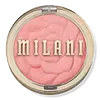
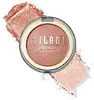
Milani Rose Powder Blush Versus Milani Baked Blush

What's inside
What's inside
 Key Ingredients
Benefits
Concerns
Ingredients Side-by-side
Talc
Abrasive
Aluminum Starch Octenylsuccinate
Absorbent
Nylon-12

Octyldodecyl Stearoyl Stearate
Emollient

Zinc Stearate
Cosmetic ColorantLauroyl Lysine
Skin Conditioning
Bis-Diglyceryl Polyacyladipate-2
Emollient
Undecylenoyl Glycine
CleansingSodium Dehydroacetate
Preservative
Capryloyl Glycine
CleansingCoco-Caprylate
Emollient
Rosa Canina Fruit Oil
Emollient


Macadamia Ternifolia Seed Oil
Emollient
CI 77120
Cosmetic ColorantCalcium Resinate
Tocopherol
Antioxidant





CI 15850
Cosmetic ColorantIron Oxides
CI 77007
Cosmetic ColorantTalc, Aluminum Starch Octenylsuccinate, Nylon-12, Octyldodecyl Stearoyl Stearate, Zinc Stearate, Lauroyl Lysine, Bis-Diglyceryl Polyacyladipate-2, Undecylenoyl Glycine, Sodium Dehydroacetate, Capryloyl Glycine, Coco-Caprylate, Rosa Canina Fruit Oil, Macadamia Ternifolia Seed Oil, CI 77120, Calcium Resinate, Tocopherol, CI 15850, Iron Oxides, CI 77007
Talc
Abrasive
Mica
Cosmetic ColorantDimethicone
Emollient
Silica
Abrasive
Synthetic Fluorphlogopite
Simmondsia Chinensis Seed Oil
Emollient
Vitis Vinifera Leaf Extract
Skin ConditioningPseudozyma Epicola/Olive Fruit Oil Ferment Filtrate
Humectant
Lauroyl Lysine
Skin Conditioning
Cetearyl Ethylhexanoate
Emollient
Caprylyl Glycol
Emollient
Magnesium Aluminum Silicate
Absorbent
Tin Oxide
Abrasive
Calcium Sodium Borosilicate
Calcium Aluminum Borosilicate
Hexylene Glycol
EmulsifyingPolysorbate 80
Emulsifying
Sorbitan Oleate
Emulsifying

Sorbitan Stearate
Emulsifying
Polysorbate 20
Emulsifying
Acrylamide/Sodium Acryloyldimethyltaurate Copolymer
Emulsion StabilisingOctyldodecyl Stearoyl Stearate
Emollient
Nylon-12
Isopropyl Palmitate
Emollient
Tocopheryl Acetate
Antioxidant
Isohexadecane
EmollientWater
Skin ConditioningPropanediol
Solvent
Phenoxyethanol
Preservative
Sodium Dehydroacetate
Preservative
Aluminum Hydroxide
EmollientCI 77891
Cosmetic ColorantCI 77491
Cosmetic ColorantCI 77492
Cosmetic ColorantCI 77499
Cosmetic ColorantCI 15850
Cosmetic ColorantCI 19140
Cosmetic ColorantCI 15985
Cosmetic ColorantTalc, Mica, Dimethicone, Silica, Synthetic Fluorphlogopite, Simmondsia Chinensis Seed Oil, Vitis Vinifera Leaf Extract, Pseudozyma Epicola/Olive Fruit Oil Ferment Filtrate, Lauroyl Lysine, Cetearyl Ethylhexanoate, Caprylyl Glycol, Magnesium Aluminum Silicate, Tin Oxide, Calcium Sodium Borosilicate, Calcium Aluminum Borosilicate, Hexylene Glycol, Polysorbate 80, Sorbitan Oleate, Sorbitan Stearate, Polysorbate 20, Acrylamide/Sodium Acryloyldimethyltaurate Copolymer, Octyldodecyl Stearoyl Stearate, Nylon-12, Isopropyl Palmitate, Tocopheryl Acetate, Isohexadecane, Water, Propanediol, Phenoxyethanol, Sodium Dehydroacetate, Aluminum Hydroxide, CI 77891, CI 77491, CI 77492, CI 77499, CI 15850, CI 19140, CI 15985
Reviews
Ingredients Explained
These ingredients are found in both products.
Ingredients higher up in an ingredient list are typically present in a larger amount.
Ci 15850 is the pigment color red. It is an azo dye and created synthetically.
Azo dyes need to be thoroughly purified before use. This allows them to be more stable and longer-lasting.
This ingredient is common in foundations, lipsticks, and blushes. This color is described as brown/orangey red.
It has many secondary names such as Red 6 and Red 7. According to a manufacturer, Red 6 usually contains aluminum.
Learn more about CI 15850This ingredient comes from a fatty acid (lauric acid) and amino acid (lysine). It is used to add a silky feel to cosmetics.
According to a manufacturer, its fatty acid base leaves a silky feeling on the skin. It also has emollient properties because of this. Emollients help soften skin by preventing water from evaporating.
Lauroyl lysine is barely soluble in water.
Learn more about Lauroyl LysineNylon-12 is a polymer. It is derived from 12-aminododecanoic acid, an omega-amino fatty acid
According to a manufacturer, it is a talc substitute. Like talc, nylon-12 gives products a satin feel. The manufacturer also claims this ingredients does not block pores and has moderate oil absorption.
This ingredient may not be reef-safe.
Learn more about Nylon-12Octyldodecyl Stearoyl Stearate is an emollient ester that mostly shows up in color cosmetics.
Functionally, it works as a skin-conditioning agent and a viscosity-increasing agent. This just means it helps soften skin while also thickening water-free formulas (like powders).
Despite being a "stearate", it has a lightweight, cushiony, and non-greasy slip.
This ingredient has shown no adverse effects in testing and is deemed safe in cosmetics at current use levels.
Typical concentrations range from 0.7-23%.
Because it is made of C-18 fatty acids (like stearic acid), this ingredient may not be fungal acne safe.
Learn more about Octyldodecyl Stearoyl StearateSodium Dehydroacetate is a synthetic preservative and sodium salt form of dehydroacetic acid. It stops bacteria, mold, and yeast from growing in your products at low concentrations.
Clinical testing found it to be non-irritating, non-sensitizing, and non-photosensitizing. It's also not significantly absorbed through skin.
There are a very small number of reported cases of contact dermatitis in cases linked to wound-care creams used over compromised skin (rather than skincare).
Overall, this is a well-studied and low-risk preservative just doing its job.
Typical concentrations run up to 0.6%, which is also the maximum amount permitted under both EU CosIng regulations and US FDA guidelines.
Learn more about Sodium DehydroacetateTalc is a clay mineral. It helps absorb moisture and improve the texture of products. Like other types of clay, Talc can have a slight exfoliating effect on skin. Talc can be added to increase the volume of products.
Some Baby powders are made by combining talc with corn starch. The word "talc" comes from Latin and originates from Arabic. Talc is a mineral commonly found throughout the world.
If you have any concerns about using talc, we recommend checking out the FDA's official page.
Learn more about Talc

