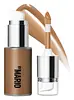
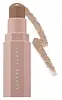
Makeup by Mario Softsculpt Bronzing & Shaping Serum Versus Fenty Beauty Match Stix Contour Skinstick

What's inside
What's inside
 Key Ingredients
Benefits
Concerns
Ingredients Side-by-side
Water
Skin ConditioningHydrogenated Polyisobutene
EmollientGlycerin
Humectant


Caprylic/Capric Triglyceride
Masking
Glyceryl Oleate Citrate
Emulsifying

Hexyl Laurate
Emollient
Silica
Abrasive


Hyaluronic Acid
Humectant

Caffeine
Skin Conditioning
Palmitoyl Tripeptide-1
Skin Conditioning

Palmitoyl Tetrapeptide-7
Skin Conditioning
Tocopherol
Antioxidant




Hydroxyethyl Acrylate/Sodium Acryloyldimethyl Taurate Copolymer
Emulsion StabilisingPolyacrylate Crosspolymer-6
Emulsion StabilisingC18-36 Acid Glycol Ester
EmollientC18-36 Acid Triglyceride
EmollientC12-15 Alkyl Benzoate
AntimicrobialBoron Nitride
Absorbent
Sorbitan Isostearate
Emulsifying
Sorbitan Laurate
Emulsifying
Sodium Benzoate
Masking
Triethoxycaprylylsilane

Tin Oxide
Abrasive
Mica
Cosmetic ColorantEthylhexylglycerin
Skin ConditioningPhenoxyethanol
Preservative
CI 77891
Cosmetic ColorantIron Oxides
Water, Hydrogenated Polyisobutene, Glycerin, Caprylic/Capric Triglyceride, Glyceryl Oleate Citrate, Hexyl Laurate, Silica, Hyaluronic Acid, Caffeine, Palmitoyl Tripeptide-1, Palmitoyl Tetrapeptide-7, Tocopherol, Hydroxyethyl Acrylate/Sodium Acryloyldimethyl Taurate Copolymer, Polyacrylate Crosspolymer-6, C18-36 Acid Glycol Ester, C18-36 Acid Triglyceride, C12-15 Alkyl Benzoate, Boron Nitride, Sorbitan Isostearate, Sorbitan Laurate, Sodium Benzoate, Triethoxycaprylylsilane, Tin Oxide, Mica, Ethylhexylglycerin, Phenoxyethanol, CI 77891, Iron Oxides
Tricaprylin
Perfuming

C12-15 Alkyl Ethylhexanoate
EmollientPolyethylene
Abrasive
Polymethyl Methacrylate
Octyldodecanol
Emollient
Sucrose Acetate Isobutyrate
Mica
Cosmetic ColorantCera Microcristallina
Emulsion StabilisingOctyldodecyl Neopentanoate
EmollientSilica
Abrasive
Polymethylsilsesquioxane
Caprylyl Glycol
Emollient
Cetyl PEG/PPG-10/1 Dimethicone
Emulsifying
Vp/Eicosene Copolymer
Vp/Hexadecene Copolymer
Cocos Nucifera Oil
Masking


Pentaerythrityl Tetra-Di-T-Butyl Hydroxyhydrocinnamate
Antioxidant
Tocopheryl Acetate
Antioxidant
Ascorbyl Palmitate
Antioxidant
Sodium Hyaluronate
Humectant
Tocopherol
Antioxidant
Calcium Sodium Borosilicate
Synthetic Fluorphlogopite
Calcium Aluminum Borosilicate
Polyethylene Terephthalate
Acrylates Copolymer
Tin Oxide
Abrasive
CI 77891
Cosmetic ColorantCI 77491
Cosmetic ColorantCI 77492
Cosmetic ColorantCI 77499
Cosmetic ColorantCI 15985
Cosmetic ColorantCI 19140
Cosmetic ColorantBHT
Antioxidant
Tricaprylin, C12-15 Alkyl Ethylhexanoate, Polyethylene, Polymethyl Methacrylate, Octyldodecanol, Sucrose Acetate Isobutyrate, Mica, Cera Microcristallina, Octyldodecyl Neopentanoate, Silica, Polymethylsilsesquioxane, Caprylyl Glycol, Cetyl PEG/PPG-10/1 Dimethicone, Vp/Eicosene Copolymer, Vp/Hexadecene Copolymer, Cocos Nucifera Oil, Pentaerythrityl Tetra-Di-T-Butyl Hydroxyhydrocinnamate, Tocopheryl Acetate, Ascorbyl Palmitate, Sodium Hyaluronate, Tocopherol, Calcium Sodium Borosilicate, Synthetic Fluorphlogopite, Calcium Aluminum Borosilicate, Polyethylene Terephthalate, Acrylates Copolymer, Tin Oxide, CI 77891, CI 77491, CI 77492, CI 77499, CI 15985, CI 19140, BHT
Reviews
Ingredients Explained
These ingredients are found in both products.
Ingredients higher up in an ingredient list are typically present in a larger amount.
Ci 77891 is a white pigment from Titanium dioxide. It is naturally found in minerals such as rutile and ilmenite.
It's main function is to add a white color to cosmetics. It can also be mixed with other colors to create different shades.
Ci 77891 is commonly found in sunscreens due to its ability to block UV rays.
Learn more about CI 77891Mica is a naturally occurring mineral used to add shimmer and color in cosmetics. It can also help improve the texture of a product or give it an opaque, white/silver color.
Serecite is the name for very fine but ragged grains of mica.
This ingredient is often coated with metal oxides like titanium dioxide. Trace amounts of heavy metals may be found in mica, but these metals are not harmful in our personal products.
Mica has been used since prehistoric times throughout the world. Ancient Egyptian, Indian, Greek, Roman, Aztec, and Chinese civilizations have used mica.
Learn more about MicaSilica, also known as silicon dioxide, is a naturally occurring mineral. It is used as a fine, spherical, and porous powder in cosmetics.
Though it has exfoliant properties, the function of silica varies depending on the product.
The unique structure of silica enhances the spreadability and adds smoothness, making it a great texture enhancer.
It is also used as an active carrier, emulsifier, and mattifier due to its ability to absorb excess oil.
In some products, tiny microneedles called spicules are made from silica or hydrolyzed sponge. When you rub them in, they lightly polish away dead skin layers and enhance the penetration of active ingredients.
Learn more about SilicaTin Oxide is an inorganic oxide used to add opacity and volume to a product. In nature, it is already found in mineral form. The main ore of tin is an opaque and shiny mineral called casseterite.
Tin Oxide helps remove translucency in a product, or make it more opaque. Besides adding opacity, tin oxide is used for bulking to add volume.
Tocopherol is a fat-soluble antioxidant known as Vitamin E.
You'll find this ingredient in the vast majority of skincare (for good reason). It works to neutralize free radicals, or unstable molecules generated by UV exposure, pollution, and other environmental stressors, before they can cause oxidative damage to your skin cells.
Topically applied tocopherol has been shown to protect against UV damage by ramping up the skin's own natural defense enzymes.
It also acts as a skin conditioning agent; some studies show that regular topical use can improve the skin's water-binding capacity over 2-4 weeks.
This ingredient is especially loved for being a team player. When combined with Vitamin C, the photoprotective effect of both ingredients roughly doubles and the combo also helps reduce UV-induced DNA damage.
This ingredient has some brightening potential but it's more of a prevention ingredient than spot-fader. Cell studies show it can slow down melanin production but it's worth noting that it's not the most powerful brightener out there.
In formulations, it also serves as a stabilizer that helps protect other oxidation-prone ingredients from degrading.
Concentrations usually range from 0.1-1% in most leave-on products.
Learn more about Tocopherol

