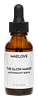
This brightening serum is formulated around Ascorbic Acid and Tocopherol to brighten dull-looking skin and fade the look of dark spots.
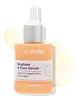
This brightening serum is formulated around Sodium Ascorbyl Phosphate and Ferulic Acid to fade the look of dark spots and brighten dull-looking skin.

What's inside
What's inside
 Key Ingredients
Benefits
Concerns
No concerns
Ingredients Side-by-side
Water
Skin ConditioningAscorbic Acid
Antioxidant






Ethoxydiglycol
HumectantAloe Barbadensis Leaf Juice
Skin Conditioning


Vitis Vinifera
MaskingVitis Vinifera Seed Extract
Antimicrobial
Glycerin
Humectant
Sodium Hyaluronate
Humectant
Magnolia Officinalis Bark Extract
Antimicrobial
Tocopherol
Antioxidant
Xanthan Gum
EmulsifyingFerulic Acid
Antimicrobial
Lecithin
Emollient
Disodium EDTA
ChelatingSodium Metabisulfite
Antioxidant
Citrus Aurantium Dulcis Callus Culture Extract
Skin ConditioningEthylhexylglycerin
Skin ConditioningMaltodextrin
Absorbent
Triethanolamine
BufferingPhenoxyethanol
Preservative
Water, Ascorbic Acid, Ethoxydiglycol, Aloe Barbadensis Leaf Juice, Vitis Vinifera, Vitis Vinifera Seed Extract, Glycerin, Sodium Hyaluronate, Magnolia Officinalis Bark Extract, Tocopherol, Xanthan Gum, Ferulic Acid, Lecithin, Disodium EDTA, Sodium Metabisulfite, Citrus Aurantium Dulcis Callus Culture Extract, Ethylhexylglycerin, Maltodextrin, Triethanolamine, Phenoxyethanol
Water
Skin ConditioningAloe Barbadensis Leaf Juice
Skin Conditioning
Glycerin
Humectant
Sodium Ascorbyl Phosphate
Antioxidant
Arginine
Masking
Ferulic Acid
Antimicrobial
Terminalia Ferdinandiana Fruit Extract
Antioxidant
Geranium Maculatum Extract
TonicEquisetum Arvense Extract
AstringentHamamelis Virginiana Water
Astringent



Taraxacum Officinale Extract
Skin ConditioningCentella Asiatica Extract
Cleansing
Tamarindus Indica Seed Polysaccharide
Skin ConditioningDimethyl Sulfone
SolventCamellia Sinensis Leaf Extract
Antimicrobial
Simmondsia Chinensis Seed Oil
Emollient

Propanediol
Solvent
Sodium Benzoate
Masking
Carrageenan


Sclerotium Gum
Emulsion StabilisingCitric Acid
Buffering
Benzoic Acid
Masking
Sodium Dehydroacetate
Preservative
Lonicera Caprifolium Flower Extract
Perfuming
Lonicera Japonica Flower Extract
Skin ConditioningWater, Aloe Barbadensis Leaf Juice, Glycerin, Sodium Ascorbyl Phosphate, Arginine, Ferulic Acid, Terminalia Ferdinandiana Fruit Extract, Geranium Maculatum Extract, Equisetum Arvense Extract, Hamamelis Virginiana Water, Taraxacum Officinale Extract, Centella Asiatica Extract, Tamarindus Indica Seed Polysaccharide, Dimethyl Sulfone, Camellia Sinensis Leaf Extract, Simmondsia Chinensis Seed Oil, Propanediol, Sodium Benzoate, Carrageenan, Sclerotium Gum, Citric Acid, Benzoic Acid, Sodium Dehydroacetate, Lonicera Caprifolium Flower Extract, Lonicera Japonica Flower Extract
Reviews
Ingredients Explained
These ingredients are found in both products.
Ingredients higher up in an ingredient list are typically present in a larger amount.
Aloe Barbadensis Leaf Juice is the filtered, stabilized liquid pressed from the inner gel of the aloe vera leaf.
In cosmetics, it shows up as either soothing active or a water-replacement base. It is roughly 98-99% water and the last 1-2% is an interesting mix of polysaccharides, amino acids, vitamins, minerals, and enzymes.
The polysaccharides do most of the work: they bind water at the skin surface for a light, non-greasy hydration boost. And one of the polysaccharides, glycomannan, is linked to fibroblast stimulation + collagen synthesis. This is also why aloe has such a long track record in wound and burn healing.
This ingredient is also calming with anti-inflammatory and mild antimicrobial activity, making it a great pick for sensitive, irritated, or post-sun skin.
Realistic expectations matter though; the solid evidence is mostly limited to hydration, soothing, and wound support. Deeper claims about anti-aging or sun protection are not well backed, and science reviews note it does not prevent radiation-induced skin injury.
Because it plays well with almost everything, it's commonly used as a base alongside other actives like niacinamide or vitamin C.
Typical usage concentrations range from 0.5% (where hydration benefits already show up) all the way to 90%+ (where it replaces water as the main base).
The safety for this ingredient is well-establish as well. Overall, this is a great supporting ingredient for those who want a boost in hydration.
Learn more about Aloe Barbadensis Leaf JuiceFerulic Acid is a plant based antioxidant that can be naturally found in the cell walls of grains like rice, oats, and corn. It has antioxidant and antimicrobial properties, and has the ability to boost the performance of other antioxidants as well.
A well-known study found that adding Ferulic Acid to a solution of Vitamins C and E doubled the photoprotection of skin. This is why you'll often see it paired with Vitamin C or Vitamin E serums rather than sold on its own.
A 2025 review of 18 human studies found that using Ferulic Acid (0.5-1%) daily for one to three months showed improvements in:
As far as allergies go, Ferulic acid is generally well-tolerated but can cause an allergic reaction in very rare cases. It's also worth noting that Ferulic acid is often extracted from plant sources like rice bran or wheat bran, so be sure to path test if you have known grain allergies.
Outside of skincare, researchers are also looking into Ferulic Acid for its potential benefits in areas like diabetes, Alzheimer's, and heart health.
Learn more about Ferulic AcidGlycerin (or glycerol) is a compound naturally found in your skin. It's a powerhouse humectant that pulls water into the stratum corneum.
Topically, glycerin does several things at once:
Your skin makes glycerin on its own (mostly from sebaceous oil breakdown) and shuttles it to your outermost layer of skin, or your epidermis, via aquaporin-3.
Aquaporin-3 is a transporter that is essential for normal skin hydration, elasticity, and repair. Interestingly, mice lacking in AQP3 have dry and less elastic skin that can be fully corrected with glycerin.
This ingredient is non-irritating, plays well with almost every ingredient, and works across all skin types. Typical use is anywhere between 3-10% but can go up to 79% in some leave-on products.
Just know very high concentrations (>40%) can feel tacky in low humidity.
Glycerin is the name for this ingredient in American English. British English uses Glycerol/Glycerine.
Learn more about GlycerinWater. It's the most common cosmetic ingredient of all. You'll usually see it at the top of ingredient lists, meaning that it makes up the largest part of the product.
So why is it so popular? Water most often acts as a solvent - this means that it helps dissolve other ingredients into the formulation.
You'll also recognize water as that liquid we all need to stay alive. If you see this, drink a glass of water. Remember to stay hydrated!
Learn more about Water

