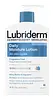
This barrier-repair moisturizer is formulated around Butyrospermum Parkii Butter and Avena Sativa Kernel Oil to strengthen the skin barrier and hydrate skin.
This oil-control moisturizer is formulated around Aluminum Starch Octenylsuccinate and Zinc Sulfate to balance excess oil.

What's inside
What's inside
 Key Ingredients

No key ingredients
Benefits
Concerns
Ingredients Side-by-side
Water
Skin ConditioningParaffinum Liquidum
Emollient


Glycerin
Humectant


Carbomer
Emulsion StabilisingPotassium Cetyl Phosphate
EmulsifyingPhenoxyethanol
Preservative
Cetyl Alcohol
Emollient



Sodium Polyacrylate
Absorbent
Caprylyl Glycol
Emollient
Hydrogenated Palm Glycerides
Emollient
Sodium Hydroxide
BufferingButyrospermum Parkii Butter
Skin Conditioning

Disodium EDTA
ChelatingAvena Sativa Kernel Oil
Skin Conditioning

Magnesium Aspartate
Skin ConditioningZinc Gluconate
Skin Conditioning



Copper Gluconate
Skin Conditioning
Water, Paraffinum Liquidum, Glycerin, Carbomer, Potassium Cetyl Phosphate, Phenoxyethanol, Cetyl Alcohol, Sodium Polyacrylate, Caprylyl Glycol, Hydrogenated Palm Glycerides, Sodium Hydroxide, Butyrospermum Parkii Butter, Disodium EDTA, Avena Sativa Kernel Oil, Magnesium Aspartate, Zinc Gluconate, Copper Gluconate
Water
Skin ConditioningGlycerin
Humectant
Butylene Glycol
Humectant
Caprylic/Capric Triglyceride
Masking
Butyrospermum Parkii Butter
Skin Conditioning
Sodium Polyacrylate
Absorbent
Phenoxyethanol
Preservative
Caprylyl Glycol
Emollient
Aluminum Starch Octenylsuccinate
Absorbent
Carbomer
Emulsion StabilisingSesamum Indicum Seed Oil
Emollient
Inulin
Skin Conditioning
Trisodium Ethylenediamine Disuccinate
ChelatingParfum
Masking

Sodium Hydroxide
BufferingGlyceryl Acrylate/Acrylic Acid Copolymer
HumectantLaminaria Saccharina Extract
Skin Protecting
Lecithin
Emollient
Zinc Sulfate
Antimicrobial
Xanthan Gum
EmulsifyingLinalool
Perfuming
Benzyl Salicylate
Perfuming
Benzyl Alcohol
Perfuming
Pyridoxine Hcl
Skin ConditioningCitric Acid
Buffering

CI 42090
Cosmetic ColorantCI 19140
Cosmetic ColorantCI 60730
Cosmetic ColorantCI 60725
Cosmetic ColorantWater, Glycerin, Butylene Glycol, Caprylic/Capric Triglyceride, Butyrospermum Parkii Butter, Sodium Polyacrylate, Phenoxyethanol, Caprylyl Glycol, Aluminum Starch Octenylsuccinate, Carbomer, Sesamum Indicum Seed Oil, Inulin, Trisodium Ethylenediamine Disuccinate, Parfum, Sodium Hydroxide, Glyceryl Acrylate/Acrylic Acid Copolymer, Laminaria Saccharina Extract, Lecithin, Zinc Sulfate, Xanthan Gum, Linalool, Benzyl Salicylate, Benzyl Alcohol, Pyridoxine Hcl, Citric Acid, CI 42090, CI 19140, CI 60730, CI 60725
Reviews
Ingredients Explained
These ingredients are found in both products.
Ingredients higher up in an ingredient list are typically present in a larger amount.
This ingredient is also known as shea butter. It is a plant-derived extract from the nuts of the Africa shea tree and one of the most well-studied emollients.
Because it has a high concentration of fatty acids (primarily oleic, stearic, and linoleic) it is able to form a protective barrier on the skin's surface. This helps seal in moisture and prevents transepidermal water loss (TEWL).
In vitro research found an increase in skin hydration by 58% and a decrease in TEWL by 37.8% after 24 hours of applying this ingredient (pretty impressive for a single ingredient!).
Besides hydration, shea butter also contains triterpenes that have anti-inflammatory potential. In particule, lupeol cinnamate has shown the highest anti-inflammatory activity in vivo.
Shea butter also contains vitamins A and E which may contribute to antioxidant activity.
While Shea Butter has an SPF rating of about 3-4, it is not a sunscreen replacement.
This ingredient may not be fungal acne safe because its fatty acids fall within the C11-C24 range that the Malassezia yeast can metabolize.
This ingredient shows up on a lot of "pore-clogging" lists but there's no real evidence behind that. It doesn't even have a comedogenic rating from an actual study; the numbers you'll find online come from blogs citing other blogs.
Ratings for other ingredients mostly come from a 1980s rabbit ear test. This test doesn't translate well to human skin or to real products because the ingredient sits at a much lower percentage.
Some people still find it breaks them out. So if that's you, definitely trust your skin. Just know this one's based on experience and not evidence.
Learn more about Butyrospermum Parkii ButterCaprylyl Glycol is a humectant, skin conditioner, emollient, and preservative booster derived from either caprylic acid or synthetically created.
Typical use levels vary from 0.3-1% as a preservative booster and go up to 2% to condition skin.
Because it is not a free-fatty acid, this ingredient is fungal acne safe (there's nothing for Malassezia to feed on).
Learn more about Caprylyl GlycolCarbomer is a synthetic thickening and gelling agent. It's basically the ingredient that gives a lot of serums, gels, creams, and sunscreens their smooth, non-sticky texture.
Although legally permitted at very high levels, carbomers are normally used at concentrations below 1%.
It also needs to be neutralized to actually thicken, and because it is a large molecule, it doesn't really penetrate the skin barrier.
Allergy-wise, the risk is very low. Clinical studies show carbomers have low potential for skin irritation/sensitization even at concentrations up to 100%.
A 2024 UK study patch-tested 1,302 patients and found true allergy to the parent group of carbomer to be rare with no confirmed relevant reactions.
Learn more about CarbomerGlycerin (or glycerol) is a compound naturally found in your skin. It's a powerhouse humectant that pulls water into the stratum corneum.
Topically, glycerin does several things at once:
Your skin makes glycerin on its own (mostly from sebaceous oil breakdown) and shuttles it to your outermost layer of skin, or your epidermis, via aquaporin-3.
Aquaporin-3 is a transporter that is essential for normal skin hydration, elasticity, and repair. Interestingly, mice lacking in AQP3 have dry and less elastic skin that can be fully corrected with glycerin.
This ingredient is non-irritating, plays well with almost every ingredient, and works across all skin types. Typical use is anywhere between 3-10% but can go up to 79% in some leave-on products.
Just know very high concentrations (>40%) can feel tacky in low humidity.
Glycerin is the name for this ingredient in American English. British English uses Glycerol/Glycerine.
Learn more about GlycerinPhenoxyethanol is one of the most widely used preservatives in skincare (and for good reason!).
It has a large spectrum of antimicrobial activity and especially effective bacteria, yeast, and mold while only having a weak effect on your skin's natural microbiome.
On a cellular level, it disrupts the cell membranes of microbes by poking holes that make the cell leak. This shuts down the chemical reactions the microbe needs to make energy so it can no longer survive.
Another perk of this ingredient is that it stays functional across a wide pH range (3-10).
You'll often see it paired with boosters like Ethylhexylglycerin; one study showed that a 1:9 ratio of Ethylhexylglycerin to Phenoxyethanol damages bacterial membranes as effectively as doubling the Phenoxyethanol concentration on its own.
Typical use concentrations range from 0.3-1% depending on the formula, and this ingredient is capped at 1% int the EU.
Safety-wise, the fear mongering does not hold up to the evidence. The EU's Scientific Committee on Consumer Safety and FDA consider it safe as a preservative at up to 1%, including for children of all ages.
Adverse systemic effects only showed up in animal studies at exposures roughly 200x higher than what people get from cosmetics. And despite its very widespread use, this ingredient is a rare sensitizer and allergic reactions are uncommon.
Learn more about PhenoxyethanolSodium Hydroxide is also known as lye or caustic soda. It is used to adjust the pH of products; many ingredients require a specific pH to be effective.
In small amounts, sodium hydroxide is considered safe to use. However, large amounts may cause chemical burns due to its high alkaline.
Your skin has a natural pH and acid mantle. This acid mantle helps prevent harmful bacteria from breaking through. The acid mantle also helps keep your skin hydrated.
"Alkaline" refers to a high pH level. A low pH level would be considered acidic.
Learn more about Sodium HydroxideSodium Polyacrylate is the sodium salt of polyacrylic acid. It is used as an absorber, emollient, and stabilizer.
This ingredient is a super-absorbent polymer - meaning it can absorb 100 to 1000 times its mass in water. As an emollient, Sodium Polyacrylate helps soften and soothe skin. Emollients work by creating a barrier to trap moisture in. This helps keep your skin hydrated.
Water. It's the most common cosmetic ingredient of all. You'll usually see it at the top of ingredient lists, meaning that it makes up the largest part of the product.
So why is it so popular? Water most often acts as a solvent - this means that it helps dissolve other ingredients into the formulation.
You'll also recognize water as that liquid we all need to stay alive. If you see this, drink a glass of water. Remember to stay hydrated!
Learn more about Water

