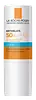
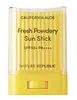
La Roche-Posay Anthelios XL SPF 50+ Stick Versus Nature Republic California Aloe Fresh Powdery Sun Stick SPF 50+
This hybrid sunscreen covers the full UV range and blocks ~98% of UVB at SPF 50.
This chemical sunscreen covers the full UV range and blocks ~98% of UVB at SPF 50.


What's inside
What's inside
 Key Ingredients
Benefits
Concerns
Ingredients Side-by-side
Ricinus Communis Seed Oil
Masking




Isopropyl Palmitate
Emollient


Polyethylene
Abrasive
Octocrylene
UV Absorber


Isohexadecane
EmollientTitanium Dioxide
Cosmetic Colorant
Ozokerite
Emulsion StabilisingButyl Methoxydibenzoylmethane
UV Absorber
Drometrizole Trisiloxane
UV Absorber
Theobroma Cacao Seed Butter
Emollient
Butyrospermum Parkii Butter
Skin Conditioning
Water
Skin ConditioningDimethicone
Emollient
Glycine Soja Oil
Emollient

Silica
Abrasive

Tocopherol
Antioxidant




Butylene Glycol Dicaprylate/Dicaprate
EmollientPolyethylene
Abrasive
Dimethicone
Emollient
Octocrylene
UV Absorber
Vinyl Dimethicone/Methicone Silsesquioxane Crosspolymer
Methyl Methacrylate Crosspolymer
Silica
Abrasive
Ethylhexyl Methoxycinnamate
UV Absorber
Cetyl Ethylhexanoate
EmollientDicaprylyl Carbonate
EmollientEthylhexyl Salicylate
UV Absorber
Diethylamino Hydroxybenzoyl Hexyl Benzoate
UV Filter
Bis-Ethylhexyloxyphenol Methoxyphenyl Triazine
UV Absorber
Tocopheryl Acetate
Antioxidant
Ozokerite
Emulsion StabilisingAloe Barbadensis Leaf Extract
Emollient
Morinda Citrifolia Extract
AstringentSea Water
HumectantHibiscus Rosa-Sinensis Flower/Leaf Extract
Skin ConditioningBisabolol
Antioxidant
Lauryl PEG-9 Polydimethylsiloxyethyl Dimethicone
Skin Conditioning
Dehydroacetic Acid
Preservative
Water
Skin ConditioningButylene Glycol
Humectant
Parfum
Masking
Phenoxyethanol
Preservative
Butylphenyl Methylpropional
Perfuming
Linalool
Perfuming
Limonene
Perfuming
Hexyl Cinnamal
Perfuming
Benzyl Salicylate
Perfuming
Butylene Glycol Dicaprylate/Dicaprate, Polyethylene, Dimethicone, Octocrylene, Vinyl Dimethicone/Methicone Silsesquioxane Crosspolymer, Methyl Methacrylate Crosspolymer, Silica, Ethylhexyl Methoxycinnamate, Cetyl Ethylhexanoate, Dicaprylyl Carbonate, Ethylhexyl Salicylate, Diethylamino Hydroxybenzoyl Hexyl Benzoate, Bis-Ethylhexyloxyphenol Methoxyphenyl Triazine, Tocopheryl Acetate, Ozokerite, Aloe Barbadensis Leaf Extract, Morinda Citrifolia Extract, Sea Water, Hibiscus Rosa-Sinensis Flower/Leaf Extract, Bisabolol, Lauryl PEG-9 Polydimethylsiloxyethyl Dimethicone, Dehydroacetic Acid, Water, Butylene Glycol, Parfum, Phenoxyethanol, Butylphenyl Methylpropional, Linalool, Limonene, Hexyl Cinnamal, Benzyl Salicylate
Reviews
Ingredients Explained
These ingredients are found in both products.
Ingredients higher up in an ingredient list are typically present in a larger amount.
Dimethicone is a type of synthetic silicone created from natural materials such as quartz. It is also known as polydimethylsiloxane.
What it does:
Dimethicone comes in different viscosities:
Depending on the viscosity, dimethicone has different properties.
Ingredients lists don't always show which type is used, so we recommend reaching out to the brand if you have questions about the viscosity.
This ingredient is unlikely to cause irritation because it does not get absorbed into skin. However, people with silicone allergies should be careful about using this ingredient.
Note: Dimethicone may contribute to pilling. This is because it is not oil or water soluble, so pilling may occur when layered with products. When mixed with heavy oils in a formula, the outcome is also quite greasy.
Learn more about DimethiconeOctocrylene is an oil-soluble organic UV filter that mainly absorbs UVB and short wave UVA II light.
Its real superpower is teamwork: octocrylene is remarkably photostable and is most famous for stabilizing avobenzone (the workhorse UVA filter).
This ingredient is commonly used to enhance both UVB and UVA protection due to its unique property in stabilizing avobenzone. It also pulls double duty by boosting water resistance and giving formulas a smooth, spreadable feel.
The EU's Scientific Committee on Consumer Safety (SCCS) has deemed octocrylene to be safe as a UV-filter at concentrations up to 10% (capped at 9% in propellant sprays). The US also permits it up to 10%.
Two things worth knowing:
You'll usually see this ingredient used in concentrations between 2-10% (higher amounts when used as a stabilizer for avobenzone).
Learn more about OctocryleneOzokerite is a naturally occuring mineral wax. In cosmetics, ozokerite is used as a texture enhancer.
Ceresin wax is derived from this ingredient.
The melting point of ozokerite is 58-100 C.
Ozokerite is found all over the world including Scotland, the US, and India.
Learn more about OzokeritePolyethylene is a synthetic ingredient that helps the skin retain moisture. It is a polymer.
It is also typically used within product formulations to help bind solid ingredients together and thicken oil-based ingredients. When added to balms and emulsions, it helps increase the melting point temperature.
Silica, also known as silicon dioxide, is a naturally occurring mineral. It is used as a fine, spherical, and porous powder in cosmetics.
Though it has exfoliant properties, the function of silica varies depending on the product.
The unique structure of silica enhances the spreadability and adds smoothness, making it a great texture enhancer.
It is also used as an active carrier, emulsifier, and mattifier due to its ability to absorb excess oil.
In some products, tiny microneedles called spicules are made from silica or hydrolyzed sponge. When you rub them in, they lightly polish away dead skin layers and enhance the penetration of active ingredients.
Learn more about SilicaWater. It's the most common cosmetic ingredient of all. You'll usually see it at the top of ingredient lists, meaning that it makes up the largest part of the product.
So why is it so popular? Water most often acts as a solvent - this means that it helps dissolve other ingredients into the formulation.
You'll also recognize water as that liquid we all need to stay alive. If you see this, drink a glass of water. Remember to stay hydrated!
Learn more about Water

