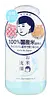
This pore-care exfoliator is formulated around Kaolin to refine the look of pores and balance excess oil.
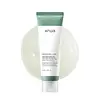
This oil-control exfoliator is formulated around Cellulose and Capryloyl Salicylic Acid to balance excess oil.


What's inside
What's inside
 Key Ingredients
Benefits
Concerns
No concerns
Ingredients Side-by-side
Kaolin
Abrasive



Malt Flour
Skin ConditioningSodium C14-16 Olefin Sulfonate
Cleansing

Dextrin
AbsorbentRice Ferment Lees
HumectantOryza Sativa Bran Oil
Emollient





Glycosphingolipids
EmollientOryza Sativa Bran Extract
Skin Conditioning
Butylene Glycol
Humectant
Arginine
Masking
Glycerin
Humectant
Hydrogenated Lecithin
Emulsifying
Hydrogenated Lysolecithin
EmulsifyingGuar Hydroxypropyltrimonium Chloride
Skin ConditioningPentylene Glycol
Skin Conditioning
Water
Skin ConditioningMethylparaben
Preservative


Ethylparaben
Preservative
Phenoxyethanol
Preservative
Kaolin, Malt Flour, Sodium C14-16 Olefin Sulfonate, Dextrin, Rice Ferment Lees, Oryza Sativa Bran Oil, Glycosphingolipids, Oryza Sativa Bran Extract, Butylene Glycol, Arginine, Glycerin, Hydrogenated Lecithin, Hydrogenated Lysolecithin, Guar Hydroxypropyltrimonium Chloride, Pentylene Glycol, Water, Methylparaben, Ethylparaben, Phenoxyethanol
Water
Skin ConditioningDipropylene Glycol
HumectantCellulose
Absorbent
1,2-Hexanediol
Skin Conditioning
Houttuynia Cordata Flower/Leaf/Stem Water
Antimicrobial
Acrylates/C10-30 Alkyl Acrylate Crosspolymer
Emulsion StabilisingTromethamine
BufferingAllantoin
Skin Conditioning
Carthamus Tinctorius Flower Extract
Skin ConditioningPropanediol
Solvent
Dextrin
AbsorbentGardenia Florida Fruit Extract
Skin ConditioningDisodium EDTA
Theobroma Cacao Extract
Skin ConditioningGlycerin
Humectant
Aloe Ferox Leaf Extract
Skin ConditioningBioflavonoids
Skin ConditioningSodium Hyaluronate
Humectant

Caprylyl Glycol
Emollient
Capryloyl Salicylic Acid
Exfoliating
Brassica Oleracea Italica Extract
AstringentEthylhexylglycerin
Skin ConditioningWater, Dipropylene Glycol, Cellulose, 1,2-Hexanediol, Houttuynia Cordata Flower/Leaf/Stem Water, Acrylates/C10-30 Alkyl Acrylate Crosspolymer, Tromethamine, Allantoin, Carthamus Tinctorius Flower Extract, Propanediol, Dextrin, Gardenia Florida Fruit Extract, Disodium EDTA, Theobroma Cacao Extract, Glycerin, Aloe Ferox Leaf Extract, Bioflavonoids, Sodium Hyaluronate, Caprylyl Glycol, Capryloyl Salicylic Acid, Brassica Oleracea Italica Extract, Ethylhexylglycerin
Reviews
Alternatives
Ingredients Explained
These ingredients are found in both products.
Ingredients higher up in an ingredient list are typically present in a larger amount.
Dextrin is a starch-derived polysaccharide. It's made by partially breaking down corn, potato, or other plant starches.
Think of it as "half-processed" starch; it's less complex than the original but not fully broken down into sugar like maltodextrin.
In cosmetics, it mainly functions as a bulking agent, viscosity controller, binder, and absorbent. It helps thicken products, stabilize powders, and get certain textures a less "wet" feel.
This ingredient has a pretty solid safety profile; it's recognized as a safe food additive and its large molecular size means it doesn't meaningfully penetrate skin.
Human repeat insult patch tests using a rinse-off facial product containing 42.69% dextrin found no skin irritation or sensitization in 54 subjects.
Typical real-world usage is much lower: usually under 1% as a texture modifier and up to 40% in masks (rinse off products use less).
Learn more about DextrinGlycerin (or glycerol) is a compound naturally found in your skin. It's a powerhouse humectant that pulls water into the stratum corneum.
Topically, glycerin does several things at once:
Your skin makes glycerin on its own (mostly from sebaceous oil breakdown) and shuttles it to your outermost layer of skin, or your epidermis, via aquaporin-3.
Aquaporin-3 is a transporter that is essential for normal skin hydration, elasticity, and repair. Interestingly, mice lacking in AQP3 have dry and less elastic skin that can be fully corrected with glycerin.
This ingredient is non-irritating, plays well with almost every ingredient, and works across all skin types. Typical use is anywhere between 3-10% but can go up to 79% in some leave-on products.
Just know very high concentrations (>40%) can feel tacky in low humidity.
Glycerin is the name for this ingredient in American English. British English uses Glycerol/Glycerine.
Learn more about GlycerinWater. It's the most common cosmetic ingredient of all. You'll usually see it at the top of ingredient lists, meaning that it makes up the largest part of the product.
So why is it so popular? Water most often acts as a solvent - this means that it helps dissolve other ingredients into the formulation.
You'll also recognize water as that liquid we all need to stay alive. If you see this, drink a glass of water. Remember to stay hydrated!
Learn more about Water

