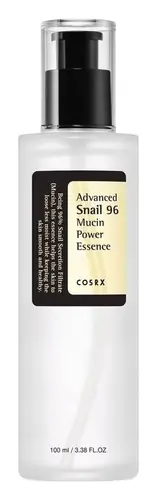
This hydrating essence is formulated around Oryza Sativa Extract and Hyaluronic Acid to hydrate skin and strengthen the skin barrier.
This calming essence is formulated around Panax Ginseng Root Extract and Bacillus Ferment to calm redness and strengthen the skin barrier.

What's inside
What's inside
 Key Ingredients
Benefits
Concerns
Ingredients Side-by-side
Water
Skin ConditioningGlycerin
Humectant


Betaine
Humectant
Propanediol
Solvent
Oryza Sativa Extract
Absorbent

Phyllostachys Pubescens Shoot Bark Extract
Skin ConditioningAloe Barbadensis Leaf Extract
Emollient
Panax Ginseng Root Extract
Emollient
Aspergillus Ferment
Skin ConditioningHyaluronic Acid
Humectant
Beta-Glucan
Skin Conditioning
Carbomer
Emulsion StabilisingXanthan Gum
EmulsifyingTrehalose
Humectant
Tromethamine
Buffering1,2-Hexanediol
Skin Conditioning
Butylene Glycol
Humectant
Sodium Phytate
Polyglyceryl-10 Laurate
Skin Conditioning

Polyglyceryl-10 Myristate
Skin Conditioning
Pulsatilla Koreana Extract
Skin ConditioningUsnea Barbata Extract
Zanthoxylum Piperitum Fruit Extract
Skin ConditioningCyclodextrin
AbsorbentAlcohol
Antimicrobial



Lavandula Angustifolia Oil
Masking



Water, Glycerin, Betaine, Propanediol, Oryza Sativa Extract, Phyllostachys Pubescens Shoot Bark Extract, Aloe Barbadensis Leaf Extract, Panax Ginseng Root Extract, Aspergillus Ferment, Hyaluronic Acid, Beta-Glucan, Carbomer, Xanthan Gum, Trehalose, Tromethamine, 1,2-Hexanediol, Butylene Glycol, Sodium Phytate, Polyglyceryl-10 Laurate, Polyglyceryl-10 Myristate, Pulsatilla Koreana Extract, Usnea Barbata Extract, Zanthoxylum Piperitum Fruit Extract, Cyclodextrin, Alcohol, Lavandula Angustifolia Oil
Panax Ginseng Root Extract
Emollient
Bacillus Ferment
Skin Conditioning
Water
Skin ConditioningGlycerin
Humectant
1,2-Hexanediol
Skin Conditioning
2,3-Butanediol
HumectantAlcohol
Antimicrobial
Panax Ginseng Root Water
Masking
Panthenol
Skin Conditioning
PEG-40 Hydrogenated Castor Oil
Emulsifying
Butylene Glycol
Humectant
Glyceryl Caprylate
EmollientCarbomer
Emulsion StabilisingTromethamine
BufferingCaprylyl Glycol
Emollient
Dimethicone
Emollient
Adenosine
Skin Conditioning
Poncirus Trifoliata Fruit Extract
Skin ConditioningBiosaccharide Gum-1
Humectant
Hydrogenated Lecithin
Emulsifying
Sodium Levulinate
Skin ConditioningArtemisia Argyi Leaf Extract
Skin ConditioningHyaluronic Acid
Humectant
P-Anisic Acid
MaskingCitronellol
Perfuming
Parfum
Masking
Hexyl Cinnamal
Perfuming
Panax Ginseng Root Extract, Bacillus Ferment, Water, Glycerin, 1,2-Hexanediol, 2,3-Butanediol, Alcohol, Panax Ginseng Root Water, Panthenol, PEG-40 Hydrogenated Castor Oil, Butylene Glycol, Glyceryl Caprylate, Carbomer, Tromethamine, Caprylyl Glycol, Dimethicone, Adenosine, Poncirus Trifoliata Fruit Extract, Biosaccharide Gum-1, Hydrogenated Lecithin, Sodium Levulinate, Artemisia Argyi Leaf Extract, Hyaluronic Acid, P-Anisic Acid, Citronellol, Parfum, Hexyl Cinnamal
Reviews
Ingredients Explained
These ingredients are found in both products.
Ingredients higher up in an ingredient list are typically present in a larger amount.
1,2-Hexanediol is a synthetic liquid and another multi-functional powerhouse.
It is a:
- Humectant, drawing moisture into the skin
- Emollient, helping to soften skin
- Solvent, dispersing and stabilizing formulas
- Preservative booster, enhancing the antimicrobial activity of other preservatives
This ingredient is also called ethanol or ethyl alcohol. It is denatured, meaning made undrinkable for cosmetic use.
In formulas, it:
Is it bad for your skin?
The answer comes down to concentration. Patch and wash studies have found highly concentrated alcohol-based hand rubs (60-100%) cause less barrier disruption than washing with a basic detergent like SLS. The only measurable effect in these studies was a temporary dip in skin hydration.
Concentrations below 12-15% in leave-on cosmetics is generally well-tolerated. Concentrations above start to see increased transepidermal water loss (TEWL) and reduced hydration.
In concentrations about 58%, it creates temporary channels in your skin's lipid layers to become more permeable and allow other ingredients to slip through easily.
This ingredient can be up to 80% of the formula in alcohol-based perfumes.
Overall, this ingredient is probably harmless if found lower down an ingredients list but worth side-eyeing if it's high up (especially if your barrier is already struggling).
Alcohol can worsen dry skin, eczema, and oily skin, especially at higher concentrations. This is because it can increase transepidermal water loss and decrease hydration to disrupt the skin barrier.
According to the National Rosacea Society based in the US, you should be mindful of products with these alcohols in the top half of ingredients.
True allergic contact dermatitis to ethanol is uncommon, but be sure to patch test if you have dry or sensitive skin.
Learn more about AlcoholButylene Glycol (or BG) is used within cosmetic products for a few different reasons:
Overall, Butylene Glycol is a safe and well-rounded ingredient that works well with other ingredients.
Though this ingredient works well with most skin types, some people with sensitive skin may experience a reaction such as allergic rashes, closed comedones, or itchiness.
Learn more about Butylene GlycolCarbomer is a synthetic thickening and gelling agent. It's basically the ingredient that gives a lot of serums, gels, creams, and sunscreens their smooth, non-sticky texture.
Although legally permitted at very high levels, carbomers are normally used at concentrations below 1%.
It also needs to be neutralized to actually thicken, and because it is a large molecule, it doesn't really penetrate the skin barrier.
Allergy-wise, the risk is very low. Clinical studies show carbomers have low potential for skin irritation/sensitization even at concentrations up to 100%.
A 2024 UK study patch-tested 1,302 patients and found true allergy to the parent group of carbomer to be rare with no confirmed relevant reactions.
Learn more about CarbomerGlycerin (or glycerol) is a compound naturally found in your skin. It's a powerhouse humectant that pulls water into the stratum corneum.
Topically, glycerin does several things at once:
Your skin makes glycerin on its own (mostly from sebaceous oil breakdown) and shuttles it to your outermost layer of skin, or your epidermis, via aquaporin-3.
Aquaporin-3 is a transporter that is essential for normal skin hydration, elasticity, and repair. Interestingly, mice lacking in AQP3 have dry and less elastic skin that can be fully corrected with glycerin.
This ingredient is non-irritating, plays well with almost every ingredient, and works across all skin types. Typical use is anywhere between 3-10% but can go up to 79% in some leave-on products.
Just know very high concentrations (>40%) can feel tacky in low humidity.
Glycerin is the name for this ingredient in American English. British English uses Glycerol/Glycerine.
Learn more about GlycerinHyaluronic acid (HA) is a glycosaminoglycan (basically a long sugar chain) that your skin already makes on its own. In your skin, HA lives in the extracellular matrix and acts as the body's moisture reservoir.
Topically, HA is a humectant that binds water and helps skin look more plump, smooth, and hydrated.
The only catch is that HA isn't a single thing; it actually comes in a wide range of molecular weights (~50 - 2,000+ kDA) and size matters.
Some clinical evidence links low molecular weight versions to improved wrinkle depth, elasticity, anti-inflammatory effects, and barrier repair.
This is why the best HA serums blend the two sizes together so you get the best of both worlds.
The majority of cosmetic HA is produced by bacterial fermentation, typically using Streptococcus or Bacillus strains. Typical use levels in skincare sit around 0.1-2%.
A clinical study using a 0.2% low-molecular weight HA gel showed improvement in facial seborrheic dermatitis with excellent tolerance.
These are some other common types of Hyaluronic Acid:
Learn more about Hyaluronic AcidGinseng root is a well-loved ingredient in Asian skincare for good reason. It hydrates the skin, soothes irritation, and helps even out skin tone.
In traditional East Asian medicine, ginseng has been used for centuries both as food and as a healing remedy, and modern research continues to confirm its skin benefits.
One of the standout features of ginseng is its ability to improve blood circulation and oxygen delivery to the skin, bringing a fresh supply of nutrients to support overall skin health. It also has antioxidant and anti-inflammatory properties. This helps to protect your skin against damage from UV exposure, pollution, and daily stress.
Additionally, studies suggest that ginseng may help reduce hyperpigmentation by inhibiting tyrosinase, the enzyme involved in melanin production.
There are different types of ginseng used in skincare, and while they all share core benefits, their potency can vary.
Most products use fresh or white ginseng because it’s more affordable. However, red ginseng, produced by steaming the root, contains higher levels of ginsenosides, which are compounds with proven anti-aging effects. These ginsenosides help reduce the appearance of wrinkles and improve skin elasticity.
Note: All forms of ginseng are listed simply as “Panax ginseng” in ingredient lists. We recommend reaching out to the brand if you have questions about which type of ginseng is used in their ingredients.
For general antioxidant benefits, any ginseng extract will do, but for wrinkle care or firmer skin, red or fermented ginseng is often more effective.
In short, ginseng is a powerhouse ingredient that supports hydration, radiance, and resilience.
Learn more about Panax Ginseng Root ExtractTromethamine (aka THAM) is a synthetic amino acid that shows up in skincare as a helper ingredient.
It functions as a pH adjuster to help neutralize acidic ingredients and set a formula's pH to the right spot.
This matters a lot because a lot of actives (like vitamin C) needs a specific pH to work well and feel comfortable on skin.
Concentration use ranges from 0.1-1.0% depending on the formula.
Learn more about TromethamineWater. It's the most common cosmetic ingredient of all. You'll usually see it at the top of ingredient lists, meaning that it makes up the largest part of the product.
So why is it so popular? Water most often acts as a solvent - this means that it helps dissolve other ingredients into the formulation.
You'll also recognize water as that liquid we all need to stay alive. If you see this, drink a glass of water. Remember to stay hydrated!
Learn more about Water