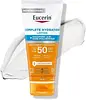
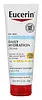
Eucerin Complete Hydration Lotion SPF 50 Face & Body Versus Eucerin Daily Hydration Cream, SPF 30, Fragrance Free
This chemical sunscreen covers burning UVB and near UVA but not the deep UVA that drives aging.
This day moisturizer is formulated around Glycyrrhiza Inflata Root Extract to reduce redness.

What's inside
What's inside
 Key Ingredients
No key ingredients
Benefits
Concerns
Ingredients Side-by-side
Homosalate
Skin Conditioning

Octocrylene
UV Absorber

Ethylhexyl Salicylate
UV Absorber
Water
Skin ConditioningC12-15 Alkyl Benzoate
AntimicrobialNeopentyl Glycol Diheptanoate
EmollientStyrene/Acrylates Copolymer
Butylene Glycol
Humectant

Diethylhexyl Syringylidenemalonate
Skin Protecting
Vp/Eicosene Copolymer
Sodium Hyaluronate
Humectant


Glycyrrhiza Inflata Root Extract
Skin Conditioning
Glycyrrhetinic Acid
Skin Conditioning
Tocopherol
Antioxidant



Aloe Barbadensis Leaf Juice
Skin Conditioning
1,2-Hexanediol
Skin Conditioning
Hydroxyacetophenone
Antioxidant
Acrylates/C10-30 Alkyl Acrylate Crosspolymer
Emulsion StabilisingPotassium Hydroxide
BufferingDisodium EDTA
ChelatingSodium Ascorbyl Phosphate
Antioxidant



Homosalate, Octocrylene, Ethylhexyl Salicylate, Water, C12-15 Alkyl Benzoate, Neopentyl Glycol Diheptanoate, Styrene/Acrylates Copolymer, Butylene Glycol, Diethylhexyl Syringylidenemalonate, Vp/Eicosene Copolymer, Sodium Hyaluronate, Glycyrrhiza Inflata Root Extract, Glycyrrhetinic Acid, Tocopherol, Aloe Barbadensis Leaf Juice, 1,2-Hexanediol, Hydroxyacetophenone, Acrylates/C10-30 Alkyl Acrylate Crosspolymer, Potassium Hydroxide, Disodium EDTA, Sodium Ascorbyl Phosphate
Water
Skin ConditioningGlycerin
Humectant
Tapioca Starch
Butylene Glycol
Humectant
Cetyl Alcohol
Emollient



Hydrogenated Coco-Glycerides
Emollient
Myristyl Myristate
Emollient

Stearyl Alcohol
Emollient
Palmitic Acid
Emollient
Glyceryl Stearate
Emollient
Stearic Acid
Cleansing
Glycyrrhiza Inflata Root Extract
Skin Conditioning
Dimethicone
Emollient
1,2-Hexanediol
Skin Conditioning
Phenoxyethanol
Preservative
Silica Dimethyl Silylate
EmollientDecylene Glycol
Skin ConditioningAcrylates/C10-30 Alkyl Acrylate Crosspolymer
Emulsion StabilisingBenzyl Alcohol
Perfuming



Xanthan Gum
EmulsifyingSodium Hydroxide
BufferingTrisodium EDTA
ChelatingWater, Glycerin, Tapioca Starch, Butylene Glycol, Cetyl Alcohol, Hydrogenated Coco-Glycerides, Myristyl Myristate, Stearyl Alcohol, Palmitic Acid, Glyceryl Stearate, Stearic Acid, Glycyrrhiza Inflata Root Extract, Dimethicone, 1,2-Hexanediol, Phenoxyethanol, Silica Dimethyl Silylate, Decylene Glycol, Acrylates/C10-30 Alkyl Acrylate Crosspolymer, Benzyl Alcohol, Xanthan Gum, Sodium Hydroxide, Trisodium EDTA
Reviews
Ingredients Explained
These ingredients are found in both products.
Ingredients higher up in an ingredient list are typically present in a larger amount.
1,2-Hexanediol is a synthetic liquid and another multi-functional powerhouse.
It is a:
- Humectant, drawing moisture into the skin
- Emollient, helping to soften skin
- Solvent, dispersing and stabilizing formulas
- Preservative booster, enhancing the antimicrobial activity of other preservatives
Acrylates/C10-30 Alkyl Acrylate Crosspolymer is a synthetic polymer. It is used to thicken, emulsify, and improve the texture of products.
As an emulsifier, it helps stabilize oil-in-water emulsions to give products an elegant feel when applied.
It can also form a thin protective film on skin. One study found that a formula using this polymer helped slow down how quickly other ingredients (like DEET) were absorbed through skin.
A 2024 study of over 1,300 patients confirmed that sensitization to this ingredient is rare. It is also non-mutagenic and has a clean track record.
Learn more about Acrylates/C10-30 Alkyl Acrylate CrosspolymerButylene Glycol (or BG) is used within cosmetic products for a few different reasons:
Overall, Butylene Glycol is a safe and well-rounded ingredient that works well with other ingredients.
Though this ingredient works well with most skin types, some people with sensitive skin may experience a reaction such as allergic rashes, closed comedones, or itchiness.
Learn more about Butylene GlycolThis ingredient comes from the Chinese licorice species, Glycyrrhiza Inflata. It has skin conditioning, soothing, and antioxidant properties.
The flavonoids in this ingredient show anti-inflammatory and antioxidant activities in lab studies. These compounds may also play a role in supporting a more even skin tone and helping to control microbial activity on acne-prone skin.
Water. It's the most common cosmetic ingredient of all. You'll usually see it at the top of ingredient lists, meaning that it makes up the largest part of the product.
So why is it so popular? Water most often acts as a solvent - this means that it helps dissolve other ingredients into the formulation.
You'll also recognize water as that liquid we all need to stay alive. If you see this, drink a glass of water. Remember to stay hydrated!
Learn more about Water

