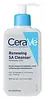
This salicylic acid gel cleanser is formulated around Salicylic Acid to clear breakouts and unclog pores.
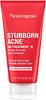
This acne treatment is formulated around Benzoyl Peroxide to clear breakouts.

What's inside
What's inside
 Key Ingredients
Benefits
Concerns
Ingredients Side-by-side
Water
Skin ConditioningCocamidopropyl Hydroxysultaine
Cleansing
Glycerin
Humectant


Sodium Lauroyl Sarcosinate
CleansingNiacinamide
Smoothing









Gluconolactone
Skin Conditioning
PEG-150 Pentaerythrityl Tetrastearate
Emulsifying

Sodium Methyl Cocoyl Taurate
Cleansing
Zea Mays Oil
Emulsifying

Ceramide NP
Skin Conditioning
Ceramide AP
Skin Conditioning
Ceramide EOP
Skin Conditioning
Carbomer
Emulsion StabilisingCalcium Gluconate
HumectantSodium Chloride
MaskingSalicylic Acid
Masking




Sodium Benzoate
Masking
Sodium Lauroyl Lactylate
EmulsifyingCholecalciferol
Cholesterol
Emollient
Phenoxyethanol
Preservative
Disodium EDTA
Tetrasodium EDTA
Hydrolyzed Hyaluronic Acid
Humectant
Phytosphingosine
Skin Conditioning
Xanthan Gum
EmulsifyingEthylhexylglycerin
Skin ConditioningWater, Cocamidopropyl Hydroxysultaine, Glycerin, Sodium Lauroyl Sarcosinate, Niacinamide, Gluconolactone, PEG-150 Pentaerythrityl Tetrastearate, Sodium Methyl Cocoyl Taurate, Zea Mays Oil, Ceramide NP, Ceramide AP, Ceramide EOP, Carbomer, Calcium Gluconate, Sodium Chloride, Salicylic Acid, Sodium Benzoate, Sodium Lauroyl Lactylate, Cholecalciferol, Cholesterol, Phenoxyethanol, Disodium EDTA, Tetrasodium EDTA, Hydrolyzed Hyaluronic Acid, Phytosphingosine, Xanthan Gum, Ethylhexylglycerin


Reviews
Ingredients Explained
These ingredients are found in both products.
Ingredients higher up in an ingredient list are typically present in a larger amount.
Carbomer is a synthetic thickening and gelling agent. It's basically the ingredient that gives a lot of serums, gels, creams, and sunscreens their smooth, non-sticky texture.
Although legally permitted at very high levels, carbomers are normally used at concentrations below 1%.
It also needs to be neutralized to actually thicken, and because it is a large molecule, it doesn't really penetrate the skin barrier.
Allergy-wise, the risk is very low. Clinical studies show carbomers have low potential for skin irritation/sensitization even at concentrations up to 100%.
A 2024 UK study patch-tested 1,302 patients and found true allergy to the parent group of carbomer to be rare with no confirmed relevant reactions.
Learn more about CarbomerDisodium EDTA is a chelating agent. It grabs onto and deactivates metal ions that sneak into your products from water, packaging, or air.
This ingredient mainly works behind the scenes and helps with:
On top of that, this ingredient can counteract the effects of hard water by binding to the minerals in it.
One thing worth knowing is that Disodium EDTA has been shown to be a mild penetration enhancer. It can help other ingredients absorb into skin more effectively which can be a double-edged sword (great for actives, but can also make the active too strong if you have sensitive skin).
Clinical patch testing showed no significant skin irritation at typical use concentrations and minimal dermal absorption.
You'll most likely see this ingredient near the end of an ingredient list. It's typically found in concentrations less than 1%.
Learn more about Disodium EDTAEthylhexylglycerin is created from glycerin. It is a multitasker ingredient that:
The CIR Expert Panel found minimal skin absorption or sensitization of any kind in a safety assessment. Though this ingredient is considered well-tolerated, a small number of cases of allergic dermatitis have been published since 2002. Just be sure to patch test if you are unsure.
Industry-reported use ranges from 8% in rinse-off products and 2% in leave-on formulations.
Learn more about EthylhexylglycerinWater. It's the most common cosmetic ingredient of all. You'll usually see it at the top of ingredient lists, meaning that it makes up the largest part of the product.
So why is it so popular? Water most often acts as a solvent - this means that it helps dissolve other ingredients into the formulation.
You'll also recognize water as that liquid we all need to stay alive. If you see this, drink a glass of water. Remember to stay hydrated!
Learn more about Water

