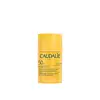
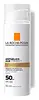
Caudalie Vinosun Protect High Protection Invisible Stick SPF 50 Versus La Roche-Posay SPF 50 Anthelios Age Correct
This chemical sunscreen covers the full UV range and blocks ~98% of UVB at SPF 50.
This chemical sunscreen covers the full UV range and blocks ~98% of UVB at SPF 50.

What's inside
What's inside
 Key Ingredients
Benefits
Concerns
Ingredients Side-by-side
Dicaprylyl Carbonate
EmollientCocoglycerides
Emollient


Euphorbia Cerifera Wax
Diethylamino Hydroxybenzoyl Hexyl Benzoate
UV Filter
Oryza Sativa Bran Wax
Skin Conditioning
Bis-Ethylhexyloxyphenol Methoxyphenyl Triazine
Skin Conditioning
Ethylhexyl Triazone
UV Absorber
Theobroma Cacao Seed Butter
Emollient


Copernicia Cerifera Cera
Emollient
Mauritia Flexuosa Fruit Oil
Skin Conditioning
Tocopherol
Antioxidant






Vitis Vinifera Seed Oil
Emollient
Benzyl Alcohol
Perfuming





Dicaprylyl Carbonate, Cocoglycerides, Euphorbia Cerifera Wax, Diethylamino Hydroxybenzoyl Hexyl Benzoate, Oryza Sativa Bran Wax, Bis-Ethylhexyloxyphenol Methoxyphenyl Triazine, Ethylhexyl Triazone, Theobroma Cacao Seed Butter, Copernicia Cerifera Cera, Mauritia Flexuosa Fruit Oil, Tocopherol, Vitis Vinifera Seed Oil, Benzyl Alcohol
Water
Skin ConditioningC12-15 Alkyl Benzoate
AntimicrobialGlycerin
Humectant
Octocrylene
UV Absorber
Niacinamide
Smoothing





Butyl Methoxydibenzoylmethane
UV Absorber
Dimethicone
Emollient
Ethylhexyl Triazone
UV Absorber
Silica
Abrasive
Aluminum Starch Octenylsuccinate
Absorbent
Vinyl Dimethicone/Methicone Silsesquioxane Crosspolymer
Terephthalylidene Dicamphor Sulfonic Acid
UV Absorber
Potassium Cetyl Phosphate
EmulsifyingDrometrizole Trisiloxane
UV Absorber
PEG-100 Stearate
Surfactant
Stearyl Alcohol
Emollient
Glyceryl Stearate
Emollient
Ammonium Polyacryloyldimethyl Taurate
Emulsion StabilisingBenzyl Alcohol
Perfuming
Benzyl Benzoate
Antimicrobial
Capryloyl Salicylic Acid
Exfoliating
Caprylyl Glycol
Emollient
Hydrolyzed Hyaluronic Acid
Humectant
Phenoxyethanol
Preservative
Phenylethyl Resorcinol
Antioxidant
Poloxamer 338
EmulsifyingTocopherol
Antioxidant
Triethanolamine
BufferingTrisodium Ethylenediamine Disuccinate
Xanthan Gum
EmulsifyingParfum
Masking
Water, C12-15 Alkyl Benzoate, Glycerin, Octocrylene, Niacinamide, Butyl Methoxydibenzoylmethane, Dimethicone, Ethylhexyl Triazone, Silica, Aluminum Starch Octenylsuccinate, Vinyl Dimethicone/Methicone Silsesquioxane Crosspolymer, Terephthalylidene Dicamphor Sulfonic Acid, Potassium Cetyl Phosphate, Drometrizole Trisiloxane, PEG-100 Stearate, Stearyl Alcohol, Glyceryl Stearate, Ammonium Polyacryloyldimethyl Taurate, Benzyl Alcohol, Benzyl Benzoate, Capryloyl Salicylic Acid, Caprylyl Glycol, Hydrolyzed Hyaluronic Acid, Phenoxyethanol, Phenylethyl Resorcinol, Poloxamer 338, Tocopherol, Triethanolamine, Trisodium Ethylenediamine Disuccinate, Xanthan Gum, Parfum
Reviews
Ingredients Explained
These ingredients are found in both products.
Ingredients higher up in an ingredient list are typically present in a larger amount.
Benzyl Alcohol is an aromatic alcohol with several roles: it's a preservative, solvent, and mild fragrance component with a floral scent.
This ingredient has been deemed safe for use in cosmetic formulations at concentrations up to 5%, and up to 10% in hair dyes. You'll typically see 0.5-2% in most rinse-off or leave-on products.
As a preservative, it works by disrupting the membrane of microbial proteins. This helps keep bacteria and fungi from growing in your products.
The sensitization picture is actually quite assuring as well:of nearly 71,000 patients patch tested with benzyl alcohol, only 0.21% showed a positive reaction with most of them being weakly positive.
This led researchers to conclude that benzyl alcohol cannot be regarded as a significant contact allergen.
It is worth noting this ingredient is classified as one of the EU's regulated fragrance allergens and restricted to 1% in finished products.
Labels must also declare it in concentrations above 0.001% in leave-on products and 0.01% in rinse-off products.
At concentrations around 5%, localized redness and itching can appear as a direct irritant response and not as a true allergic reaction.
Learn more about Benzyl AlcoholEthylhexyl Triazone (aka Octyl Triazone) is an oil-soluble organic UVB filter. It has peak absorption around 314 nm, right in the middle of the UVB range.
This ingredient is described as one of the most effective UVB filters available and small concentrations are enough to deliver a high SPF thanks to its strong UV absorbing power.
Formulators love it for its stability; its ability to filter UV stays practically unchanged even under intense radiation and it can also help boost the photostability of less stable filters like avobenzone.
It's also a great pick for water resistant products because it's insoluble in water and has a good affinity for keratin.
Because it's a big, heavy molecule, the European Scientific Committee has found to to have very low dermal penetration and negative results for allergenicity.
In vitro testing also showed a low absorption rate and clean results on irritation.
Typical use levels are 1-5% with 5% being the maximum in the EU, Japan, and other markets that allow it. However, this ingredient is not approved yet in the US or Canada.
Learn more about Ethylhexyl TriazoneTocopherol is a fat-soluble antioxidant known as Vitamin E.
You'll find this ingredient in the vast majority of skincare (for good reason). It works to neutralize free radicals, or unstable molecules generated by UV exposure, pollution, and other environmental stressors, before they can cause oxidative damage to your skin cells.
Topically applied tocopherol has been shown to protect against UV damage by ramping up the skin's own natural defense enzymes.
It also acts as a skin conditioning agent; some studies show that regular topical use can improve the skin's water-binding capacity over 2-4 weeks.
This ingredient is especially loved for being a team player. When combined with Vitamin C, the photoprotective effect of both ingredients roughly doubles and the combo also helps reduce UV-induced DNA damage.
This ingredient has some brightening potential but it's more of a prevention ingredient than spot-fader. Cell studies show it can slow down melanin production but it's worth noting that it's not the most powerful brightener out there.
In formulations, it also serves as a stabilizer that helps protect other oxidation-prone ingredients from degrading.
Concentrations usually range from 0.1-1% in most leave-on products.
Learn more about Tocopherol

