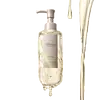
This oil-based makeup remover is made to dissolve makeup, sunscreen, and daily buildup.
This oil-based makeup remover is made to dissolve makeup, sunscreen, and daily buildup.

What's inside
What's inside
 Key Ingredients
No key ingredients
Benefits
Concerns
Ingredients Side-by-side
Paraffinum Liquidum
Emollient


Isopropyl Myristate
Emollient



Ethylhexyl Palmitate
Emollient
PEG-8 Glyceryl Isostearate
Emollient
Isododecane
EmollientPEG-20 Glyceryl Triisostearate
Emollient
Dipropylene Glycol
HumectantWater
Skin ConditioningBehenic Acid
Cleansing
PPG-2 Isostearate
Emollient
Gluconobacter/Honey Ferment Filtrate
Skin ConditioningHydrogenated Shea Oil
Emollient
Simmondsia Chinensis Seed Oil
Emollient

Lavandula Angustifolia Oil
Masking


Rosmarinus Officinalis Leaf Oil
Masking
Bear Oil
Emollient
Dipteryx Odorata Bean Extract
Masking
Rose Extract
Skin ConditioningPolyglyceryl-2 Isostearate
Emulsifying
Glycol
HumectantPEG-12
HumectantPEG-12 Laurate
Emulsifying
Phenoxyethanol
Preservative
Paraffinum Liquidum, Isopropyl Myristate, Ethylhexyl Palmitate, PEG-8 Glyceryl Isostearate, Isododecane, PEG-20 Glyceryl Triisostearate, Dipropylene Glycol, Water, Behenic Acid, PPG-2 Isostearate, Gluconobacter/Honey Ferment Filtrate, Hydrogenated Shea Oil, Simmondsia Chinensis Seed Oil, Lavandula Angustifolia Oil, Rosmarinus Officinalis Leaf Oil, Bear Oil, Dipteryx Odorata Bean Extract, Rose Extract, Polyglyceryl-2 Isostearate, Glycol, PEG-12, PEG-12 Laurate, Phenoxyethanol
Zea Mays Germ Oil
Emollient
Ethylhexyl Palmitate
Emollient
Caprylic/Capric Triglyceride
Masking
Isopropyl Myristate
Emollient
Polyglyceryl-10 Dioleate
Emulsifying
Polyglyceryl-6 Dicaprate
EmulsifyingPolyglyceryl-2 Oleate
Emulsifying
Limnanthes Alba Seed Oil
Skin Conditioning
Phenoxyethanol
Preservative
Linalool
Perfuming
Squalane
Emollient
Camellia Japonica Seed Oil
Emollient
Simmondsia Chinensis Seed Oil
Emollient
Isopropyl Lauroyl Sarcosinate
Skin ConditioningCarthamus Tinctorius Seed Oil
Masking
Dicaprylyl Ether
Emollient
Dicaprylyl Carbonate
EmollientTocopherol
Antioxidant




Geraniol
Perfuming
Glycine Soja Oil
Emollient
Glyceryl Stearate Citrate
Emollient
Butyrospermum Parkii Butter
Skin Conditioning
Phospholipids
Skin Conditioning
Panax Ginseng Root Extract
Emollient
Bambusa Vulgaris Extract
Skin Conditioning
Citric Acid
Buffering
Parfum
Masking
Zea Mays Germ Oil, Ethylhexyl Palmitate, Caprylic/Capric Triglyceride, Isopropyl Myristate, Polyglyceryl-10 Dioleate, Polyglyceryl-6 Dicaprate, Polyglyceryl-2 Oleate, Limnanthes Alba Seed Oil, Phenoxyethanol, Linalool, Squalane, Camellia Japonica Seed Oil, Simmondsia Chinensis Seed Oil, Isopropyl Lauroyl Sarcosinate, Carthamus Tinctorius Seed Oil, Dicaprylyl Ether, Dicaprylyl Carbonate, Tocopherol, Geraniol, Glycine Soja Oil, Glyceryl Stearate Citrate, Butyrospermum Parkii Butter, Phospholipids, Panax Ginseng Root Extract, Bambusa Vulgaris Extract, Citric Acid, Parfum
Reviews
Ingredients Explained
These ingredients are found in both products.
Ingredients higher up in an ingredient list are typically present in a larger amount.
Ethylhexyl Palmitate, also known as octyl palmitate, is created from 2-ethylhexyl alcohol and palmitic acid.
In cosmetics, it plays many roles:
One thing worth noting: a controlled study found this ingredient applied under occlusion to acne-prone subjects increased microcomedones. Just keep in mind this was under occlusive conditions and don't reflect how most products are used day-to-day.
For most people, this is a well-tolerated and lightweight ingredient.
This ingredient may not be fungal acne safe because it is an ester of palmitic acid, a C16 fatty acid that falls within the C11-24 range that Malassezia can metabolize.
You'll see this one rated 4 comedogenic all over the internet. That number isn't from a single study, and the actual research is more interesting.
The original rating comes from 1980s rabbit ear tests (which are a shaky basis for anything). But Ethylhexyl Palmitate is one of the few ingredients with real human data behind it. A 2021 controlled trial found this ingredient increased microcomedones by an average of 365% over four weeks.
Just know that test used the pure ingredient under an occlusive pad on back skin; most products use it at much lower levels alongside other ingredients and plenty of people use those with no issue.
Learn more about Ethylhexyl PalmitateIsopropyl Myristate is an ester made by combining isopropyl alcohol with myristic acid.
It is primarily an emollient and penetration enhancer that gives products a lightweight, silky feel without the heaviness of oils.
This ingredient is generally considered non-toxic, non-irritating, and has low absorption potential.
This ingredient does have a comedogenic rating of 3-5, but this doesn't mean a formula with this ingredient will clog pores.
Dermatologist Dr. Zoe Draelos has also confirmed in a peer-reviewed paper that products containing comedogenic ingredients are not necessarily comedogenic themselves.
A small subset of people (~2%) may experience contact sensitivity so patch testing is a reasonable idea if you have reactive skin.
Since this ingredient is an ester of myristic acid (a C14 fatty acid), it falls within the carbon chain range that is known to feed Malassezia. This ingredient may not be fungal acne safe.
Learn more about Isopropyl MyristatePhenoxyethanol is one of the most widely used preservatives in skincare (and for good reason!).
It has a large spectrum of antimicrobial activity and especially effective bacteria, yeast, and mold while only having a weak effect on your skin's natural microbiome.
On a cellular level, it disrupts the cell membranes of microbes by poking holes that make the cell leak. This shuts down the chemical reactions the microbe needs to make energy so it can no longer survive.
Another perk of this ingredient is that it stays functional across a wide pH range (3-10).
You'll often see it paired with boosters like Ethylhexylglycerin; one study showed that a 1:9 ratio of Ethylhexylglycerin to Phenoxyethanol damages bacterial membranes as effectively as doubling the Phenoxyethanol concentration on its own.
Typical use concentrations range from 0.3-1% depending on the formula, and this ingredient is capped at 1% int the EU.
Safety-wise, the fear mongering does not hold up to the evidence. The EU's Scientific Committee on Consumer Safety and FDA consider it safe as a preservative at up to 1%, including for children of all ages.
Adverse systemic effects only showed up in animal studies at exposures roughly 200x higher than what people get from cosmetics. And despite its very widespread use, this ingredient is a rare sensitizer and allergic reactions are uncommon.
Learn more about PhenoxyethanolJojoba oil is one of the most well-studied plant-derived ingredients in cosmetics. It is an emollient with a special structure.
Because it is made up of 97-98% wax esters, it closely mirrors the linear monoesters found in human sebum. This makes it skin compatible, non-greasy, and lightweight.
Unlike other plant oils, jojoba wax doesn't easily penetrate skin. It mostly works in the uppermost layers as an emollient. This just means it forms a light barrier on the skin to help retain moisture.
Formulations with jojoba esters up to 90% reduced transepidermal water loss (TEWL) and increased barrier recovery by 81% (outperforming bisabolol at 47%).
Besides barrier support, the science also suggests jojoba to have anti-inflammatory effects and potential applications for skin infections, aging, and wound healing.
Fun fact: Indigenous cultures have used jojoba as a moisturizer and to help treat burns for centuries.
Fungal acne: The Malassezia yeast is known to metabolize fatty acids in the C11-24 range and jojoba's dominant fatty acid components fall into this range. This ingredient may not be fungal acne safe.
Learn more about Simmondsia Chinensis Seed Oil

