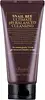
This mild gel cleanser is made to cleanse while calming and soothing your skin.

What's inside
What's inside
 Key Ingredients
No key ingredients
Benefits
Concerns
Ingredients Side-by-side
Water
Skin ConditioningGlycerin
Humectant


Saccharomyces/Snail Secretion Filtrate Ferment Filtrate
Skin Conditioning

Sodium Cocoamphoacetate
CleansingLauryl Glucoside
CleansingSodium Methyl Oleoyl Taurate
CleansingSodium Cocoyl Glutamate
Cleansing
Sodium Lauryl Glucose Carboxylate
CleansingSalix Alba Bark Extract
Astringent


Laminaria Digitata Extract
Skin Protecting

Plantago Asiatica Extract
Skin ConditioningUlmus Campestris Bark Extract
AstringentDiospyros Kaki Leaf Extract
Skin Protecting
Lactobacillus Ferment Lysate
Skin Conditioning
Polyglutamic Acid
Skin Conditioning
Althaea Rosea Root Extract
HumectantAloe Barbadensis Leaf Extract
Emollient
Taraxacum Officinale Leaf Extract
Skin ConditioningDipotassium Glycyrrhizate
Humectant
Beta-Glucan
Skin Conditioning
Panthenol
Skin Conditioning
Betaine
Humectant
Hexapeptide-9
Skin Conditioning
Hexapeptide-11
Skin Conditioning
Palmitoyl Pentapeptide-4
Skin Conditioning
Palmitoyl Tripeptide-1
Skin Conditioning
Tripeptide-1
Skin Conditioning
Copper Tripeptide-1
Skin Conditioning
Bee Venom
Astringent
Polyglyceryl-10 Laurate
Skin Conditioning
Acrylates/C10-30 Alkyl Acrylate Crosspolymer
Emulsion StabilisingGlyceryl Caprylate
EmollientButylene Glycol
Humectant
Sodium Chloride
MaskingCaprylyl Glycol
Emollient
Xanthan Gum
EmulsifyingRosmarinus Officinalis Leaf Oil
Masking
Allantoin
Skin Conditioning
Sodium Phytate
Chelating1,2-Hexanediol
Skin Conditioning
Ethylhexylglycerin
Skin ConditioningWater, Glycerin, Saccharomyces/Snail Secretion Filtrate Ferment Filtrate, Sodium Cocoamphoacetate, Lauryl Glucoside, Sodium Methyl Oleoyl Taurate, Sodium Cocoyl Glutamate, Sodium Lauryl Glucose Carboxylate, Salix Alba Bark Extract, Laminaria Digitata Extract, Plantago Asiatica Extract, Ulmus Campestris Bark Extract, Diospyros Kaki Leaf Extract, Lactobacillus Ferment Lysate, Polyglutamic Acid, Althaea Rosea Root Extract, Aloe Barbadensis Leaf Extract, Taraxacum Officinale Leaf Extract, Dipotassium Glycyrrhizate, Beta-Glucan, Panthenol, Betaine, Hexapeptide-9, Hexapeptide-11, Palmitoyl Pentapeptide-4, Palmitoyl Tripeptide-1, Tripeptide-1, Copper Tripeptide-1, Bee Venom, Polyglyceryl-10 Laurate, Acrylates/C10-30 Alkyl Acrylate Crosspolymer, Glyceryl Caprylate, Butylene Glycol, Sodium Chloride, Caprylyl Glycol, Xanthan Gum, Rosmarinus Officinalis Leaf Oil, Allantoin, Sodium Phytate, 1,2-Hexanediol, Ethylhexylglycerin

Ingredients Explained
These ingredients are found in both products.
Ingredients higher up in an ingredient list are typically present in a larger amount.
Betaine is a humectant. Like hyaluronic acid, it helps attract and retain moisture in the skin. It’s known for being gentle and for helping the skin maintain balanced hydration.
Betaine is mainly used to improve hydration and support calmer skin. It helps skin cells regulate water balance because it functions as an osmolyte.
Some studies suggest betaine may support making skin tone more even.
Fun fact: Betaine naturally exists in the skin and the body. In cosmetic products, it can be either plant-derived (most commonly from sugar beets) or synthetically produced for consistency and stability.
Betaine is also known as trimethylglycine.
Learn more about BetaineGlycerin (or glycerol) is a compound naturally found in your skin. It's a powerhouse humectant that pulls water into the stratum corneum.
Topically, glycerin does several things at once:
Your skin makes glycerin on its own (mostly from sebaceous oil breakdown) and shuttles it to your outermost layer of skin, or your epidermis, via aquaporin-3.
Aquaporin-3 is a transporter that is essential for normal skin hydration, elasticity, and repair. Interestingly, mice lacking in AQP3 have dry and less elastic skin that can be fully corrected with glycerin.
This ingredient is non-irritating, plays well with almost every ingredient, and works across all skin types. Typical use is anywhere between 3-10% but can go up to 79% in some leave-on products.
Just know very high concentrations (>40%) can feel tacky in low humidity.
Glycerin is the name for this ingredient in American English. British English uses Glycerol/Glycerine.
Learn more about GlycerinLauryl Glucoside sugar- and lipid-based cleansing agent. It is created from glucose and lauryl alcohol.
This ingredient is a surfactant, making it easier to rinse oil, dirt, and other pollutants away.
A British study found lauryl glucoside to cause skin sensitivity for some people. We recommend speaking with a professional if you have concerns.
Other names for this ingredient include "Lauryl Polyglucose", "Lauryl glycoside", and "D-Glucopyranoside".
Learn more about Lauryl GlucosideWater. It's the most common cosmetic ingredient of all. You'll usually see it at the top of ingredient lists, meaning that it makes up the largest part of the product.
So why is it so popular? Water most often acts as a solvent - this means that it helps dissolve other ingredients into the formulation.
You'll also recognize water as that liquid we all need to stay alive. If you see this, drink a glass of water. Remember to stay hydrated!
Learn more about Water

