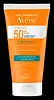
This chemical sunscreen covers the full UV range and blocks ~98% of UVB at SPF 50.
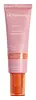
This chemical sunscreen covers most of the UV range, lighter on the deep UVA that drives aging.


What's inside
What's inside
 Key Ingredients
Benefits
Concerns
Ingredients Side-by-side
Water
Skin ConditioningC12-15 Alkyl Benzoate
AntimicrobialDiethylamino Hydroxybenzoyl Hexyl Benzoate
UV Filter
Ethylhexyl Triazone
UV Absorber
Oryza Sativa Starch
AbsorbentPhenylene Bis-Diphenyltriazine
Stabilising
Glycerin
Humectant


Bis-Ethylhexyloxyphenol Methoxyphenyl Triazine
UV Absorber
Potassium Cetyl Phosphate
EmulsifyingGlyceryl Laurate
Emollient

Glyceryl Stearate
Emollient
Stearyl Alcohol
Emollient
Tapioca Starch
Vp/Eicosene Copolymer
Benzoic Acid
Masking

Caprylic/Capric Triglyceride
Masking
Caprylyl Glycol
Emollient
Parfum
Masking


Glyceryl Behenate
Emollient
Glyceryl Dibehenate
Emollient
PPG-1-PEG-9 Lauryl Glycol Ether
EmulsifyingCI 17200
Cosmetic ColorantTocopheryl Glucoside
EmollientTribehenin
Emollient
Xanthan Gum
EmulsifyingZinc Gluconate
Skin Conditioning



Water, C12-15 Alkyl Benzoate, Diethylamino Hydroxybenzoyl Hexyl Benzoate, Ethylhexyl Triazone, Oryza Sativa Starch, Phenylene Bis-Diphenyltriazine, Glycerin, Bis-Ethylhexyloxyphenol Methoxyphenyl Triazine, Potassium Cetyl Phosphate, Glyceryl Laurate, Glyceryl Stearate, Stearyl Alcohol, Tapioca Starch, Vp/Eicosene Copolymer, Benzoic Acid, Caprylic/Capric Triglyceride, Caprylyl Glycol, Parfum, Glyceryl Behenate, Glyceryl Dibehenate, PPG-1-PEG-9 Lauryl Glycol Ether, CI 17200, Tocopheryl Glucoside, Tribehenin, Xanthan Gum, Zinc Gluconate









Reviews
Ingredients Explained
These ingredients are found in both products.
Ingredients higher up in an ingredient list are typically present in a larger amount.
Glyceryl Stearate is made by reacting glycerin with stearic acid (typically sourced from plant oils like palm or coconut). It's an emulsifier, emollient, and mild occlusive.
Emulsifiers help ingredients like oil and water stay mixed so your formula stays nicely blended and uniform in texture.
This ingredient is typically used in concentrations between 1-10%. Studies have found it to be non-sensitizing, non-phototoxic, and non-photoallergenic.
A close cousin of this ingredient is Glyceryl Stearate SE ("self-emulsifying"). This just has a small amount of sodium or potassium stearate added so it can emulsify without a co-emulsifier.
Since this ingredient is an ester of a C18 fatty acid, it may not be fungal acne safe. The Malassezia yeast can potentially metabolize within the C11-C24 range.
Fun fact: The human body also creates Glyceryl Stearate naturally.
Learn more about Glyceryl StearateParfum is a catch-all term for an ingredient or more that is used to give a scent to products.
Also called "fragrance", this ingredient can be a blend of hundreds of chemicals or plant oils. This means every product with "fragrance" or "parfum" in the ingredients list is a different mixture.
For instance, Habanolide is a proprietary trade name for a specific aroma chemical. When used as a fragrance ingredient in cosmetics, most aroma chemicals fall under the broad labeling category of “FRAGRANCE” or “PARFUM” according to EU and US regulations.
The term 'parfum' or 'fragrance' is not regulated in many countries. In many cases, it is up to the brand to define this term.
For instance, many brands choose to label themselves as "fragrance-free" because they are not using synthetic fragrances. However, their products may still contain ingredients such as essential oils that are considered a fragrance by INCI standards.
One example is Calendula flower extract. Calendula is an essential oil that still imparts a scent or 'fragrance'.
Depending on the blend, the ingredients in the mixture can cause allergies and sensitivities on the skin. Some ingredients that are known EU allergens include linalool and citronellol.
Parfum can also be used to mask or cover an unpleasant scent.
The bottom line is: not all fragrances/parfum/ingredients are created equally. If you are worried about fragrances, we recommend taking a closer look at an ingredient. And of course, we always recommend speaking with a professional.
Learn more about ParfumPotassium Cetyl Phosphate is the potassium salt of a mixture. This mixture consists of the esters from phosphoricacid and cetyl alcohol.
Potassium Cetyl Phosphate is an emulsifier and cleansing agent. Emulsifiers help stabilize a product. It does this by preventing certain ingredients from separating.
As a cleansing agent, Potassium Cetyl Phosphate helps gather oils, dirts, and pollutants from your skin. This makes it easier to rinse them away with water.
Learn more about Potassium Cetyl PhosphateWater. It's the most common cosmetic ingredient of all. You'll usually see it at the top of ingredient lists, meaning that it makes up the largest part of the product.
So why is it so popular? Water most often acts as a solvent - this means that it helps dissolve other ingredients into the formulation.
You'll also recognize water as that liquid we all need to stay alive. If you see this, drink a glass of water. Remember to stay hydrated!
Learn more about Water

